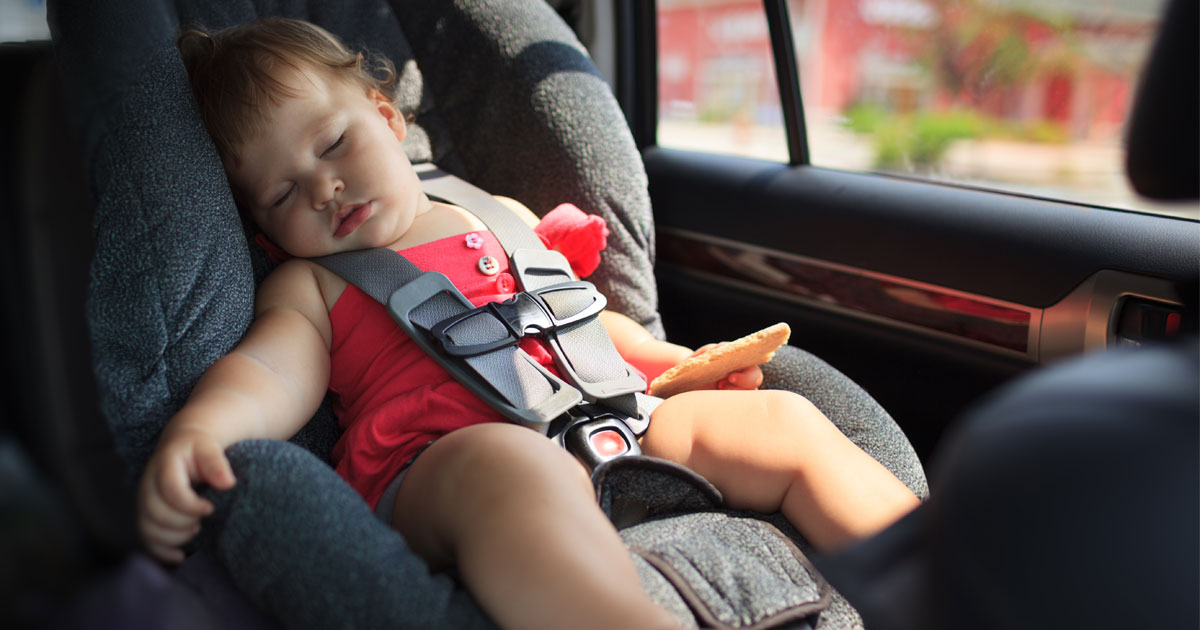
When a tragic accident claimed the life of a neighbor’s infant, one young Texas boy refused to accept it as just another heartbreaking statistic. Instead, he set out to create a solution that he hoped could save children’s lives in the future.
A Tragedy That Sparked an Idea
At just 11 years old, Bishop Curry was deeply affected after learning that a six-month-old baby from his community had died after being left inside a hot vehicle. The devastating incident stayed on his mind, prompting him to think about ways technology could help prevent similar tragedies from happening again.
Rather than feeling powerless, Bishop saw an opportunity to make a difference.
“I felt like this was my chance to create something that could truly help people,” he explained in an interview with NBC News.
His determination came against the backdrop of a serious and ongoing issue. Data from NoHeatstroke.org shows that since 1998, more than 1,000 children in the United States have died from heatstroke after being left in vehicles. Many of those cases involved children who were unintentionally forgotten by caregivers.
For Bishop, those numbers represented lives that might have been saved with the right safety measures in place.
Turning Concern Into Action
Creativity was nothing new for the young inventor. Over the years, Bishop had enjoyed designing imaginative projects, including a homemade catapult and a ping-pong ball launcher.
This time, however, his invention had a much greater purpose.
After sketching out his concept, Bishop presented it to his father, Bishop Curry IV, who works as a process engineer for Toyota. His father immediately recognized the potential of the idea.
His first reaction was simple: Why doesn’t something like this already exist?
Together, they began developing the concept into a device Bishop named Oasis.
The system was designed to attach to a child’s car seat and monitor the vehicle’s interior after the engine was turned off. The goal was to provide multiple layers of protection if a child remained inside.
How the Oasis Device Would Work
The proposed technology would first detect whether a child was still secured in the car seat after the vehicle had been parked.
If temperatures inside the car began rising to dangerous levels, Oasis would activate automatically.
According to Curry IV, the device would immediately begin blowing cool air toward the child while simultaneously sending alerts to parents or caregivers.
Bishop described the communication system as being similar to a text message alert, designed to quickly notify adults that action was needed.
If those alerts went unanswered, the system would escalate the response by contacting emergency services and first responders.
The idea behind Oasis was straightforward but powerful: create several opportunities to intervene before a child faced life-threatening conditions.
From a Sketchbook to a Serious Project
As excitement surrounding the invention grew, Bishop and his father created a 3D model to demonstrate how the device might function in the real world.
However, they soon discovered that transforming an idea into a marketable product involved much more than creativity. Patent applications, legal fees, engineering work, and manufacturing costs all required significant funding.
To help cover those expenses, the family decided to launch a crowdfunding campaign.
What happened next exceeded all expectations.
Within just a few months, supporters from around the world contributed nearly $100,000 through GoFundMe. The overwhelming response provided the resources needed to move forward with patent filings and product development efforts.
Bishop’s father admitted they had initially hoped to raise only a small fraction of that amount.
The outpouring of support, he said, reflected how many people were inspired by a child who simply wanted to protect other children.
The successful fundraising campaign ultimately allowed the family to submit patent documentation to the U.S. Patent and Trademark Office, bringing the invention one step closer to becoming a reality.
Inspired by One Child, Designed to Protect Many
Although Oasis has not yet entered full-scale production, Bishop remains optimistic about its future potential.
For him, the project has always been about more than inventing a new gadget. It is about preventing families from experiencing the same heartbreak that inspired him to act in the first place.
The memory of the baby from his neighborhood continues to motivate him, serving as a reminder of why the project matters.
Bishop believes that children often see problems differently than adults do. With fresh perspectives and a desire to help, young people can sometimes come up with solutions that others overlook.
His journey is a powerful example of how compassion, creativity, and determination can come together to address real-world challenges. What began as one boy’s response to a devastating loss has become a hopeful effort to make the world a safer place for children everywhere.







