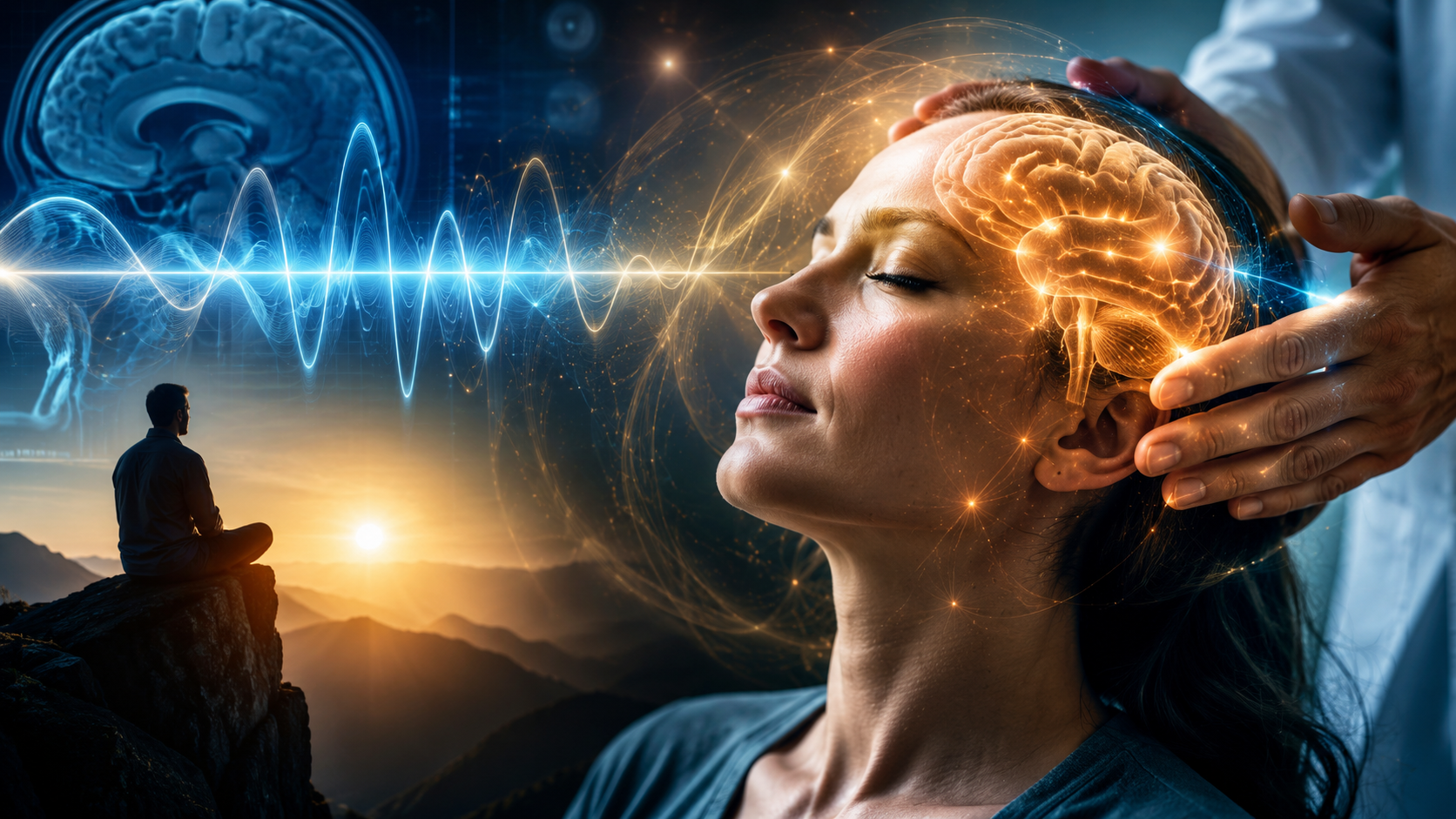
The human brain is an extraordinary organ, capable of processing thoughts, storing memories, controlling movement, and regulating countless bodily functions. Despite decades of scientific progress, many neurological conditions—from traumatic brain injuries to stroke and neurodegenerative diseases—remain difficult to treat. As researchers search for innovative therapies, one area of study has generated growing excitement: the use of electromagnetic signals to influence brain activity and support recovery.
At first glance, the idea may sound like science fiction. However, electromagnetic fields are already a natural part of how the brain functions. Every thought, movement, and sensation involves tiny electrical impulses traveling between neurons. Scientists are now exploring ways to harness carefully controlled electromagnetic signals to stimulate brain circuits, encourage healing, and improve neurological function.
While much of the research is still evolving, early findings have opened fascinating possibilities. Here are 12 intriguing facts about electromagnetic signals and their potential role in brain healing.
1. The Brain Naturally Generates Electrical Activity
Many people don’t realize that the brain is essentially an electrical organ.
Neurons communicate through electrochemical signals. Whenever you think, learn, move, or experience emotions, billions of nerve cells exchange tiny electrical impulses. These signals create measurable patterns of brain activity that can be detected using technologies such as electroencephalography (EEG).
Because the brain already operates using electrical signals, researchers believe carefully targeted electromagnetic stimulation may help influence neural activity in beneficial ways.
Understanding this natural electrical foundation is key to appreciating why electromagnetic therapies have attracted scientific interest.
2. Electromagnetic Signals Can Influence Neural Communication
Neurons rely on electrical activity to send messages throughout the nervous system.
External electromagnetic stimulation can affect this communication by altering the likelihood that certain neurons will activate. Depending on how the stimulation is applied, researchers may be able to increase or decrease activity within specific brain regions.
This ability to modulate neural circuits has become a major focus of neuroscience research. Scientists are investigating how electromagnetic approaches can help restore healthier patterns of activity in brains affected by injury or disease.
The goal is not to override the brain but to encourage more effective communication between neural networks.
3. Transcranial Magnetic Stimulation Is Already Being Used Clinically
One of the best-known applications of electromagnetic brain stimulation is Transcranial Magnetic Stimulation, commonly called TMS.
TMS uses magnetic pulses delivered through a device placed near the scalp. These pulses generate small electrical currents within targeted brain regions.
Today, TMS is used in several countries as a treatment option for certain patients with depression, particularly when traditional therapies have not provided sufficient relief.
Its clinical use demonstrates that electromagnetic stimulation is not merely a theoretical concept—it is already being applied in real-world healthcare settings.
4. Researchers Are Studying Brain Recovery After Stroke
Stroke can damage neural pathways responsible for movement, speech, memory, and other critical functions.
Scientists are investigating whether electromagnetic stimulation may help support rehabilitation by encouraging surviving brain regions to reorganize and compensate for lost functions.
The brain possesses a remarkable ability known as neuroplasticity, which allows neural networks to adapt and form new connections. Electromagnetic techniques may help enhance this process under certain conditions.
Although outcomes vary among individuals, this area of research continues to generate considerable interest.
5. It May Help Promote Neuroplasticity
Neuroplasticity is one of the most important concepts in modern neuroscience.
For many years, scientists believed the adult brain was relatively fixed. Research now shows that the brain can continue adapting throughout life by strengthening, weakening, or creating neural connections.
Electromagnetic stimulation may influence the biological processes involved in this adaptability. By activating specific neural circuits, researchers hope to encourage beneficial changes that support learning, recovery, and rehabilitation.
This potential to enhance neuroplasticity is one reason electromagnetic therapies remain a promising area of study.
6. Brain Stimulation Is Being Investigated for Memory Disorders
Memory-related conditions affect millions of people worldwide.
Researchers are exploring whether electromagnetic stimulation can influence brain regions involved in memory formation, retrieval, and cognitive processing. Some studies have examined its potential applications in age-related cognitive decline and certain neurodegenerative conditions.
Although results remain mixed and more research is needed, early findings suggest that targeted stimulation may affect neural networks associated with memory function.
The possibility of supporting cognitive health has made this an active area of investigation.
7. Not All Electromagnetic Therapies Work the Same Way
The term “electromagnetic stimulation” covers a variety of technologies.
Different methods use varying frequencies, intensities, durations, and delivery systems. Some rely primarily on magnetic fields, while others involve electrical currents or combined approaches.
Because each technique interacts with the brain differently, researchers carefully study which methods are most effective for specific conditions.
This diversity highlights the complexity of the field and explains why scientists continue refining stimulation protocols.
8. Scientists Are Exploring Applications for Brain Injuries
Traumatic brain injuries can disrupt communication between neurons and damage important neural networks.
Researchers are investigating whether electromagnetic stimulation may help support recovery by encouraging neural reorganization and improving communication within affected regions.
The goal is to complement existing rehabilitation strategies rather than replace them. Combining stimulation with physical therapy, occupational therapy, and cognitive rehabilitation may provide additional benefits in certain cases.
Although much work remains to be done, the approach continues to attract attention from neuroscientists and clinicians alike.
9. Electromagnetic Signals Can Affect More Than Neurons
While neurons receive much of the attention, the brain contains many other important cell types.
Researchers have discovered that electromagnetic stimulation may influence support cells known as glial cells, which help maintain neural health, regulate inflammation, and support communication within the nervous system.
Some studies suggest that electromagnetic fields may affect cellular signaling pathways involved in repair and maintenance processes.
Understanding these broader biological effects may reveal additional mechanisms through which stimulation influences brain health.
10. Personalized Brain Stimulation Could Be the Future
No two brains are exactly alike.
Differences in anatomy, genetics, medical history, and neural activity mean that treatments may not work identically for every individual. As technology advances, researchers are increasingly exploring personalized stimulation approaches.
Future systems may use brain imaging, artificial intelligence, and real-time monitoring to tailor stimulation parameters to each person’s unique neurological profile.
This personalized approach could potentially improve effectiveness while minimizing unwanted effects.
11. Researchers Are Investigating Non-Invasive Treatment Options
One of the major advantages of many electromagnetic therapies is that they are non-invasive.
Unlike brain surgery, techniques such as TMS do not require incisions or implanted devices. Sessions are typically performed while patients remain awake and alert.
The ability to influence brain activity without invasive procedures makes these technologies attractive for both researchers and clinicians.
As safety and effectiveness continue to be evaluated, non-invasive approaches are expected to remain a major focus of future development.
12. The Field Is Advancing Rapidly
The study of electromagnetic brain stimulation has expanded dramatically over the past two decades.
Advances in neuroscience, medical imaging, computer modeling, and engineering have allowed researchers to investigate the brain with unprecedented precision. New stimulation technologies continue to emerge, offering greater control over how signals are delivered and monitored.
Clinical trials are exploring applications for depression, stroke recovery, chronic pain, movement disorders, cognitive impairment, and other neurological conditions.
While many questions remain unanswered, the pace of innovation suggests that this field will continue evolving rapidly in the years ahead.
How Electromagnetic Brain Stimulation Works
At its core, electromagnetic brain stimulation seeks to influence neural activity through carefully controlled physical signals.
When magnetic or electrical fields interact with brain tissue, they can alter how neurons communicate. Depending on the stimulation pattern, researchers may encourage increased activity, reduced activity, or improved synchronization within specific neural networks.
The exact biological mechanisms remain an active area of research. Scientists continue studying how stimulation affects neurotransmitters, cellular signaling pathways, blood flow, and neural plasticity.
The more researchers learn about these mechanisms, the better they can design therapies for specific neurological challenges.
Challenges Researchers Still Face
Despite encouraging progress, significant challenges remain.
The brain is extraordinarily complex, and responses to stimulation can vary widely between individuals. Researchers must determine which patients are most likely to benefit, what stimulation protocols are optimal, and how long effects may last.
Long-term outcomes also require further investigation. While many techniques have demonstrated promising safety profiles, scientists continue monitoring potential risks and refining treatment strategies.
These challenges highlight the importance of rigorous clinical research before widespread adoption of new therapies.
The Future of Brain Healing Technologies
Many experts believe the future of brain medicine will involve a combination of approaches rather than a single solution.
Electromagnetic stimulation may eventually work alongside rehabilitation programs, pharmaceuticals, regenerative medicine, brain-computer interfaces, and advanced diagnostic technologies.
Researchers envision a future where treatments can precisely target damaged neural circuits, enhance recovery processes, and support cognitive function with far greater accuracy than is currently possible.
Although that future is still unfolding, ongoing discoveries continue to bring it closer to reality.
Final Thoughts
Electromagnetic signals are already an essential part of how the brain operates. By learning how to carefully influence these signals, scientists are opening new possibilities for treating neurological disorders and supporting recovery after injury.
From promoting neuroplasticity and aiding stroke rehabilitation to advancing non-invasive therapies and personalized medicine, the field of electromagnetic brain stimulation represents one of the most exciting frontiers in neuroscience.
While many applications remain under investigation, the progress achieved so far demonstrates the remarkable potential of combining physics, biology, and medicine. As research continues, electromagnetic technologies may become increasingly important tools in the quest to understand, protect, and heal the human brain.
The journey is far from complete, but the discoveries already made suggest that the future of brain healing could be powered, in part, by the very electrical signals that make thought itself possible.