Anyone who shares their home with a cat knows they can be wonderfully unpredictable. One moment they’re acting completely independent, and the next they’re curled up beside you demanding attention.
Some cats have an especially adorable habit that leaves many owners curious: they gently bump their heads against people they love.
At first glance, it may seem like a quirky personality trait or a playful gesture. But animal behavior experts say there’s actually a meaningful reason behind this affectionate act.
More Than Just a Cute Habit
A recent social media video captured the hearts of cat lovers everywhere when a woman showed her black cat performing a special “kiss” routine. Every time she asked for a kiss, the cat would walk over and gently press its head against her before waiting for affection in return.
While the interaction looked adorable, it also highlighted a common feline behavior known as bunting.
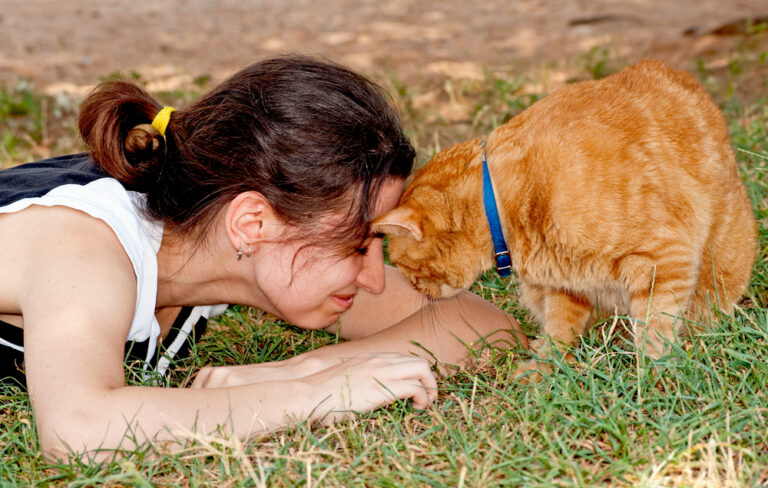
Bunting occurs when a cat rubs or bumps its head against a person, another animal, or even furniture. Far from being random, this behavior serves an important purpose in feline communication.
Your Cat Is Marking You as Family
Cats have scent glands located around their cheeks, forehead, and chin. When they rub their head against someone, they release scent markers known as pheromones.
These pheromones act like a personal signature, helping cats identify things and individuals they trust.
When your cat headbutts you, it’s essentially placing its scent on you. Rather than claiming ownership in a possessive way, it’s more like an expression of belonging.
In cat language, it’s their version of saying:
“You’re part of my family.”
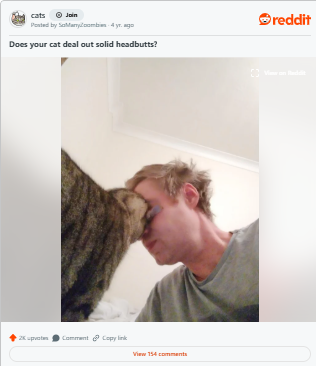
That gentle bump on your arm, face, or leg is actually a sign that your cat feels safe, comfortable, and connected to you.
A Powerful Sign of Trust
Cats are naturally cautious animals. They don’t give their trust easily, especially to people or environments they aren’t comfortable with.
That’s why headbutting is considered such a meaningful gesture.
When a cat willingly approaches you and rubs its face against yours, it is showing vulnerability. It knows you’re not a threat and feels secure enough to let its guard down.
For many cat owners, this behavior ranks among the strongest signs of feline affection.
Not Every Cat Shows Love the Same Way
Just like people, cats have unique personalities.
Some are incredibly affectionate and constantly seek physical contact, while others prefer to express their affection from a distance.
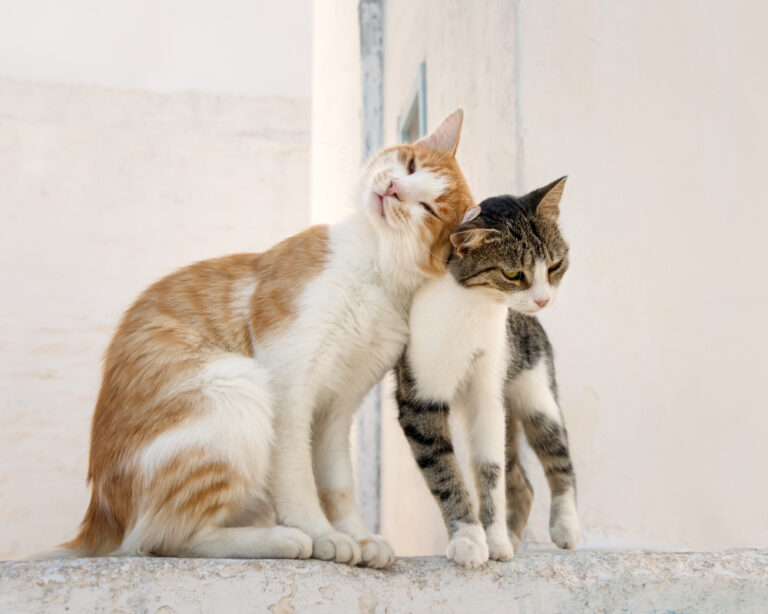
A cat that loves headbutting may also:
- Purr when near you
- Follow you around the house
- Curl up beside you while sleeping
- Knead blankets or your lap
- Slow blink while making eye contact
Meanwhile, a more reserved cat may show affection in quieter ways without enjoying constant cuddles or kisses.
Learning your cat’s individual preferences is an important part of building a strong bond.
Watch Their Body Language
Although many cats enjoy gentle affection, it’s always important to respect their boundaries.
If your cat enjoys physical contact, you’ll typically notice signs such as:
- Relaxed posture
- Purring
- Closed or half-closed eyes
- Slow blinking
- Remaining close after contact
On the other hand, if your cat is uncomfortable, you may notice:
- Flattened ears
- Tail flicking
- Tense body language
- Pulling away
- Vocalizing in annoyance
Paying attention to these signals helps create a relationship built on trust and respect.
Even Lions Do It
Interestingly, headbutting isn’t limited to domestic cats.
Large wild cats, including lions, also engage in similar behaviors with members of their pride.
Lions often rub their heads and faces together when greeting one another. These interactions strengthen social bonds and help maintain group relationships.
Domestic cats have inherited many behaviors from their wild relatives, making your cat’s affectionate headbutt part of an ancient feline tradition.
Whether it’s a lion greeting another lion on the savannah or a house cat greeting its favorite human, the message is surprisingly similar:
“You’re important to me.”
The Role of Pheromones
A major reason cats engage in bunting involves pheromones.
Pheromones are natural chemical signals animals use to communicate information that humans cannot detect.
When a cat rubs its face against you, it leaves behind these scent markers, creating a familiar and comforting environment.
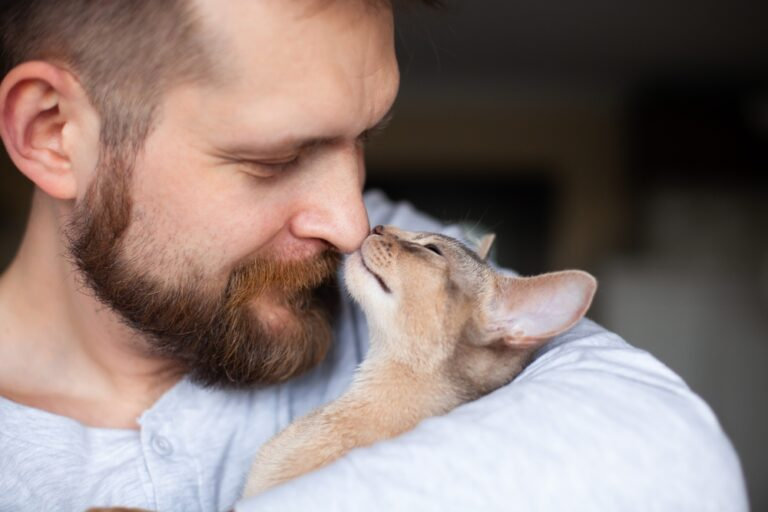
This process helps reduce stress and reinforces feelings of security.
Essentially, your cat is making you part of its trusted circle.
What Should You Do When Your Cat Headbutts You?
The answer is simple: enjoy the moment.
When your cat gives you a gentle head bump, it’s offering one of the highest compliments available in feline language.
You can respond by:
- Speaking softly
- Offering gentle pets around the cheeks and ears
- Returning slow blinks
- Respecting their personal space if they move away
These small interactions help strengthen the bond between you and your furry companion.
A Tiny Gesture With a Big Meaning
The next time your cat walks over and presses its head against you, remember that it’s much more than a random behavior.
That little nudge represents trust, comfort, affection, and acceptance.
In your cat’s world, you’ve become part of its family—and that’s a privilege not given lightly.
So cherish those headbutts. They may be one of the sweetest ways your feline friend can say, “I love you.”







