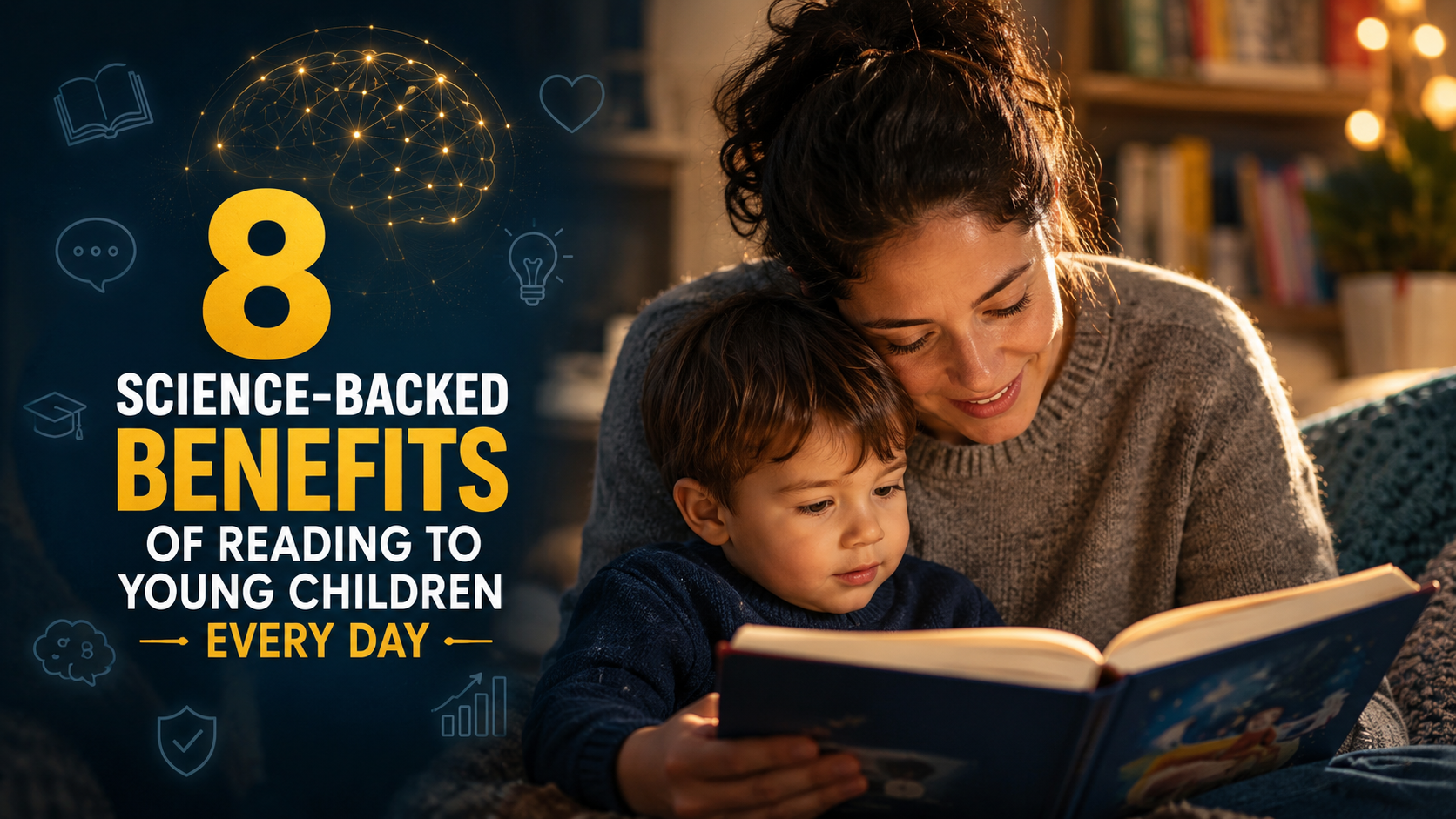
In a world filled with screens, notifications, and constant digital distractions, one simple daily habit continues to stand out as one of the most powerful things parents can do for a child’s development: reading together.
It may seem small — sitting down with a picture book for a few minutes before bedtime or reading a favorite story after lunch — but research shows these moments can have a profound impact on a child’s brain, emotional growth, language skills, and long-term academic success.
Scientists, pediatricians, and child development experts have spent decades studying how early reading affects young children. Again and again, the evidence points to the same conclusion: regular reading provides benefits that extend far beyond learning words.
Reading aloud helps shape how children think, communicate, bond with others, and understand the world around them.
Even more surprisingly, many of the advantages begin long before a child can read independently.
Here are eight science-backed benefits of reading to young children every single day.
1. Reading Strengthens Brain Development
One of the most important discoveries in child development research is that early reading experiences help support rapid brain growth.
During the first few years of life, a child’s brain forms millions of neural connections at an extraordinary pace. These early experiences shape how the brain develops and organizes information.
Reading aloud stimulates multiple areas of the brain simultaneously.
When children hear stories, they process sounds, recognize patterns in language, imagine scenes, interpret emotions, and begin building memory skills. This creates rich neurological activity that supports cognitive development.
Brain imaging studies have even shown increased activity in regions associated with language comprehension and visual imagination when children are regularly read to.
In simple terms, reading helps exercise the developing brain in ways that support learning and communication later in life.
The earlier this habit begins, the greater the potential long-term benefits.
2. Children Build Stronger Language and Vocabulary Skills
One of the clearest benefits of reading aloud is improved language development.
Young children learn language by hearing it repeatedly. Books expose them to a much wider range of vocabulary, sentence structures, and expressions than everyday conversation alone.
A child may hear words in books that rarely appear in normal daily speech. Over time, this expanded exposure strengthens vocabulary naturally.
Children who are read to regularly often develop:
- Better communication skills
- Stronger listening abilities
- Improved sentence formation
- Earlier vocabulary growth
- Greater understanding of language patterns
These advantages can influence school readiness significantly.
Research consistently shows that early vocabulary exposure is linked to later reading ability and academic performance.
Importantly, reading does not need to involve complicated books to be effective. Even simple stories, repetition, rhymes, and picture books contribute to language learning.
The consistency of daily reading matters more than perfection.
3. Reading Helps Create Emotional Security
Reading together is not only educational — it is deeply emotional.
When parents or caregivers read with children, they create moments of focused attention, closeness, and connection.
These routines can become comforting parts of a child’s day.
Young children thrive on predictable interactions and emotional responsiveness. Sitting together during story time helps children feel safe, valued, and emotionally connected.
The physical closeness involved in reading — sitting on a parent’s lap, hearing a calm voice, turning pages together — can strengthen attachment and trust.
For many families, bedtime reading becomes one of the most meaningful daily bonding rituals.
In a busy world where schedules often feel rushed, these quiet moments of connection can have a lasting emotional impact.
4. It Improves Attention Span and Listening Skills
Modern childhood is increasingly shaped by fast-moving digital content designed to capture attention quickly.
Books encourage a different kind of focus.
When children listen to stories, they practice sustained attention, patience, and concentration. They learn to follow sequences, understand cause and effect, and remain engaged over longer periods of time.
This type of mental focus supports important developmental skills.
Reading also strengthens listening comprehension, which plays a major role in classroom learning later on.
Children who regularly listen to stories often become better at:
- Following instructions
- Understanding narratives
- Processing information
- Retaining details
- Staying mentally engaged
These abilities can influence both academic performance and everyday communication.
Short daily reading sessions can gradually help build attention skills in a calm and natural way.
5. Stories Help Children Understand Emotions
Books introduce children to emotions, relationships, and social situations they may not yet fully understand in real life.
Through stories, children learn about:
- Kindness
- Fear
- Friendship
- Anger
- Courage
- Empathy
- Problem-solving
When a child sees characters experience sadness, excitement, frustration, or joy, they begin learning how emotions work.
This process helps children develop emotional intelligence.
Reading also creates opportunities for meaningful conversations between adults and children.
Parents may ask questions like:
- “Why do you think the character felt sad?”
- “What would you do in that situation?”
- “How do you think they solved the problem?”
These discussions help children process emotions and build empathy for others.
In many ways, stories act as safe emotional practice environments where children can explore feelings and social interactions through imagination.
6. Daily Reading Supports Academic Success Later in Life
One reason experts strongly encourage early reading is because the long-term educational benefits are remarkably consistent.
Children who are regularly read to during early childhood often enter school with stronger literacy foundations.
This can influence future performance in multiple areas, including:
- Reading comprehension
- Writing skills
- Vocabulary development
- General knowledge
- Critical thinking
Early literacy exposure also helps children become more comfortable with books and learning environments overall.
Children who associate reading with positive emotions may become more motivated learners later on.
Research suggests that reading habits established during early childhood can continue influencing academic confidence for years.
Importantly, these benefits are not limited to high-income households or advanced educational environments.
Consistent reading at home — even for short periods — can make a meaningful difference across many family backgrounds.
7. Reading Encourages Imagination and Creativity
Books allow children to build worlds inside their minds.
Unlike passive entertainment, reading encourages active imagination.
When children hear stories, they mentally picture characters, environments, sounds, and events. This strengthens creative thinking and visualization skills.
Imaginative play often grows from stories as well.
A child who hears stories about animals, adventures, castles, space travel, or magical creatures may later recreate those ideas through pretend play, drawing, storytelling, or problem-solving games.
Creativity is closely connected to flexible thinking, curiosity, and innovation.
These abilities remain valuable throughout life — not only in artistic activities but also in communication, leadership, and problem-solving.
Books help nurture curiosity by introducing children to new ideas, cultures, experiences, and possibilities.
8. Reading Builds Lifelong Positive Associations With Learning
Perhaps one of the most underrated benefits of reading aloud is the emotional association children develop with books themselves.
When reading feels comforting, enjoyable, and connected to love or attention, children often begin viewing books positively from an early age.
This matters because emotional attitudes toward learning can shape future habits.
A child who experiences reading as stressful or forced may avoid it later. In contrast, a child who connects books with warmth, fun, and closeness may become more naturally curious about learning.
Daily reading routines can quietly build:
- Confidence
- Curiosity
- Patience
- Love of learning
- Self-expression
These qualities extend far beyond literacy alone.
In many families, story time becomes more than education — it becomes part of a child’s emotional foundation.
Why Reading Matters Even Before Children Understand Every Word
Some parents worry that reading may not “count” if a child is too young to fully understand the story.
But experts emphasize that early exposure still matters tremendously.
Even babies benefit from hearing language patterns, rhythms, tone changes, and emotional expression during reading.
Young children absorb far more information than adults often realize.
Repeated exposure to language helps lay the foundation for future communication and literacy development long before formal reading begins.
This means it is never too early to start reading aloud.
The Importance of Consistency Over Perfection
Parents sometimes feel pressure to create elaborate educational routines or read for long periods every day.
In reality, consistency matters far more than perfection.
Even short reading sessions can be highly beneficial when done regularly.
A few minutes before bedtime, after meals, or during quiet moments throughout the day can create meaningful developmental benefits over time.
Children also tend to enjoy repetition. Reading the same favorite book repeatedly may feel boring to adults, but repetition helps reinforce language learning and emotional comfort for children.
Simple, consistent routines are often the most effective.
Screens and Books Affect the Brain Differently
Digital content is not automatically harmful, but research suggests books and human interaction provide unique developmental advantages.
Reading together involves:
- Eye contact
- Emotional responsiveness
- Conversation
- Shared attention
- Human connection
These interactive experiences support learning differently than passive screen viewing.
Books also encourage slower thinking and imagination rather than rapid sensory stimulation.
That balance is becoming increasingly important in modern childhood.
Final Thoughts
Reading to young children every day may seem like a small habit, but science continues showing that its effects can be profound.
From brain development and language growth to emotional bonding and academic readiness, reading supports multiple areas of a child’s development simultaneously.
Perhaps most importantly, reading creates moments of human connection in a fast-moving world.
Children may not remember every story they hear, but they often remember the feeling of closeness, comfort, and attention that came with those moments.
In the end, reading is about much more than books.
It is about helping children build language, imagination, confidence, empathy, and curiosity — one story at a time.