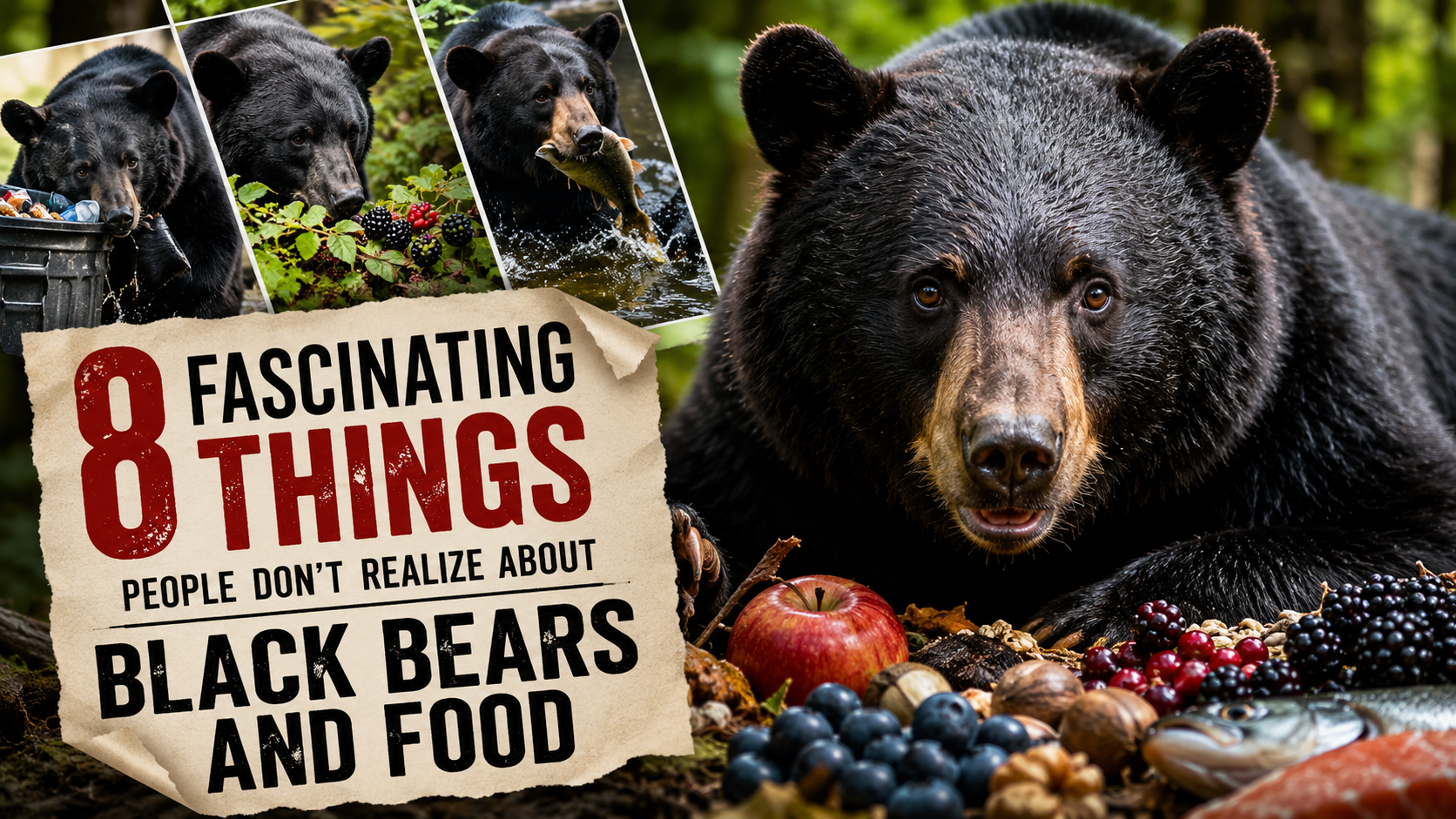
Black bears are among the most recognizable wild animals in North America, yet many people misunderstand one of the most important aspects of their lives: food. While bears are often portrayed as fearless hunters or campground thieves, the reality is far more interesting. Their eating habits are shaped by seasons, survival needs, intelligence, and an incredible ability to adapt to changing environments.
From their surprisingly varied diet to their remarkable sense of smell, black bears have developed feeding behaviors that help them thrive in forests, mountains, wetlands, and even areas close to human communities. Understanding how bears find and use food not only reveals fascinating details about their lives but also helps people coexist safely with these powerful animals.
Here are eight surprising things most people don’t realize about black bears and food.
1. Black Bears Are Mostly Plant Eaters
Many people assume black bears survive mainly by hunting other animals. In reality, they are opportunistic omnivores whose diets are dominated by plant-based foods.
Depending on the season and location, up to 80 percent or more of a black bear’s diet may consist of berries, fruits, nuts, roots, grasses, and other vegetation. They eagerly consume acorns, beechnuts, wild cherries, blueberries, blackberries, and countless other natural foods.
Animal matter certainly plays a role in their diet, but it typically represents a smaller portion than many people expect. Bears may eat insects, fish, eggs, carrion, and occasionally small mammals, but plants remain the foundation of their nutrition.
This flexibility allows black bears to survive across a wide range of habitats, from dense forests to mountain regions and coastal ecosystems.
2. Their Sense of Smell Is Extraordinary
A black bear’s nose is one of the most powerful tools in the animal kingdom.
Scientists estimate that a bear’s sense of smell is several times stronger than that of a bloodhound and vastly superior to a human’s. Bears rely on scent to locate food sources from remarkable distances, even when those foods are hidden beneath vegetation, buried underground, or stored inside containers.
This incredible ability helps them detect ripe berries, insect colonies, animal carcasses, and other food opportunities that would be impossible for humans to notice.
Their powerful noses also explain why improperly stored food at campsites can attract bears so quickly. What seems odorless to people may release scent particles that bears can easily detect.
For black bears, smell is often more important than sight when searching for a meal.
3. They Spend Most of Their Lives Looking for Food
Finding food is not an occasional activity for black bears—it is their primary daily mission.
During active months, bears may spend much of the day traveling, sniffing, digging, climbing, and foraging. Their survival depends on consuming enough calories to maintain their bodies and prepare for winter.
A bear’s food choices constantly change with seasonal availability. In spring, fresh vegetation and insects become important. Summer brings berries and fruit. Fall is often a feeding frenzy as bears search for calorie-rich nuts and other energy-dense foods.
Because natural food supplies can vary dramatically from year to year, bears must remain flexible and take advantage of whatever resources are available.
Their lives revolve around an endless search for the next meal.
4. Fall Feeding Is Critical for Survival
As winter approaches, black bears enter a period known as hyperphagia—a stage of intense eating that can dramatically increase their body weight.
During this time, bears may consume tens of thousands of calories in a single day. Their biological drive to eat becomes incredibly powerful because they must build enough fat reserves to survive months of winter dormancy.
A bear preparing for winter may spend nearly every waking hour feeding. Acorns, nuts, berries, and other high-energy foods become especially valuable.
Successful fall feeding often determines whether a bear enters winter in good condition. Poor food years can result in lower survival rates, especially for young bears and nursing mothers.
This seasonal urgency explains why bears become particularly focused on food during autumn months.
5. Black Bears Are Surprisingly Intelligent Food Problem-Solvers
Black bears are far smarter than many people realize.
Researchers have observed bears opening complex latches, remembering productive feeding locations, and adapting quickly to new food opportunities. Their problem-solving abilities help them exploit changing environments and locate resources efficiently.
Bears can remember where food was found months earlier and often revisit successful feeding areas year after year. Some have learned how to access bird feeders, garbage containers, orchards, and other food sources through repeated observation and experimentation.
This intelligence allows bears to thrive in diverse habitats but can also create challenges when they discover human-related food sources.
Once a bear learns that a certain location consistently provides easy calories, it may return repeatedly.
6. Human Food Can Be More Dangerous Than It Looks
Many people assume feeding a bear is harmless or even helpful. In reality, human food can create serious problems for both bears and people.
When bears gain access to garbage, pet food, bird seed, outdoor grills, or intentional handouts, they often lose their natural caution around humans. Over time, they may begin associating people with food rewards.
This behavior can increase the likelihood of property damage, dangerous encounters, and conflicts that may ultimately put the bear’s life at risk.
Wildlife experts often repeat a simple phrase: “A fed bear is a dead bear.” Bears that become dependent on human food sources are more likely to be relocated or euthanized if they repeatedly create safety concerns.
Protecting bears often means keeping food securely stored and allowing them to rely on natural feeding behaviors.
7. Insects Are an Important Part of Their Diet
Although berries and nuts get most of the attention, insects provide valuable nutrition for black bears.
Bears frequently tear apart rotting logs, overturn rocks, and dig into the ground searching for ants, termites, beetle larvae, and other insects. These small creatures may not seem significant, but they offer concentrated protein and fat.
A bear can consume thousands of insects in a relatively short period. In some regions, insect-rich habitats become important feeding areas during certain seasons.
Watching a large bear carefully dismantle a log for tiny insects is a reminder that efficient feeding is often more important than chasing large prey.
For black bears, even the smallest food sources can be worth the effort.
8. Every Bear’s Diet Is Different
There is no single black bear menu.
A bear living in a northern forest may depend heavily on berries and nuts, while one near a river system might eat more fish. Bears in coastal regions often have access to entirely different food resources than those living in mountainous environments.
Weather, habitat quality, competition, and seasonal changes all influence what a bear eats. Even neighboring bears may develop different feeding preferences based on individual experience and opportunity.
This adaptability is one reason black bears have become one of North America’s most successful large mammals. Their ability to take advantage of diverse food sources allows them to survive in environments where more specialized animals might struggle.
Rather than relying on a single food type, black bears constantly adjust their diets to match the conditions around them.
Why Understanding Bear Feeding Habits Matters
Black bears are far more complex than the stereotypes often portrayed in movies and cartoons. Their feeding behavior reflects intelligence, adaptability, and a remarkable ability to survive in changing environments.
Food influences nearly every aspect of a bear’s life—from where it travels and how it spends its time to how successfully it survives winter and raises its young. Understanding these behaviors can help people appreciate bears not as nuisances or predators, but as highly adaptable wildlife with sophisticated survival strategies.
It also highlights the importance of responsible coexistence. Securing garbage, removing outdoor attractants, and respecting wild animals can reduce conflicts while helping bears maintain their natural behaviors.
The more we learn about black bears and food, the more we discover that these animals are not simply driven by hunger. They are skilled foragers, intelligent problem-solvers, and masters of adaptation whose survival depends on making the most of every opportunity nature provides.
That combination of instinct, intelligence, and flexibility is one of the reasons black bears continue to thrive across so much of North America today.







