A strange and mesmerizing marine worm has recently gone viral online, and once you see it, you’ll understand why.
The Antarctic Sea Worm With a Nightmare-Worthy Smile
A bizarre deep-sea creature from Antarctica has recently captured the internet’s attention, and it’s easy to see why. At first glance, it looks less like a real animal and more like something straight out of a science-fiction horror film.
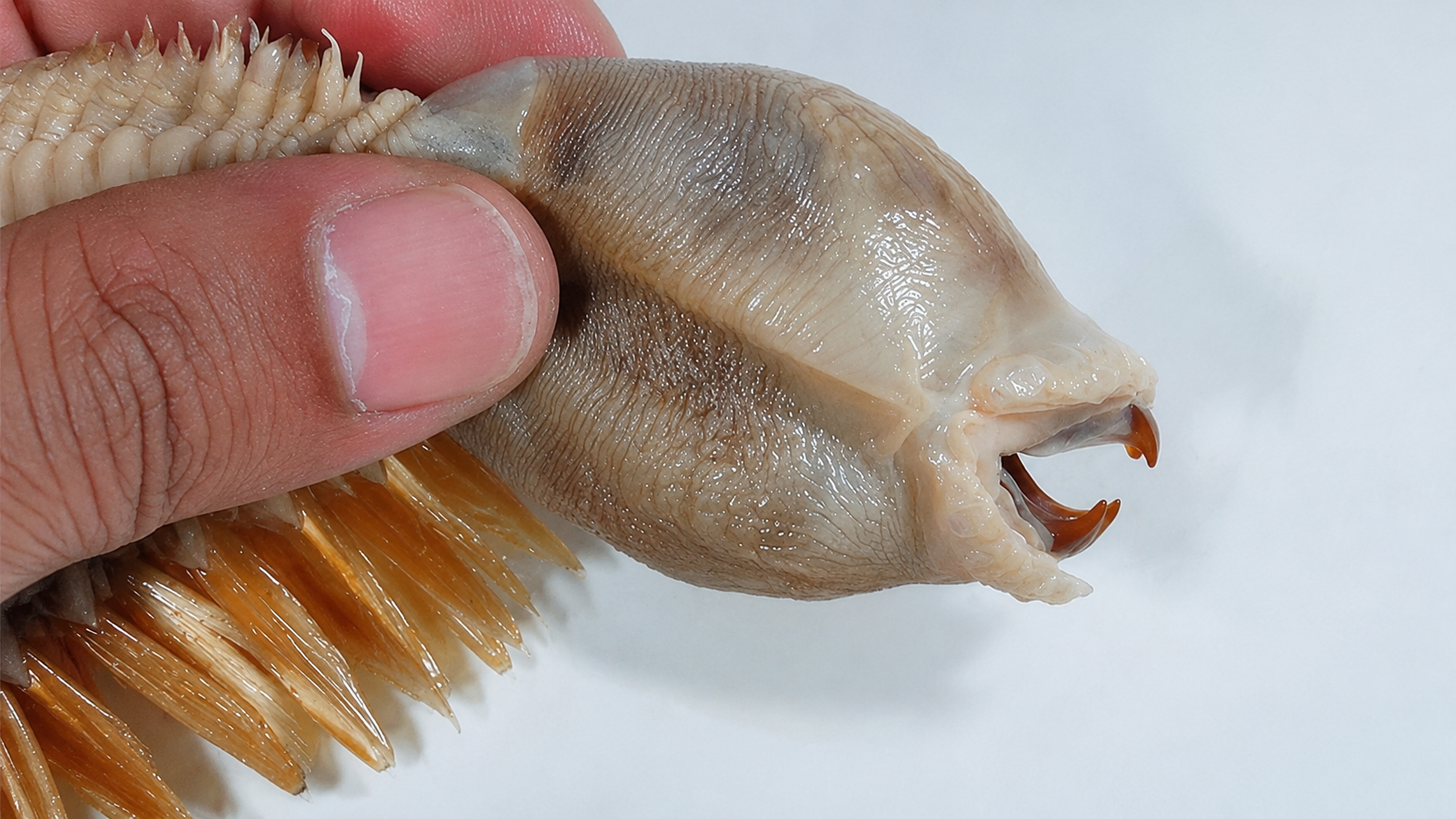
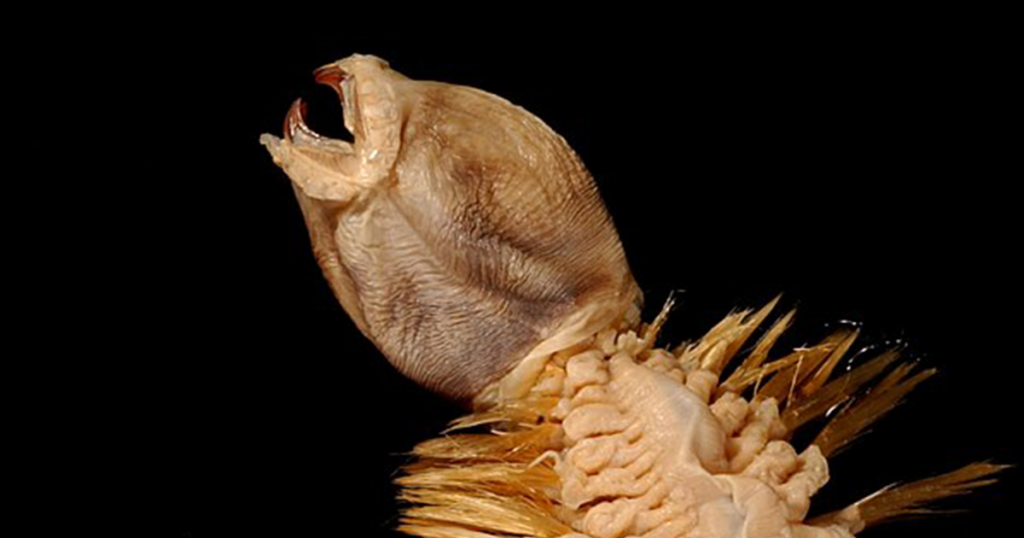
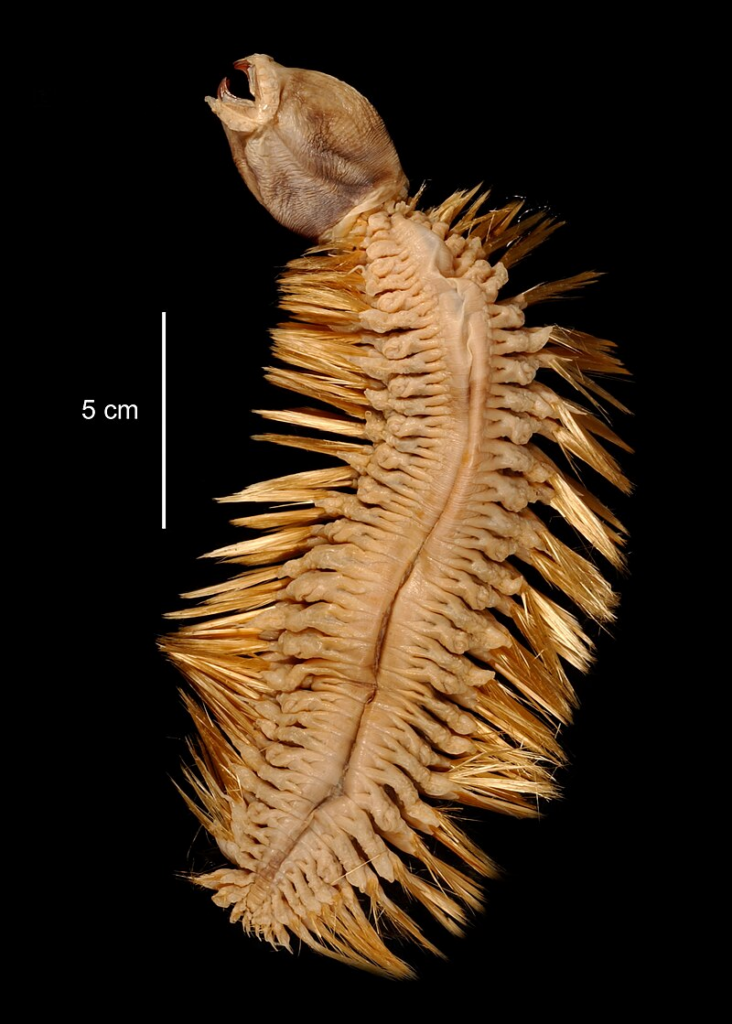
Known as Eulagisca gigantea, this unusual marine worm is covered in shimmering golden bristles and hides a terrifying mouth packed with sharp teeth. Its appearance is so strange that many people have compared it to a holiday decoration gone horribly wrong.
Although it has only recently become a social media sensation, this remarkable creature has actually been living in the icy waters of the Southern Ocean for decades. Scientists first identified it in 1939, but it has remained largely unknown outside marine biology circles.
A Predator Hidden Beneath the Ice
One of the most fascinating features of Eulagisca gigantea is its feeding mechanism. The worm can grow to roughly eight inches in length, about the size of a banana, but its most striking characteristic is its retractable throat.
When feeding, the worm extends this throat outward, revealing a set of sharp teeth that instantly transform its appearance from unusual to downright intimidating. This adaptation allows it to scavenge for food and potentially hunt smaller creatures living on the ocean floor.
Its metallic-looking golden bristles are more than just decorative. Researchers believe these structures may help the worm move through its environment, navigate the seafloor, or even protect it from predators. Despite its eye-catching appearance, scientists still know relatively little about the species because it has not been extensively studied.
Part of a Vast Underwater World
Eulagisca gigantea belongs to a group of segmented marine worms called polychaetes, one of the most diverse groups of ocean-dwelling animals. These worms inhabit a wide variety of environments, from colorful coral reefs near the surface to some of the deepest and most extreme regions of the ocean.
More than 8,000 polychaete species have been identified so far, but researchers suspect that thousands more remain undiscovered. The deep ocean is still one of Earth’s least explored environments, leaving plenty of room for surprising new discoveries.
Research published in recent years has suggested that scientists may have documented only a fraction of the marine worm species that actually exist. If that estimate is correct, countless unusual and fascinating creatures may still be hiding in the darkness of the deep sea.
The Internet’s Latest Deep-Sea Obsession
Interest in Eulagisca gigantea surged after a photograph of a specimen collected from Antarctic waters began circulating online. The image highlighted the worm’s gleaming golden bristles and its frightening extended jaws, quickly drawing reactions ranging from amazement to outright horror.
While its appearance may seem unsettling, creatures like this provide valuable insight into the incredible diversity of life beneath the ocean’s surface. Every new discovery helps researchers better understand how animals survive in some of the planet’s harshest and most remote environments.
As exploration of the deep sea continues, scientists are likely to uncover even more strange and extraordinary species. The story of Eulagisca gigantea serves as a reminder that nature can often be far more imaginative—and far stranger—than anything found in fiction.