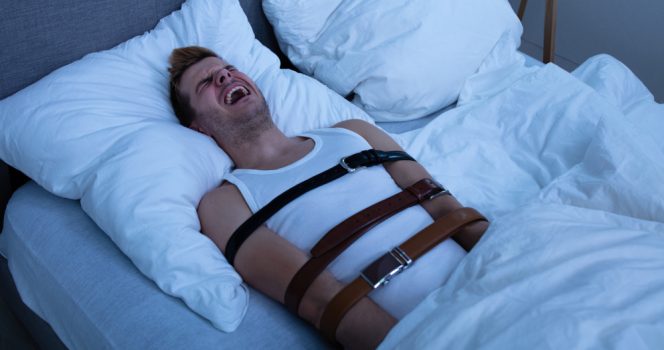
Imagine opening your eyes in the middle of the night and realizing you’re fully awake—but completely unable to move. You try to speak, call for help, or even lift a finger, yet nothing happens. For many people, this frightening experience is known as sleep paralysis.
Although it can feel like something out of a horror movie, sleep paralysis is actually a common sleep phenomenon that affects millions of people around the world. Despite how alarming it can be, experts say it is usually harmless and temporary.
More Common Than Most People Think
Many people are unfamiliar with the term “sleep paralysis,” yet researchers estimate that nearly one-third of the population will experience it at least once during their lifetime.
Sleep paralysis typically occurs during the transition between sleeping and waking. A person becomes conscious and aware of their surroundings, but their body remains temporarily unable to move or speak. The experience may last only a few seconds, though some episodes can continue for several minutes.
Because the sensation is so unusual and unsettling, many people never forget their first encounter with it.
What Happens During Sleep Paralysis?
According to sleep specialists, sleep paralysis occurs when the brain and body become briefly out of sync during the sleep cycle.
Normally, while you’re in REM (Rapid Eye Movement) sleep—the stage associated with vivid dreaming—your body naturally enters a temporary state of muscle paralysis. This protective mechanism prevents you from physically acting out your dreams.
Sleep paralysis happens when your mind wakes up before this protective paralysis has worn off. As a result, you’re mentally alert but unable to control your body’s movements.
This brief disconnect between the brain and muscles can create an experience that feels incredibly real and often terrifying.
Common Symptoms
People who experience sleep paralysis often report a range of symptoms, including:
- Inability to move or speak
- Feeling awake but trapped inside the body
- A sensation of pressure on the chest
- Difficulty taking deep breaths
- Intense fear or panic
- Out-of-body experiences
- Vivid visual, auditory, or sensory hallucinations
Episodes vary from person to person. Some may last only a few moments, while others can continue for up to 20 minutes before normal movement returns.
Why Does It Happen?
Researchers have identified several factors that appear to increase the likelihood of sleep paralysis.
Common triggers include:
- High levels of stress
- Anxiety and emotional strain
- Sleep deprivation
- Irregular sleep schedules
- Physical exhaustion
- Frequent disruptions to normal sleep patterns
Sleep experts note that individuals who consistently lack quality sleep or experience elevated stress levels tend to be more vulnerable to these episodes.
While anyone can experience sleep paralysis, maintaining healthy sleep habits can significantly reduce the chances of it occurring.
The Hallucinations That Make It So Frightening
One of the most disturbing aspects of sleep paralysis is the possibility of hallucinations.
Many people describe sensing an unknown presence nearby. Others report seeing shadowy figures, hearing unexplained sounds, or feeling as though someone is standing beside their bed. Some even believe a person or creature is sitting on their chest, creating a feeling of pressure and fear.
These experiences can seem incredibly realistic because parts of the brain associated with dreaming may still be active while the person is awake.
The result is a strange overlap between dream imagery and conscious awareness.
A Phenomenon With a Long History
Sleep paralysis is far from a modern discovery. Historical records show that people have been trying to explain it for centuries.
Ancient medical writings from Persia referenced experiences resembling sleep paralysis as early as the 10th century. Later, a Dutch physician documented one of the earliest detailed medical descriptions in the 1600s.
Long before science provided explanations, cultures around the world developed their own interpretations.
In Japan, the experience became associated with a supernatural force that immobilizes people during sleep. Traditional Chinese folklore often described it as a form of “ghost pressure.” In several African traditions, it was sometimes explained as a spirit or demon sitting on a sleeper’s chest.
These cultural beliefs emerged because the experience feels so vivid and convincing that many people struggle to find a logical explanation in the moment.
Real-Life Experiences
Numerous public figures have shared their encounters with sleep paralysis.
Many describe feeling an overwhelming sense of dread, strange vibrations throughout the body, or the sensation of being pulled toward an unknown force. Others recall seeing figures standing nearby or feeling convinced that someone was present in the room.
Although the details vary, the emotional impact is often similar: fear, confusion, and a lingering sense of unease long after the episode ends.
How to Reduce the Risk
While sleep paralysis cannot always be prevented, experts recommend several lifestyle habits that may help lower the chances of experiencing it:
Stick to a Consistent Sleep Schedule
Going to bed and waking up at the same time each day helps regulate the body’s internal clock.
Manage Stress Levels
Relaxation techniques such as meditation, deep breathing, and regular exercise can help reduce stress-related sleep disruptions.
Limit Screen Time Before Bed
The blue light emitted by phones, tablets, and computers can interfere with healthy sleep patterns.
Create a Comfortable Sleep Environment
A quiet, dark, and relaxing bedroom can improve overall sleep quality and reduce nighttime disturbances.
What to Do During an Episode
If sleep paralysis occurs, try to remain calm and remind yourself that the episode will pass.
Rather than fighting against the sensation, focus on slow, controlled breathing. Some experts suggest concentrating on moving a small body part, such as a finger or toe. Once a little movement returns, full control of the body often follows shortly afterward.
Understanding Brings Reassurance
Sleep paralysis can be one of the most unsettling experiences a person encounters during sleep, but it is not dangerous. Although the inability to move and the vivid hallucinations can feel frightening, the condition is temporary and medically understood.
Learning what sleep paralysis is—and why it happens—can help replace fear with understanding. For those who experience it, knowing that the episode is harmless and will soon pass can provide significant peace of mind.
The more awareness people have about sleep paralysis, the easier it becomes to recognize it for what it truly is: a strange but natural part of the human sleep experience.