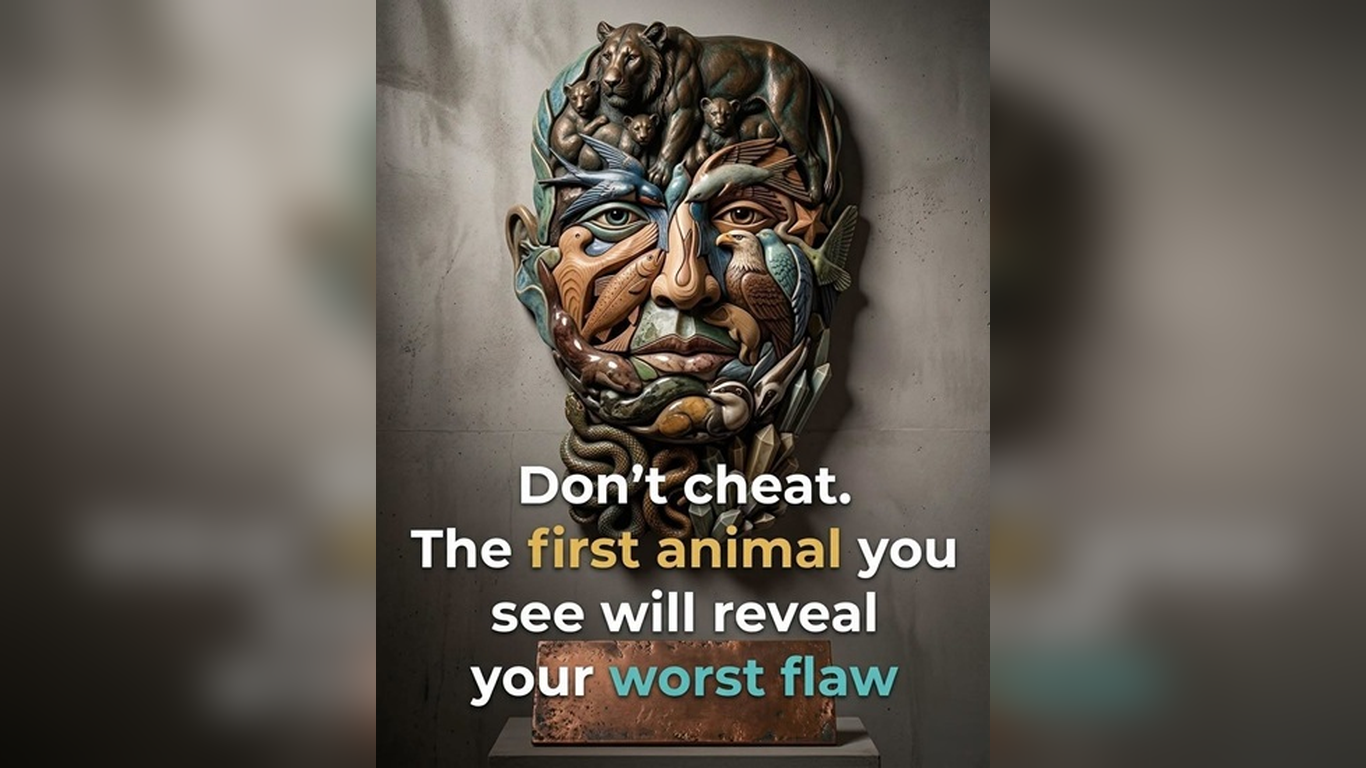
Have you ever shared one of those viral optical illusion images with a friend, only to discover that each of you noticed something entirely different first? It’s a surprisingly common experience, and it helps explain why “first animal you see” personality tests continue to dominate social media feeds. These simple visual challenges attract millions of participants because they are fun, quick, and often spark curiosity about how people think and perceive the world.
Most of these quizzes feature a single image containing multiple hidden figures, animals, or shapes. The challenge is straightforward: identify the first thing that catches your eye. Based on that choice, the quiz provides a personality interpretation that claims to reveal something about your character, habits, or mindset. While these results can be entertaining and occasionally thought-provoking, experts generally agree that such quizzes are not scientifically reliable measures of personality.
Their popularity, however, is rooted in something very real: the way our brains process information. Every moment, our minds are flooded with an enormous amount of visual data. To avoid becoming overwhelmed, the brain constantly sorts and prioritizes what deserves attention. This filtering process allows us to focus on certain details while unconsciously ignoring others. As a result, two people looking at the exact same image may immediately notice completely different elements.
Psychologists who study perception have long known that attention is influenced by a wide range of factors. Personal experiences, interests, emotions, expectations, and even a person’s mood at a particular moment can shape what stands out first. Someone who loves animals may instantly recognize animal figures hidden in an image, while another person may be drawn to patterns, colors, or background details. These differences do not necessarily reveal secret aspects of personality, but they do highlight the unique ways individuals interpret visual information.
Part of the appeal of these quizzes comes from a psychological phenomenon known as the Barnum Effect. This occurs when people accept broad, generalized descriptions as if they were highly personal and specific. Statements such as “you care deeply about others but sometimes keep your feelings private” or “you can be confident in some situations yet uncertain in others” resonate with many people. Because these descriptions feel familiar, participants often believe the quiz has uncovered something meaningful about them, even though the same interpretation could apply to countless others.
Another reason these tests remain so popular is that people naturally enjoy learning about themselves. Human beings are curious by nature. We often seek insight into our strengths, weaknesses, motivations, and behaviors. Even when a quiz lacks scientific credibility, it can still encourage valuable self-reflection. In many cases, the real benefit comes not from the result itself but from the thoughts and conversations it inspires afterward.
The rise of social media has further fueled the popularity of visual personality challenges. They are easy to complete, easy to share, and easy to discuss. After receiving a result, many people immediately compare answers with friends, family members, or coworkers. These conversations can quickly become engaging as participants debate whether the descriptions are accurate and discuss how they see themselves. In some cases, the discussions even lead to deeper conversations about communication styles, personal growth, and relationships.
Many of these quizzes also draw on symbolic meanings that have been attached to animals for generations. Throughout history and across cultures, certain animals have been associated with particular traits or characteristics. Lions are often linked to courage, leadership, and confidence. Rabbits may represent sensitivity or careful thinking. Birds frequently symbolize freedom and independence. Snakes are commonly connected to transformation, wisdom, or mystery. Elephants are often viewed as symbols of intelligence, memory, and strength. While these associations are rooted in cultural traditions rather than scientific evidence, they add an extra layer of intrigue that makes the quizzes more engaging.
It is important to recognize the distinction between entertainment and legitimate psychological assessment. Professional personality tests are developed through years of research, testing, and validation. They use carefully designed methods to measure specific traits and behaviors. Viral image quizzes, on the other hand, are primarily created for amusement and social engagement. Although they can be enjoyable, they should not be considered accurate evaluations of someone’s personality.
That said, these quizzes are not without value. Sometimes a result can encourage a person to reflect on habits or behaviors they may want to change. For instance, if a description suggests a tendency toward impatience, it might prompt someone to pay closer attention to how they respond during stressful situations. Even if the interpretation itself lacks scientific backing, the self-awareness it encourages can still be beneficial.
The broader subject of visual perception remains one of psychology’s most fascinating fields. Researchers continue to explore how the brain interprets colors, shapes, patterns, and ambiguous images. Their findings consistently show that perception is far more active than many people realize. Rather than simply recording information like a camera, the brain constantly organizes, interprets, and constructs its own understanding of reality using both current input and past experiences.
This helps explain why two people can witness the same event and remember it differently. Each person’s brain may focus on different details, assign different meanings, and create a unique interpretation of what occurred. These variations are not mistakes—they are a natural part of how human perception works.
In today’s digital world, where attention spans are short and content spreads rapidly, visual personality tests are perfectly suited for social media. They require only a few seconds of engagement while offering the promise of self-discovery. This combination of curiosity, entertainment, and personal insight makes them especially appealing to a broad audience.
Psychologists generally recommend approaching these quizzes with an open but critical mindset. Rather than treating the results as definitive truths, it is more useful to see them as conversation starters. They can encourage people to think about their habits, goals, and behaviors without claiming to provide absolute answers about who they are.
Ultimately, the enduring popularity of “first animal seen” challenges reveals something interesting about human nature. People genuinely want to understand themselves better. They enjoy exploring their thoughts, emotions, and motivations, even through simple and lighthearted activities. A single image may not reveal the secrets of someone’s personality, but it can inspire reflection and discussion.
Perhaps the most meaningful takeaway from these viral puzzles has little to do with the animal spotted first. Instead, they remind us that perception is deeply personal, attention is selective, and self-discovery is a lifelong journey. No image can fully define a person, yet the questions these challenges raise can encourage us to think more carefully about how we view ourselves and the world around us.
In the end, visual personality quizzes are best appreciated for what they are: an entertaining blend of curiosity and self-exploration. Whether you first notice a lion, a bird, a rabbit, or another hidden figure entirely, the true value lies in the conversations they spark, the reflections they inspire, and the reminder that every individual experiences the world through a unique perspective shaped by their own experiences and perceptions.







