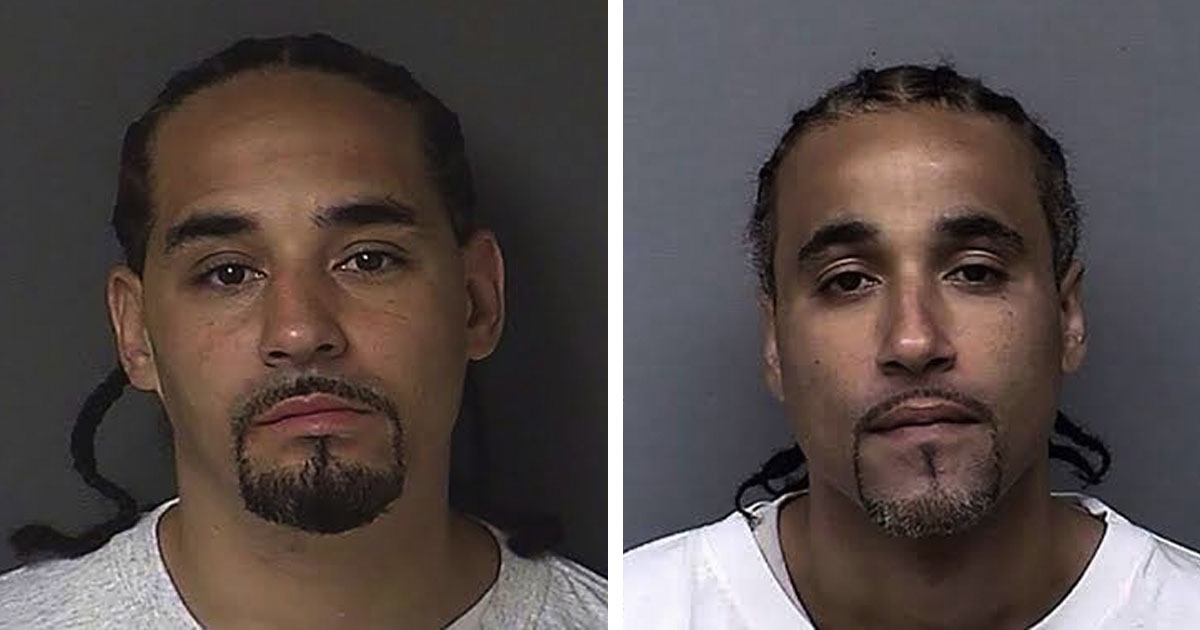
A Kansas man who spent 17 years behind bars for a robbery he consistently maintained he did not commit has finally been exonerated and awarded $1.1 million in compensation after a remarkable case of mistaken identity came to light.
Richard Anthony Jones was convicted in 1999, even though he had a strong alibi. Several witnesses testified that he was attending his girlfriend’s birthday celebration when the robbery occurred. Despite their statements, a jury found him guilty, and he was sentenced to 19 years in prison.
A shocking case of mistaken identity
For years, Jones refused to give up his fight for justice. His persistence eventually paid off when attorneys working with innocence advocacy groups uncovered a man named Ricky Lee Amos, whose appearance was so remarkably similar to Jones that distinguishing between the two proved extremely difficult.
As investigators revisited the case, people involved in the original investigation reportedly struggled to tell the men apart when shown photographs side by side. The discovery raised serious questions about the eyewitness testimony that had helped secure Jones’ conviction years earlier.
Further investigation revealed that Amos had ties to the neighborhood where the robbery occurred and matched several details witnesses had originally described. When those same witnesses were later presented with photos of both men, they were no longer able to confidently identify Jones as the robber.
The new evidence ultimately led to Jones’ release in June 2017 after spending nearly two decades in prison for a crime he did not commit.
Compensation after years of lost freedom
Following his release, Jones applied for compensation under a Kansas law that provides financial relief for individuals who have been wrongfully convicted.
The state awarded him $1.1 million and issued an official certificate of innocence, formally clearing his name. His criminal record related to the case was erased, and he also became eligible for counseling services and healthcare benefits intended to help him rebuild his life after years of wrongful imprisonment.
Kansas Attorney General Derek Schmidt confirmed that Jones qualified for compensation under the state’s wrongful-conviction law.
Choosing forgiveness over anger
Although the wrongful conviction cost Jones 17 years of freedom, he reportedly did not blame Ricky Lee Amos for what happened. According to his attorney, Alice Craig, Jones understood that Amos was not responsible for the failures that led to his imprisonment.
Craig explained that her client never held any personal resentment toward Amos, emphasizing that the tragedy resulted from mistakes within the justice system rather than from Amos himself.
Amos was never charged in connection with the robbery. By the time Jones was officially cleared, the legal deadline for prosecuting the crime had already passed, making any future criminal case impossible.
Jones’ story has since become one of the most striking examples of the dangers of mistaken eyewitness identification and the importance of reviewing wrongful convictions. It also highlights how persistence, legal advocacy, and new evidence can eventually correct even the most devastating miscarriages of justice—though they can never restore the years that were lost.







