Fashion has evolved dramatically over the years, with many traditional distinctions between men’s and women’s clothing becoming less rigid. Yet one small design feature has quietly remained in place for centuries—and most people rarely notice it.
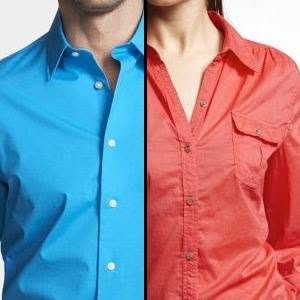
Take a look at the buttons on a typical dress shirt or blouse. You may be surprised to discover that men’s and women’s garments are usually fastened on opposite sides.
In most cases, men’s shirts have buttons on the right side, while women’s clothing places them on the left.
It seems like an insignificant detail, but historians believe this unusual difference may be linked to centuries-old social customs, class divisions, and even gender inequality.
A Fashion Mystery Hidden in Plain Sight

The exact reason for opposite button placement remains unclear, and no single explanation has been universally accepted. However, several historical theories have emerged over the years.
One of the most popular explanations dates back to medieval Europe, when buttons were considered a luxury item rather than an everyday clothing feature.
Because buttons were expensive and often reserved for the wealthy, many upper-class women relied on servants to help them dress. Since most people are right-handed, placing buttons on the left side of a woman’s garment would have made fastening them easier for a maid standing opposite her employer.
Fashion experts have pointed out that clothing design was often influenced by practicality, particularly among the upper classes, where dressing could be a lengthy and elaborate process.
By contrast, men generally dressed themselves. For a right-handed person, buttons placed on the right side would have felt more natural and convenient.
A Connection to Military History?
Another widely discussed theory centers on warfare and military traditions.
Historically, many men carried swords, pistols, or other weapons. Clothing was often designed to allow quick access to those items when needed.
Fashion historians suggest that right-side button placement may have made it easier for right-handed men to open coats or jackets while keeping their dominant hand available for drawing a weapon or defending themselves.
Throughout history, military influences have shaped countless aspects of men’s fashion, from jacket cuts to decorative buttons and structured tailoring. Some experts believe button placement may simply be another example of that influence.
Women’s clothing, meanwhile, was generally designed with different priorities and was not expected to accommodate battlefield practicality.
A Way to Differentiate Men’s and Women’s Clothing
Another possible explanation emerged during the late 19th century, when women’s fashion began borrowing elements traditionally associated with menswear.
Tailored jackets, structured silhouettes, and other masculine-inspired styles became increasingly fashionable among women.
Some historians believe that maintaining opposite button placement may have served as a visual distinction between men’s and women’s garments at a time when gender expectations were strictly enforced.
In many places, social rules regarding how men and women dressed were taken seriously, and subtle design differences may have helped reinforce those boundaries.
The Role of Gender Expectations
Not everyone views the button difference as a harmless historical curiosity.
Some scholars have argued that the tradition reflects outdated beliefs about gender roles.
British writer and sexologist Havelock Ellis, writing in the late 19th century, suggested that women’s clothing was designed differently because society viewed women as less independent than men. According to his interpretation, women were often expected to rely on assistance for tasks such as dressing, while men were presumed to be self-sufficient.
Although those views are no longer widely accepted, the clothing convention they may have helped shape has largely survived.
The Internet’s Surprising Discovery
Despite existing for generations, many people only recently learned about the difference in button placement.
Social media users frequently express shock when they discover that men’s and women’s shirts are designed differently.
Many admit they wore button-up shirts for years without ever noticing the distinction. Others have pointed out that the same pattern often appears on jackets, coats, and even some zippered garments.
The revelation has sparked conversations online about whether the tradition still serves a purpose in modern fashion.
Are Brands Moving Away From It?
While some clothing companies have started embracing gender-neutral designs and questioning traditional fashion rules, most mainstream brands continue to follow the long-standing convention.
As a result, men’s shirts still typically button right over left, while women’s garments usually fasten left over right.
Whether the reason originated with servants, soldiers, social expectations, or a combination of all three, this small design detail remains one of fashion’s most enduring—and overlooked—traditions.
The next time you button a shirt, take a second look. You might notice a centuries-old piece of history stitched right into the fabric.







