
Most parents celebrate when their children lose their baby teeth. The tiny teeth are often tucked away in keepsake boxes, placed under pillows for the Tooth Fairy, or simply thrown away without a second thought.
But a growing number of researchers believe those little teeth may hold something far more valuable than childhood memories.
According to emerging scientific research, baby teeth contain stem cells that could one day play a role in treating serious illnesses, repairing damaged tissue, and advancing regenerative medicine.
While the science is still developing, some experts say these tiny teeth could become an important biological resource for the future.
A Story That Highlights the Power of Stem Cells
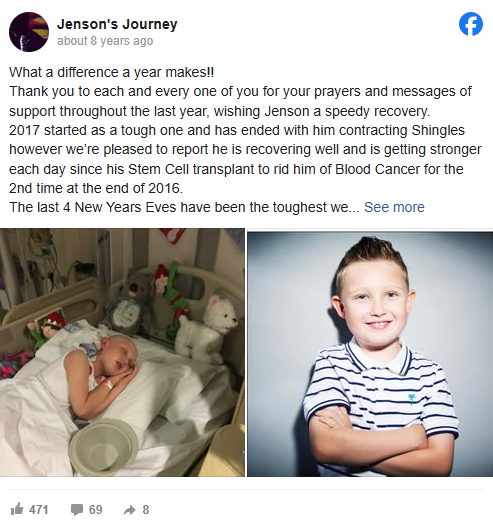
The potential of stem-cell therapies is perhaps best illustrated through stories like that of Jenson Wright.
When Jenson was just seven years old, he faced a devastating diagnosis. After previously battling cancer as a young child, he was diagnosed once again with an aggressive form of leukemia.
According to his family, the disease spread rapidly despite multiple rounds of treatment, leaving doctors and loved ones searching desperately for another option.
That option came in the form of a stem-cell transplant derived from donated umbilical cord blood.
Umbilical cord blood is rich in stem cells—specialized cells capable of developing into different types of tissue throughout the body.
Following the transplant, healthy donor cells began replacing the diseased cells in Jenson’s body. Over time, the treatment helped eliminate the cancer.
Years later, Jenson was declared cancer-free and has since gone on to live a healthy and active life.
His story demonstrates how powerful stem-cell therapies can be when suitable treatments are available.
What Makes Stem Cells So Important?
Stem cells are often described as the body’s master cells.
Unlike ordinary cells that serve a specific purpose, stem cells can develop into many different types of tissue and help repair damaged areas of the body.
Researchers continue studying how stem cells may be used to treat a wide range of conditions, including blood disorders, immune diseases, injuries, and certain degenerative illnesses.
Because of their unique regenerative abilities, scientists consider them one of the most promising areas of modern medicine.
The Hidden Potential Inside Baby Teeth
What many parents don’t realize is that baby teeth contain stem cells of their own.
Inside the soft tissue at the center of a tooth—known as dental pulp—are specialized stem cells called mesenchymal stem cells.
These cells have attracted growing interest because of their potential ability to help regenerate bone, nerve tissue, cartilage, and other structures within the body.
Researchers refer to stem cells collected from naturally shed baby teeth as SHEDs, which stands for Stem Cells from Human Exfoliated Deciduous Teeth.
Because baby teeth fall out naturally, collecting these cells is painless and non-invasive compared to other stem-cell harvesting methods.
A New Form of Biological Storage
The growing interest in dental stem cells has led to the development of specialized storage facilities.
Rather than discarding a lost tooth, some parents now choose to send it to a stem-cell bank where the pulp tissue is preserved under carefully controlled conditions.
The idea is straightforward: if future medical treatments using dental stem cells become widely available, those preserved cells could potentially be used by the individual later in life.
Since the cells originate from the person receiving treatment, the risk of immune rejection would be significantly reduced.
For many families, the concept is similar to storing umbilical cord blood as a form of biological insurance.
Is It Worth the Cost?
While the concept sounds promising, experts emphasize that much of the technology remains experimental.
Although laboratory research has produced encouraging results, most dental stem-cell applications are still being studied and have not yet become routine medical treatments.
As a result, some healthcare professionals caution parents against viewing tooth banking as a guaranteed medical solution.
Private storage services typically charge collection fees along with annual or long-term preservation costs, which can become expensive over time.
For some families, the potential future benefits justify the investment. Others may prefer to wait until more therapies become clinically available before making a decision.
Current Reality Versus Future Possibilities
Unlike cord blood stem-cell transplants—which are already used to treat certain cancers and blood disorders—many proposed uses for dental stem cells remain in the research phase.
Scientists are investigating whether these cells could eventually help repair nerve damage, regenerate tissue, improve healing after injuries, or even contribute to treatments for chronic diseases.
The possibilities are exciting, but experts agree that more clinical studies are needed before many of these applications become standard medical practice.
Looking Ahead
Medical science continues to advance at a remarkable pace, and stem-cell research remains one of the most rapidly evolving fields.
While no one can predict exactly what treatments will exist decades from now, researchers believe the stem cells found inside baby teeth may one day play a significant role in regenerative medicine.
For now, parents are left with an intriguing question: should they save a child’s baby teeth in hopes that future medical breakthroughs will unlock their full potential?
There is no universal answer.
What is clear, however, is that something once considered little more than a childhood keepsake may hold surprising scientific value—and could become part of the next generation of medical innovation.







