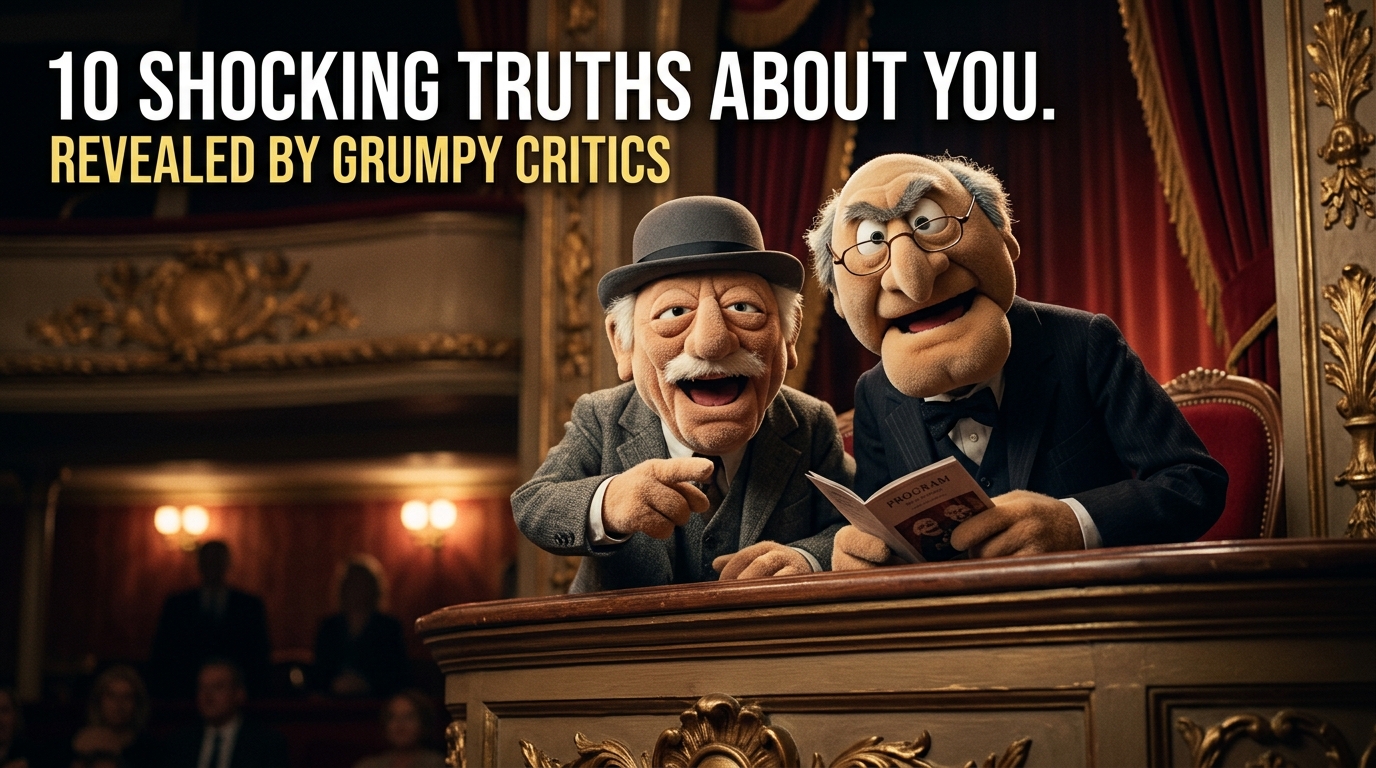
For decades, audiences have laughed at the sharp-tongued commentary of Statler and Waldorf, the two elderly balcony critics from The Muppet Show. While they were often portrayed as grumpy spectators who seemed to dislike nearly everything they watched, their humor resonated with viewers in a surprisingly meaningful way.
On the surface, the duo existed mainly to deliver witty one-liners and sarcastic observations. Yet beneath the jokes lies something deeper. Their exchanges reflect recognizable aspects of human behavior, social interaction, and psychology. In many ways, their humor serves as a mirror, revealing truths about how people think, communicate, judge situations, and connect with others.
The enduring popularity of Statler and Waldorf isn’t simply due to clever writing. Their comedy works because it taps into universal human experiences that remain relevant across generations.
Here are ten fascinating lessons about human nature that can be uncovered through the humor of these iconic characters.
1. People Often Bond Through Shared Complaints
One of the most noticeable aspects of Statler and Waldorf’s relationship is that they constantly agree on what they dislike.
While most friendships are associated with shared interests and positive experiences, psychology suggests that people can also form strong social bonds through mutual frustrations. Complaining about a common annoyance can create a sense of connection and belonging.
The two critics spend much of their time criticizing performances, but their shared perspective strengthens their friendship. Their interactions highlight how humans often use humor and shared grievances to reinforce social ties.
In everyday life, this can be seen when coworkers joke about a difficult project or friends laugh together about travel mishaps. Shared criticism, when used playfully, can become a surprisingly powerful social glue.
2. Humor Helps People Process Disappointment
Statler and Waldorf rarely seem impressed by what unfolds on stage. Rather than expressing frustration directly, they turn their disappointment into comedy.
This reflects an important aspect of human behavior.
People frequently use humor as a coping mechanism when situations fail to meet expectations. A joke can reduce tension, soften disappointment, and help individuals maintain perspective.
Whether it’s laughing about a missed opportunity, an embarrassing mistake, or an unexpected setback, humor often serves as an emotional buffer.
The duo demonstrates how wit can transform frustration into entertainment, making negative experiences easier to handle.
3. Criticism Is Part of Human Nature
Humans are naturally evaluative creatures.
People constantly assess products, performances, ideas, and experiences. Statler and Waldorf embody this tendency in exaggerated form. They analyze everything they see and rarely hesitate to offer an opinion.
Their behavior reminds us that criticism is not inherently negative. Thoughtful evaluation can help people learn, improve, and make informed decisions.
However, the characters also illustrate how excessive criticism can become a habit. When people focus exclusively on flaws, they may miss opportunities to appreciate what is working well.
Their humor encourages viewers to recognize this tendency within themselves.
4. Perspective Shapes Reality
One reason Statler and Waldorf find humor where others see entertainment is that they view events through a unique lens.
Human beings rarely experience reality in exactly the same way. Personal history, expectations, beliefs, and attitudes influence how people interpret situations.
A performance that delights one audience member may bore another. An opportunity that excites one person may feel intimidating to someone else.
The duo’s reactions remind us that perspective often determines how we experience the world. What seems obvious from one viewpoint may appear entirely different from another.
Understanding this principle can improve communication, empathy, and relationships.
5. People Enjoy Feeling Clever
Many of Statler and Waldorf’s jokes rely on wordplay, irony, and sharp observations.
Their humor often works because audiences enjoy recognizing the cleverness behind the punchline. Psychologists have long noted that people derive satisfaction from solving mental puzzles and understanding subtle humor.
When viewers understand a joke, they experience a small sense of accomplishment.
This explains why witty humor often remains memorable. It engages the audience intellectually rather than relying solely on surprise or slapstick comedy.
The popularity of the pair demonstrates how much people appreciate humor that rewards attention and quick thinking.
6. Friendship Thrives on Consistent Interaction
Despite their constant criticism, Statler and Waldorf share a remarkably stable friendship.
They appear together in nearly every scene, exchange jokes effortlessly, and seem comfortable challenging one another’s opinions.
Their relationship reflects an important truth about human connection: strong friendships often develop through regular interaction rather than extraordinary experiences.
Many lasting relationships are built on simple routines—daily conversations, shared hobbies, recurring traditions, or familiar exchanges.
The duo’s balcony conversations illustrate how consistency helps create trust, familiarity, and companionship over time.
7. People Are Drawn to Honest Opinions
One reason audiences enjoy Statler and Waldorf is their willingness to say exactly what they think.
While their comments are exaggerated for comedic effect, they represent a trait many people admire: honesty.
In social settings, individuals often soften opinions to avoid conflict or maintain harmony. Yet there is also a fascination with people who speak candidly.
The appeal of reviewers, commentators, and critics often comes from their perceived authenticity.
Statler and Waldorf capture this dynamic perfectly. Their blunt observations may not always be kind, but they are rarely filtered.
This honesty creates humor while also making the characters feel genuine.
8. Laughter Creates Emotional Distance
Many of the situations criticized by the duo involve minor failures, awkward moments, or mistakes.
Instead of responding with frustration, they respond with jokes.
This reflects a broader psychological phenomenon. Humor creates emotional distance from problems, allowing people to view situations less seriously.
By laughing, individuals can temporarily step back from stress and gain perspective.
This ability helps explain why comedy remains valuable during difficult times. Even when circumstances are challenging, humor can provide relief and resilience.
Statler and Waldorf demonstrate how laughter can transform irritation into entertainment.
9. Humans Love Observing Human Behavior
The two balcony critics spend most of their time watching others.
Interestingly, audiences enjoy watching them do exactly that.
This layered form of observation reflects a fundamental human curiosity about behavior. People naturally enjoy analyzing how others act, react, succeed, and fail.
From reality television to social media to live performances, much of modern entertainment revolves around observing people.
Statler and Waldorf act as audience members within the audience, highlighting our fascination with human behavior itself.
Their role reminds us that people are often just as interested in reactions as they are in events.
10. Even Cynicism Can Hide Optimism
Perhaps the most surprising lesson comes from a simple question: If Statler and Waldorf disliked every performance, why did they keep showing up?
The answer reveals something important about human nature.
Despite their constant complaints, they never stop attending the show. Deep down, their continued presence suggests hope. They keep returning because they expect that something entertaining, surprising, or worthwhile might eventually happen.
This mirrors how many people approach life.
Individuals may complain about work, politics, sports, technology, or daily frustrations, yet they continue participating. Their involvement reflects an underlying belief that improvement is possible.
In this sense, even cynicism can contain a hidden form of optimism.
The willingness to stay engaged often reveals faith in the future, even when accompanied by criticism.
Why Their Humor Still Resonates Today
Comedy changes over time, yet Statler and Waldorf remain remarkably relevant.
Their jokes continue to connect with audiences because they are rooted in timeless aspects of human behavior. The characters reflect habits and attitudes that people recognize in themselves, their friends, family members, coworkers, and communities.
Whether it’s bonding through shared complaints, using humor to navigate disappointment, or finding comfort in honest conversation, the duo highlights experiences that transcend generations.
Their humor works because it is both entertaining and relatable.
Viewers laugh not only at the jokes but also at the truth hidden within them.
The Psychology Behind Enduring Comedy
Many comedic characters fade from public memory because their humor depends heavily on trends, cultural references, or current events.
Statler and Waldorf are different.
Their comedy focuses on universal human tendencies that remain consistent regardless of era. People still seek connection, express opinions, evaluate experiences, and use humor to manage life’s challenges.
Because these behaviors are timeless, the characters continue to feel familiar decades after their creation.
The best comedy often succeeds by revealing something truthful about the human experience. Statler and Waldorf accomplish this with remarkable efficiency, delivering meaningful observations disguised as simple jokes.
Final Thoughts
At first glance, Statler and Waldorf appear to be little more than two grumpy spectators offering sarcastic commentary from a balcony. Yet their humor reveals far more than clever punchlines.
Through their friendship, criticism, observations, and relentless wit, they provide insight into how people connect, communicate, cope with disappointment, and interpret the world around them.
The ten lessons explored here demonstrate why these beloved characters remain memorable long after their original appearances. Their jokes resonate because they reflect genuine aspects of human nature that audiences continue to recognize in everyday life.
Perhaps that’s the secret behind their enduring appeal. While they spent years laughing at everyone else, they were quietly teaching us something about ourselves all along.







