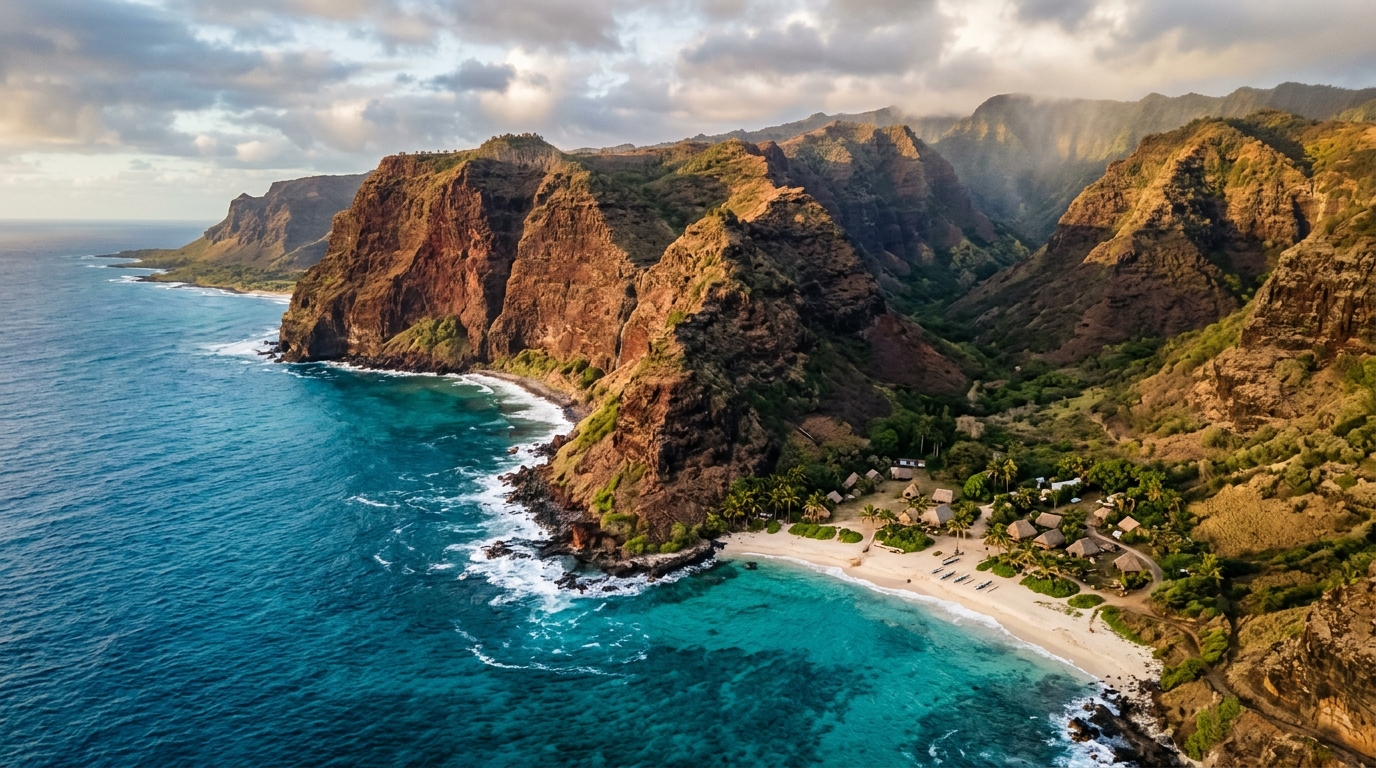
Few places in the world inspire as much curiosity as Niʻihau, a small island located just off the coast of Kauaʻi in the Hawaiian archipelago. Often called the “Forbidden Island,” Niʻihau has remained largely closed to outsiders for more than a century, preserving a way of life that has largely disappeared elsewhere in modern Hawaii.
With its limited access, unique cultural traditions, and fascinating history, Niʻihau has become one of the most mysterious inhabited islands in the United States. While stories and myths often surround the island, the reality is just as intriguing.
Here are 10 fascinating facts about Niʻihau, Hawaii’s mysterious Forbidden Island.
1. It Is Privately Owned
Unlike the other major Hawaiian Islands, Niʻihau is privately owned.
In 1864, King Kamehameha V sold the island to Elizabeth Sinclair and her family. More than 150 years later, descendants of the Sinclair-Robinson family continue to own and manage the island.
This private ownership has played a major role in preserving Niʻihau’s unique character and limited public access.
2. Visitors Are Rarely Allowed
Niʻihau earned its nickname, the “Forbidden Island,” because access is highly restricted.
Most people cannot simply book a ferry or flight to visit. Entry is generally limited to island residents, invited guests, family members, and individuals involved in specific work or cultural activities.
This isolation has helped protect the island from large-scale tourism and development.
3. Hawaiian Is Still the Primary Language
One of the most remarkable aspects of Niʻihau is its role in preserving the Hawaiian language.
While English dominates most of Hawaii today, many residents of Niʻihau continue to speak Hawaiian as their primary language in daily life. Linguists and cultural historians often regard the island as one of the most important strongholds of traditional Hawaiian language and culture.
4. The Population Is Small
Niʻihau is home to a relatively small community.
The island’s population fluctuates, but it is generally estimated to be only a few hundred residents. Most families have deep ancestral connections to the island that span multiple generations.
The small population contributes to the close-knit nature of the community.
5. Modern Development Is Extremely Limited
Unlike Hawaii’s major tourist destinations, Niʻihau has seen very little modern development.
There are no large resorts, crowded beaches, shopping districts, or major highways. The island’s rural environment offers a glimpse into a slower-paced lifestyle that contrasts sharply with many modern vacation destinations.
6. It Covers More Than 69 Square Miles
Although often described as small, Niʻihau is actually the seventh-largest inhabited island in Hawaii.
Covering approximately 69 square miles (179 square kilometers), the island features rugged landscapes, dry plains, coastal areas, and rolling hills. Its remote setting contributes to its reputation as one of Hawaii’s least-understood islands.
7. It Played a Role in World War II
Niʻihau briefly became part of an unusual chapter in American history during World War II.
Following the attack on Pearl Harbor in 1941, a Japanese pilot crash-landed on the island. The events that followed became known as the Niihau Incident and have since been studied by historians examining the early days of the Pacific War.
8. The Island Is Known for Its Unique Shell Lei
Niʻihau is famous for its beautiful handcrafted shell jewelry.
Known as Niʻihau shell lei, these intricate creations are made from tiny shells collected from the island’s beaches. Producing them requires exceptional skill, patience, and craftsmanship.
Because authentic Niʻihau shell lei are rare and labor-intensive to create, they are highly valued and sought after.
9. Wildlife Thrives in Its Isolation
The island’s relative isolation has benefited certain native species.
Niʻihau provides habitat for seabirds, endangered Hawaiian monk seals, and other wildlife. Reduced development and limited human activity have helped preserve portions of the island’s natural environment.
Conservation efforts continue to play an important role in protecting these ecosystems.
10. It Remains One of America’s Most Unique Communities
Perhaps the most fascinating aspect of Niʻihau is that it offers a rare example of cultural continuity in an increasingly connected world.
While modern technology and globalization have transformed many communities, Niʻihau has maintained traditions, language, and lifestyles that connect residents closely to their heritage. This unique balance between preservation and adaptation continues to attract interest from historians, anthropologists, and cultural researchers.
Why Niʻihau Captures the Public’s Imagination
Much of Niʻihau’s mystique comes from its limited accessibility. In an era when satellite images, social media, and tourism make most destinations instantly visible, Niʻihau remains largely private and relatively unknown.
This rarity has fueled countless stories about the island. Yet beyond the mystery lies something even more compelling: a living community dedicated to preserving cultural traditions that have endured for generations.
The island serves as a reminder that some places still maintain strong connections to their history and identity despite the rapid pace of modern change.
A Window Into Hawaii’s Past
Niʻihau offers valuable insights into traditional Hawaiian culture and language preservation. For researchers, it represents an important cultural treasure. For many Native Hawaiians, it stands as a symbol of resilience and continuity.
The island’s residents have helped safeguard customs, knowledge, and linguistic traditions that might otherwise have been lost over time.
Their commitment has made Niʻihau one of the most culturally significant places in the Hawaiian Islands.
Final Thoughts
Niʻihau, Hawaii’s mysterious Forbidden Island, is far more than a secluded piece of land in the Pacific Ocean. It is a place where history, culture, language, and tradition remain deeply woven into everyday life.
From its private ownership and limited access to its role in preserving the Hawaiian language and crafting world-famous shell lei, Niʻihau continues to fascinate people around the world. While most will never set foot on the island, its story offers a rare glimpse into a unique community that has chosen to protect its heritage in an increasingly connected age.
In many ways, Niʻihau’s greatest mystery is not why it remains isolated—but how successfully it has preserved a living link to Hawaii’s past.







