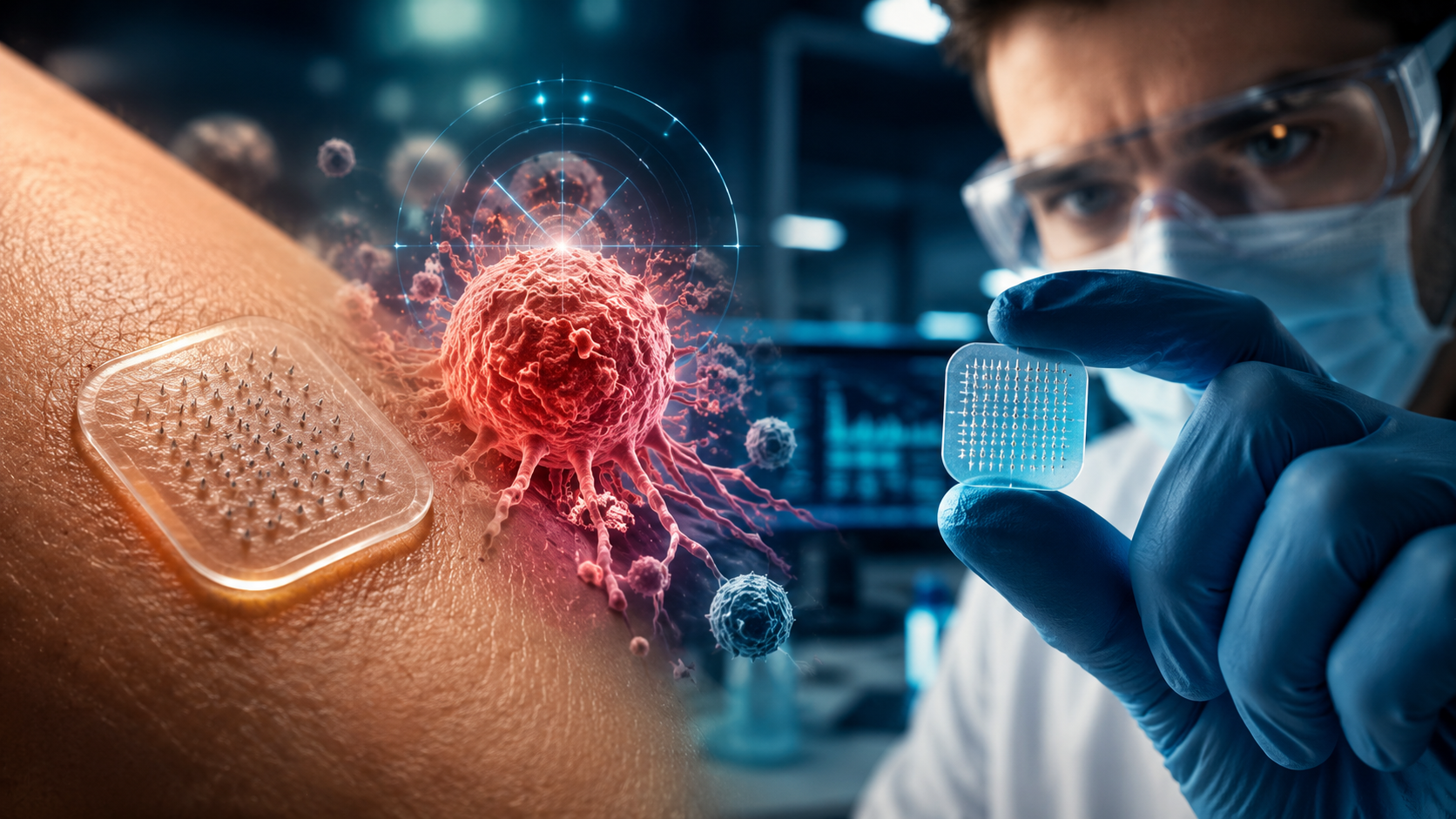
Medical science is constantly pushing the boundaries of what’s possible, and one of the most exciting areas of research involves technologies that are becoming smaller, smarter, and more precise. Among the latest innovations attracting attention is the development of tiny cancer-detection and treatment patches designed to improve how doctors identify, monitor, and potentially treat certain forms of cancer.
While these experimental technologies are still being studied and refined, they represent a major shift toward less invasive and more personalized healthcare. Instead of relying solely on traditional procedures, researchers are exploring ways to use miniature devices that can interact directly with the body in new and remarkable ways.
Here are 10 fascinating facts about the tiny cancer patch technology scientists are developing.
1. The Patch Is Smaller Than Most People Imagine
When people hear about a medical patch, they often picture something similar to a bandage.
Many cancer-related patches being studied by researchers are far smaller. Some are only a few centimeters wide, while others use microscopic components that are nearly invisible to the naked eye. Their compact size allows them to be placed precisely where they are needed.
Miniaturization is one of the biggest advantages of this emerging technology.
2. It Could Reduce the Need for Invasive Procedures
Traditional cancer diagnosis and monitoring often involve biopsies, blood tests, imaging scans, or surgical procedures.
Researchers are exploring whether specialized patches could gather important information directly from the skin or nearby tissues. In some cases, these devices may help reduce discomfort and lower the need for repeated invasive testing.
The goal is to make cancer care easier on patients while maintaining accuracy.
3. Some Patches Use Microscopic Needles
One of the most innovative designs involves microneedles.
These tiny structures are so small that they may penetrate only the outer layers of the skin. Unlike conventional needles, microneedles can often deliver medications or collect biological samples with minimal discomfort.
Scientists believe this approach could improve both diagnosis and treatment.
4. The Technology May Enable Earlier Detection
Early detection remains one of the most important factors in successful cancer treatment.
Researchers hope advanced patch systems will help identify biological markers associated with cancer before symptoms become severe. Detecting changes earlier could allow doctors to intervene sooner and improve patient outcomes.
This possibility is one reason the technology has generated so much excitement.
5. It Combines Medicine and Engineering
The tiny cancer patch is not simply a medical breakthrough—it’s also an engineering achievement.
Its development often requires collaboration among physicians, biologists, materials scientists, chemists, and engineers. These teams work together to create devices capable of safely interacting with the human body while collecting or delivering precise amounts of information and treatment.
The result is a blend of multiple scientific disciplines.
6. Some Designs Can Deliver Drugs Directly to Target Areas
Traditional treatments often circulate throughout the body, affecting both healthy and cancerous cells.
Certain patch technologies are being designed to release medication directly into specific tissues. By targeting treatment more precisely, scientists hope to improve effectiveness while potentially reducing unwanted side effects.
This approach aligns with the growing trend toward personalized medicine.
7. Researchers Are Exploring Smart Monitoring Features
Future versions of cancer patches may do more than deliver treatment.
Some prototypes are being developed with sensors capable of monitoring biological changes in real time. These systems could potentially track treatment responses, measure biomarkers, or provide doctors with continuous health data.
Such capabilities could transform how patients are monitored during treatment.
8. The Materials Used Are Surprisingly Advanced
Many experimental medical patches are made from highly specialized materials.
Researchers are investigating flexible polymers, biodegradable substances, and biocompatible compounds that safely interact with human tissues. Some materials can even dissolve naturally after completing their function, eliminating the need for removal.
These innovations help make the devices safer and more practical.
9. The Research Is Part of a Larger Trend in Precision Medicine
The tiny cancer patch reflects a broader movement in healthcare.
Rather than treating every patient the same way, modern medicine increasingly focuses on personalized approaches tailored to an individual’s biology, genetics, and medical history. Technologies like cancer patches fit naturally into this vision by enabling more targeted interventions.
The future of healthcare is becoming increasingly customized.
10. It Could Change Cancer Care in the Future
Although many cancer patch technologies remain under development, their potential is enormous.
Researchers envision a future where diagnosis, monitoring, and treatment become faster, less invasive, and more convenient. While more studies and clinical testing are needed, these devices could eventually become valuable tools in the fight against cancer.
If successful, they may represent one of the most significant advances in patient-centered cancer care.
Why This Technology Matters
Cancer remains one of the world’s most significant health challenges, driving scientists to search for better ways to detect and treat the disease. The development of tiny cancer patches highlights how innovation is reshaping medicine through smaller, smarter, and more precise technologies.
While these devices are still evolving, they offer a glimpse into a future where healthcare becomes less invasive, more personalized, and potentially more effective. For patients, doctors, and researchers alike, that possibility makes this tiny patch one of the most fascinating medical developments to watch in the years ahead.