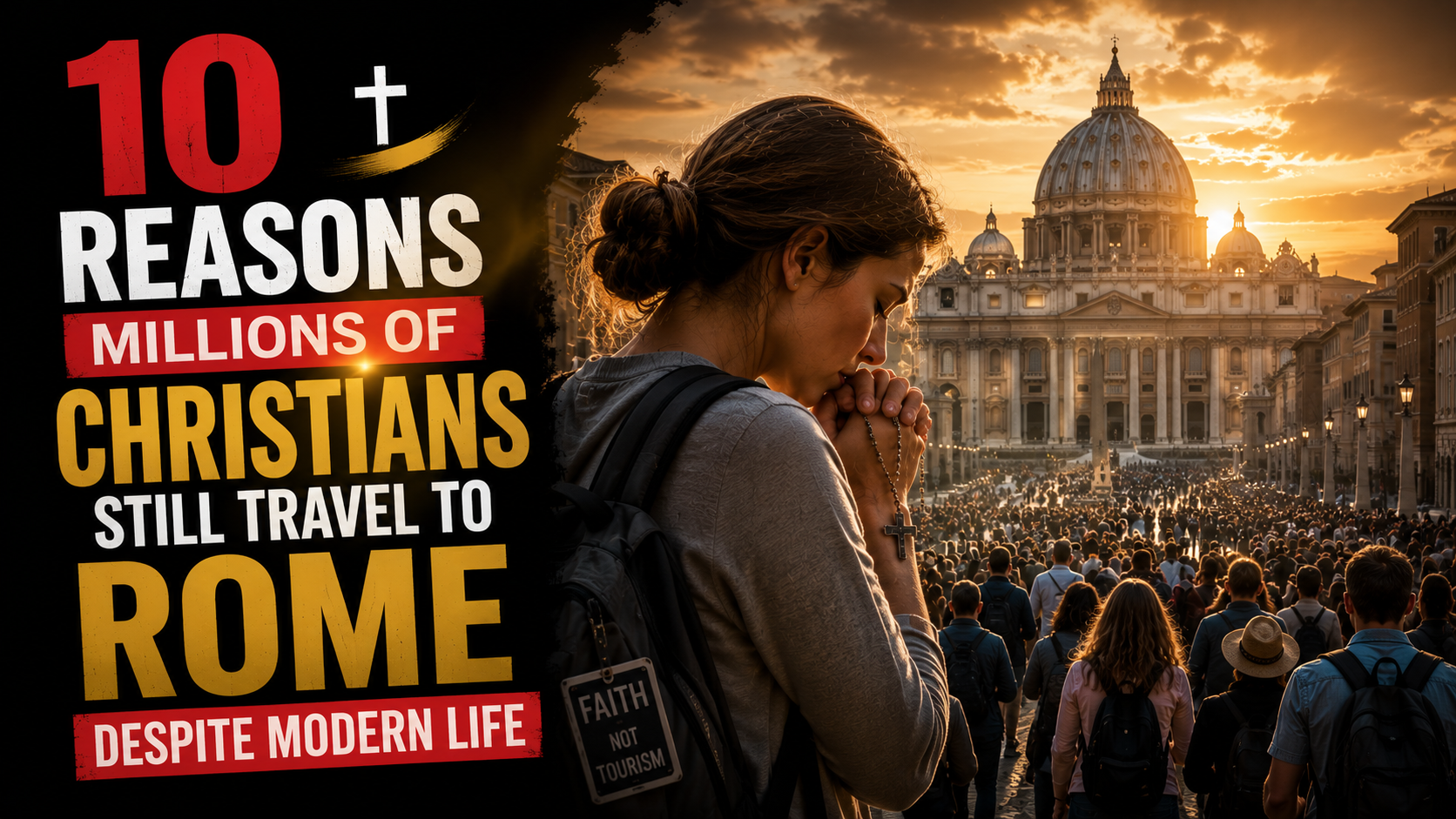
Rome is more than just a historic European capital. For millions of Christians around the world, it remains a deeply meaningful spiritual destination that connects faith, history, and tradition. Even in today’s fast-moving, highly digital world, people continue to make pilgrimages to the Eternal City in large numbers.
From ancient churches and sacred relics to the presence of the Vatican, Rome holds a unique place in Christian history. It is a city where faith is not only remembered but actively experienced through architecture, ritual, and community.
While modern travel has made the world more accessible than ever, Rome’s spiritual significance has not diminished. In fact, many argue that it has grown stronger as people search for meaning, connection, and reflection in an increasingly busy world.
Here are 10 key reasons why millions of Christians still travel to Rome despite modern life.
1. Rome Is the Heart of the Catholic Church
One of the most important reasons Christians travel to Rome is its role as the center of the Roman Catholic Church.
The Vatican, located within Rome, is the spiritual and administrative headquarters of Catholicism. It is home to the Pope and serves as the guiding institution for millions of believers worldwide.
For many pilgrims, visiting Rome is a way of connecting directly with the core of their faith tradition.
2. The Presence of St. Peter’s Basilica
St. Peter’s Basilica is one of the most iconic and sacred churches in Christianity.
Believed to be built over the burial site of St. Peter, one of Jesus’ apostles, it holds deep historical and spiritual significance.
Its grandeur, art, and architecture make it not only a place of worship but also a powerful symbol of Christian heritage.
3. A Direct Connection to Early Christianity
Rome offers a rare link to the earliest days of Christianity.
Ancient catacombs, early churches, and historical sites allow visitors to step back into a time when Christianity was still developing under the Roman Empire.
This connection to early believers gives many pilgrims a sense of continuity and historical grounding.
4. The Opportunity to See the Pope
For many travelers, one of the most meaningful experiences in Rome is the chance to see or hear the Pope.
Public audiences and blessings in St. Peter’s Square draw thousands of visitors from around the world.
These moments are often described as deeply emotional and spiritually uplifting for those who attend.
5. Rome’s Churches Are Rich in Art and History
Rome is home to some of the most beautiful churches in the world, many of which contain priceless works of art.
Frescoes, sculptures, and mosaics created by masters like Michelangelo and Raphael tell stories from the Bible in vivid detail.
These artistic masterpieces help bring Christian history and teachings to life in a powerful visual form.
6. Pilgrimage Is a Meaningful Spiritual Practice
For centuries, pilgrimage has been an important part of Christian life.
Traveling to sacred places is seen as a way to deepen faith, reflect on one’s life, and grow spiritually.
Rome remains one of the most significant pilgrimage destinations, offering opportunities for prayer, reflection, and renewal.
7. The City Blends Faith With History
Rome is unique in how it blends religious significance with ancient history.
Walking through the city, visitors encounter layers of civilization—from the Roman Empire to early Christianity and beyond.
This combination allows pilgrims to experience both spiritual and historical depth in one place.
8. Global Christian Unity Is Felt in Rome
One of the most striking aspects of visiting Rome is the diversity of pilgrims from around the world.
People from different cultures, languages, and backgrounds gather in shared spaces like St. Peter’s Square.
This creates a powerful sense of global Christian unity that transcends national and cultural boundaries.
9. Modern Travel Makes Pilgrimage More Accessible
Unlike in centuries past, traveling to Rome is now relatively easy for many people.
Affordable flights, organized tours, and improved infrastructure have made pilgrimage more accessible than ever before.
This accessibility allows more believers to experience the city’s spiritual significance firsthand.
10. Personal Faith Journeys Bring People Back
Beyond tradition and history, many Christians travel to Rome for deeply personal reasons.
Some seek healing, others give thanks, and many come in search of clarity or renewal.
These personal spiritual journeys make Rome more than a destination—it becomes a place of transformation and reflection.
Why Rome Still Matters in a Modern World
In an age defined by speed, technology, and constant change, Rome offers something different: permanence.
Its ancient churches, sacred traditions, and enduring spiritual leadership provide a sense of stability and continuity.
For many believers, this makes Rome not just relevant but essential to their faith experience.
Final Thoughts
Millions of Christians continue to travel to Rome because it represents more than history or architecture—it represents living faith.
From the Vatican to ancient catacombs, from global gatherings in St. Peter’s Square to personal moments of prayer, the city offers a deeply layered spiritual experience.
In a modern world filled with distractions, Rome remains a place where many people reconnect with meaning, tradition, and belief.
Ultimately, it is not just a destination—it is a journey into the heart of Christian heritage and personal faith.







