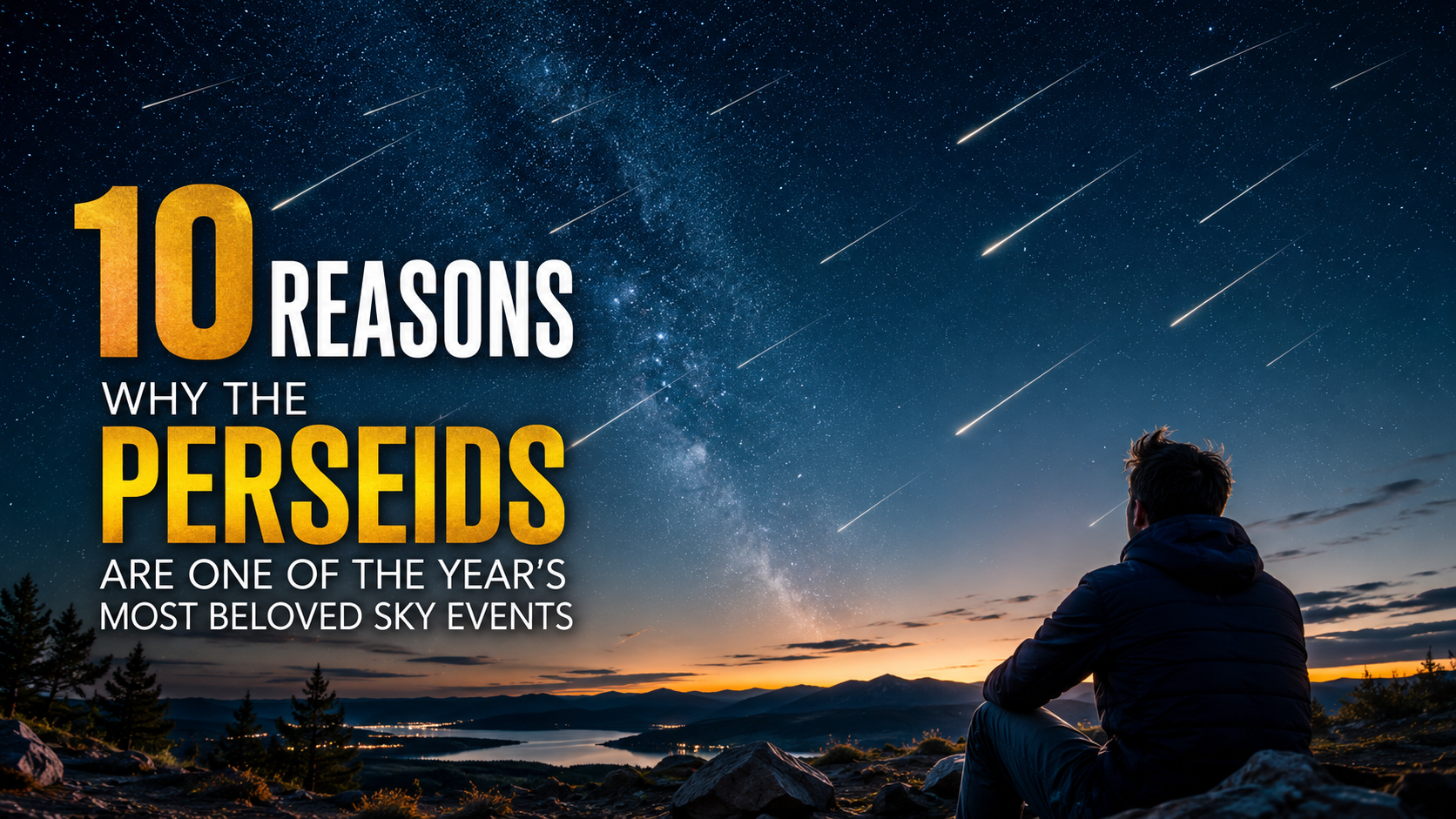
Every year, millions of people around the world step outside after dark and turn their eyes toward the heavens for one of nature’s most spectacular displays: the Perseid meteor shower. Unlike many astronomical events that require expensive equipment or advanced knowledge, the Perseids can be enjoyed by almost anyone willing to spend a little time under a clear night sky.
Known for their bright, fast-moving meteors and reliable annual appearance, the Perseids have become a favorite among astronomers, photographers, and casual stargazers alike. For a few magical nights each year, the sky seems to come alive as streaks of light flash overhead, reminding us of the beauty and wonder of the cosmos.
Here are ten reasons why the Perseids are one of the year’s most beloved sky events.
1. They Put on an Impressive Light Show
The Perseids are famous for producing a large number of meteors.
Under ideal dark-sky conditions, observers may see dozens of meteors per hour, and during peak activity, the rate can occasionally exceed 100 meteors in a single hour. The frequent bursts of light make the shower exciting because there is always the possibility that another meteor will appear at any moment.
This abundance is one of the main reasons the Perseids consistently attract skywatchers from around the world.
2. The Meteors Are Often Exceptionally Bright
Not all meteor showers are created equal.
The Perseids are known for producing particularly bright meteors, many of which leave glowing trails that linger in the sky for several seconds. Some are so brilliant that they become fireballs, shining brighter than the surrounding stars.
These dazzling streaks of light create unforgettable viewing experiences and often leave observers in awe.
3. You Don’t Need a Telescope to Enjoy Them
One of the greatest things about the Perseids is their accessibility.
Unlike many celestial events that require binoculars or telescopes, the Perseids are best viewed with the naked eye. In fact, using a telescope can limit your field of view and make it harder to spot meteors crossing different parts of the sky.
All you really need is a comfortable place to sit, a dark location, and a little patience.
4. The Shower Returns Every Year
Part of the Perseids’ popularity comes from their reliability.
The meteor shower appears every year, typically from mid-July through late August, with its peak occurring around the middle of August. This dependable schedule allows skywatchers to plan ahead and look forward to the event year after year.
Its annual return has made it a cherished tradition for countless families and astronomy enthusiasts.
5. The Meteors Come from an Ancient Comet
The Perseids originate from debris left behind by Comet Swift-Tuttle.
As the comet travels through the Solar System, it sheds tiny particles of rock and dust along its orbit. Each year, Earth passes through this stream of debris.
When these particles enter our atmosphere at tremendous speeds, they heat up and create the glowing streaks we recognize as meteors.
In a sense, every Perseid meteor is a tiny piece of a comet putting on a spectacular show high above our heads.
6. They Move at Incredible Speeds
Perseid meteors are extraordinarily fast.
They enter Earth’s atmosphere at speeds of about 59 kilometers per second, or roughly 133,000 miles per hour. At these tremendous velocities, even tiny particles no larger than grains of sand can create bright flashes of light.
Their rapid movement adds excitement to the experience because meteors can appear suddenly and vanish just as quickly.
7. The Event Connects People With the Night Sky
The Perseids have a unique ability to inspire curiosity about astronomy.
For many people, watching a meteor shower becomes their first meaningful experience with the night sky. Children and adults alike often find themselves asking questions about stars, planets, comets, and the universe itself.
The event serves as a reminder that remarkable cosmic phenomena can be enjoyed without traveling anywhere or purchasing special equipment.
8. They Are a Photographer’s Dream
Astrophotographers eagerly anticipate the Perseids each year.
The combination of dark summer skies, bright meteors, and scenic landscapes creates opportunities for stunning images. Capturing a meteor streaking across a star-filled sky can produce photographs that are both scientifically fascinating and artistically beautiful.
Many iconic night-sky photographs feature Perseid meteors illuminating mountains, forests, lakes, and deserts.
9. The Perseids Have Been Observed for Nearly Two Thousand Years
People have admired this meteor shower for centuries.
Historical records indicate that the Perseids have been observed for almost 2,000 years. Long before modern astronomy existed, people noticed the annual appearance of these celestial streaks and incorporated them into cultural traditions and stories.
The fact that generations separated by centuries have witnessed the same event creates a sense of connection across time.
10. They Inspire a Sense of Wonder and Perspective
Perhaps the greatest reason the Perseids are so beloved is the feeling they evoke.
Watching meteors race across the night sky can be a deeply moving experience. For a few moments, everyday concerns seem less important as we are reminded of the immense and beautiful universe beyond our planet.
Each meteor represents a tiny fragment of cosmic debris burning high in Earth’s atmosphere, yet together they create a display capable of inspiring millions of people every year.
Final Thoughts
The Perseid meteor shower is much more than an astronomical event. It is an annual celebration of the night sky that combines beauty, accessibility, and scientific wonder. Bright meteors, incredible speeds, ancient origins, and centuries of human fascination have made the Perseids one of the world’s most cherished celestial spectacles.
Whether you are a dedicated astronomer or someone simply looking up for the first time, the Perseids offer an opportunity to experience the universe in a personal and unforgettable way. Sometimes all it takes is a dark sky and a few falling stars to remind us how extraordinary our cosmos truly is.







