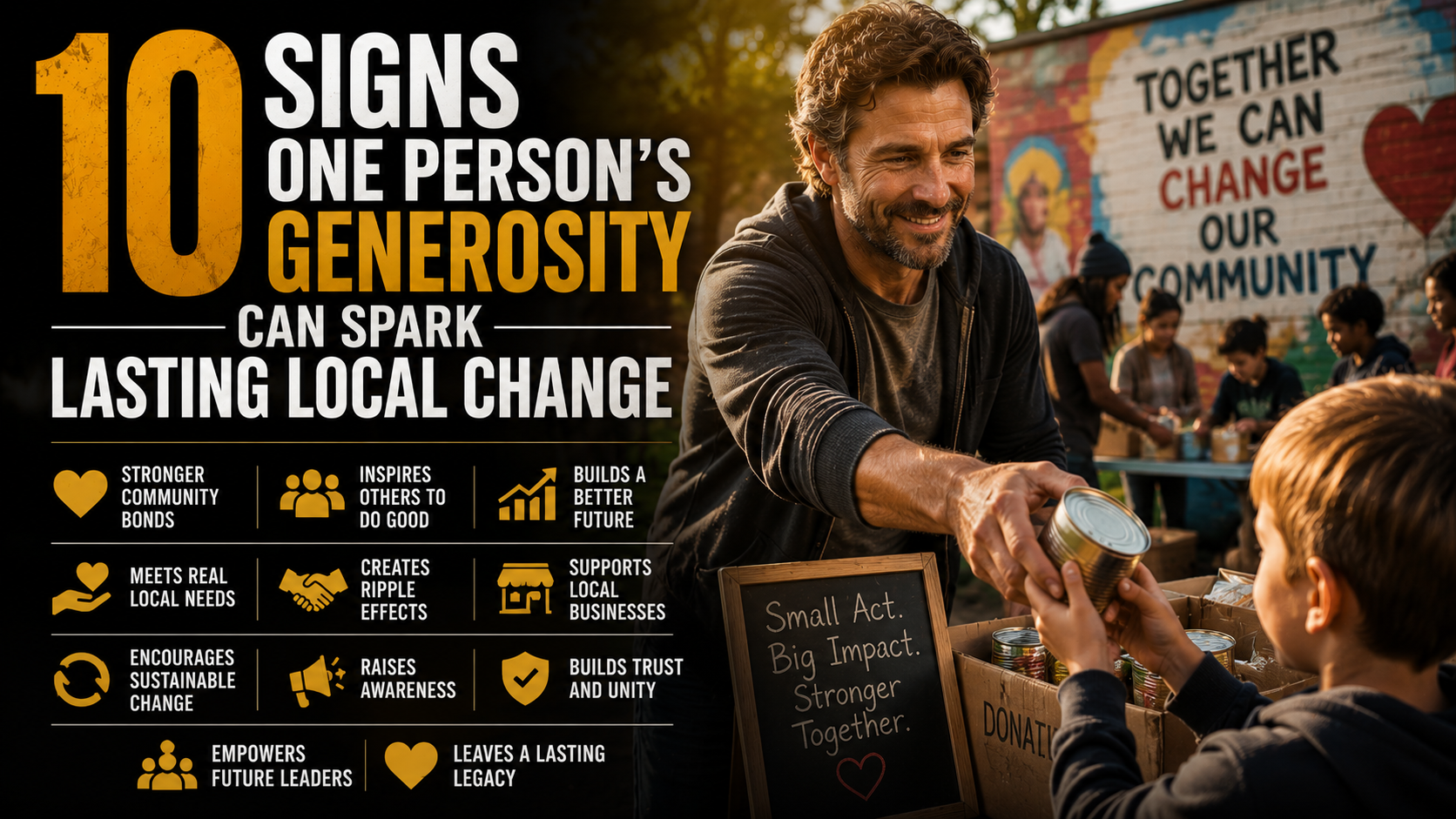
When people think about creating change in their community, they often imagine large organizations, major fundraising campaigns, or government programs. While those efforts certainly play an important role, history repeatedly shows that meaningful transformation often begins with a single individual who decides to help.
One generous act may seem small at first. A donation to a local shelter, mentoring a young person, supporting a struggling family, or funding a community project can appear modest compared to larger social initiatives. Yet many lasting improvements start exactly this way.
Generosity has a unique ability to spread. It inspires others, builds trust, strengthens relationships, and creates momentum that can continue long after the original contribution has been made. In many communities, one person’s willingness to step forward becomes the catalyst for broader participation and long-term progress.
The most remarkable part is that lasting change doesn’t always require extraordinary wealth or influence. Often, it begins with someone recognizing a need and choosing to act.
Here are 10 powerful signs that one person’s generosity can create a ripple effect that transforms an entire community.
1. Others Begin Following the Example
One of the clearest indicators that generosity is making an impact is when other people start getting involved.
Acts of kindness tend to be contagious. When community members witness someone contributing time, resources, or expertise to help others, they often feel inspired to do the same.
A single donation can encourage additional donors. One volunteer may motivate others to volunteer. A community improvement project may attract new supporters who were previously unaware of the need.
People naturally respond to positive examples.
What begins as one person’s effort can quickly evolve into a collective movement supported by dozens—or even hundreds—of participants.
This multiplier effect is one of generosity’s greatest strengths.
2. Community Problems Receive More Attention
Many local challenges remain unresolved simply because they lack visibility.
Generous individuals often shine a spotlight on issues that others may overlook. By supporting a cause, funding a project, or sharing information, they help raise awareness within the community.
Once attention increases, conversations begin.
Residents, local leaders, businesses, and organizations become more aware of the problem and may start exploring solutions.
Awareness alone doesn’t solve challenges, but it creates the foundation for action.
In many cases, meaningful progress starts when one person draws attention to an issue that deserves greater focus.
3. New Partnerships Begin to Form
Communities become stronger when people work together.
Generosity often serves as the spark that brings individuals, nonprofits, schools, businesses, and local leaders into collaboration.
For example, a donor might fund a youth program that eventually attracts volunteers, corporate sponsors, and educational partners. What began as one contribution evolves into a network of support.
These partnerships often produce results that no single organization could achieve alone.
When generosity encourages cooperation, communities gain access to more resources, expertise, and opportunities.
Strong partnerships frequently become one of the most enduring outcomes of a charitable effort.
4. Small Projects Grow Into Larger Initiatives
Many successful community programs begin with modest goals.
A neighborhood cleanup becomes a beautification campaign. A scholarship fund expands to support dozens of students. A local food drive grows into a year-round assistance program.
Generosity creates momentum.
Once people see positive results, they become more willing to invest additional time and resources.
Growth doesn’t happen overnight, but steady progress often transforms small projects into lasting institutions.
The ability of generosity to generate long-term expansion is one reason individual contributions can have such a profound impact.
5. People Feel More Connected to Their Community
Communities thrive when residents feel a sense of belonging.
Generous acts often strengthen these connections by reminding people that they are part of something larger than themselves.
Whether supporting a local park, helping a family in need, or contributing to a community center, acts of generosity reinforce the idea that neighbors care about one another.
This sense of connection encourages civic engagement and strengthens social bonds.
People who feel invested in their community are more likely to participate in local events, volunteer opportunities, and improvement efforts.
Over time, these stronger relationships contribute to a healthier and more resilient community culture.
6. Young People Become Inspired to Contribute
One of the most valuable effects of generosity is its influence on future generations.
Children and young adults pay close attention to the behavior of people around them.
When they witness individuals giving back to the community, they learn important lessons about responsibility, compassion, and civic involvement.
These experiences help shape values that can last a lifetime.
A teenager who sees a local leader supporting educational programs may become a volunteer. A student who benefits from community assistance may eventually choose to help others.
Generosity often creates a cycle in which today’s beneficiaries become tomorrow’s contributors.
That cycle can sustain positive change for decades.
7. Trust Within the Community Increases
Trust is essential for healthy communities.
When people see others acting selflessly, confidence in local institutions and relationships often improves.
Generosity demonstrates that community members are willing to invest in one another’s well-being.
This creates an environment where cooperation becomes easier and more effective.
People are generally more willing to collaborate when they believe others share their commitment to the common good.
As trust grows, communities become better equipped to address challenges and pursue collective goals.
In many cases, generosity helps build the social foundation necessary for long-term success.
8. Local Organizations Gain Strength
Nonprofits, community groups, schools, shelters, and neighborhood initiatives often operate with limited resources.
Support from a generous individual can provide critical assistance that helps these organizations expand their impact.
Financial contributions may fund new programs. Volunteer efforts may increase capacity. Public advocacy may attract additional supporters.
The result is stronger organizations capable of serving more people.
Healthy local institutions play an essential role in community development. They provide services, create opportunities, and address needs that might otherwise go unmet.
Generosity helps ensure these organizations can continue fulfilling their missions.
9. Positive Change Becomes Sustainable
Temporary improvements are valuable, but lasting change requires sustainability.
One sign that generosity is creating a meaningful impact is when projects continue generating benefits long after the initial contribution.
For example, a scholarship program may support students for years. A renovated community space may serve residents for generations. A mentorship initiative may influence countless lives through ongoing relationships.
Sustainable change occurs when generosity creates systems, opportunities, and resources that continue functioning independently.
This long-term perspective separates transformational contributions from short-lived interventions.
The most effective acts of generosity often leave behind structures that continue producing positive outcomes.
10. Hope Begins Replacing Cynicism
Perhaps the most powerful sign of all is a shift in community mindset.
Many communities face challenges that can lead to frustration, discouragement, or pessimism. When positive change occurs, people begin to see new possibilities.
Generosity sends a powerful message: improvement is possible.
When residents witness tangible results, confidence grows. People become more willing to believe that problems can be solved and that their efforts matter.
Hope is an incredibly valuable resource.
It motivates action, encourages participation, and strengthens resilience during difficult times.
A community that believes positive change is achievable is far more likely to continue pursuing progress.
Why One Person Can Make Such a Difference
Some people underestimate the impact an individual can have.
They assume that meaningful change requires vast resources, large organizations, or widespread support from the beginning.
In reality, many successful movements, nonprofits, and community initiatives started because one person refused to ignore a problem.
Leadership often begins with action rather than authority.
A generous individual doesn’t need to have all the answers. They simply need the willingness to take the first step.
That initial action often inspires others to join the effort.
As participation grows, what started as one person’s contribution can evolve into a powerful force for change.
The Ripple Effect of Generosity
One of the most fascinating aspects of generosity is its ripple effect.
Unlike many resources that diminish when shared, kindness often expands.
A donation may fund a program that changes someone’s life. That person may later mentor others. Those individuals may go on to contribute to their community in new ways.
The original act continues generating benefits far beyond its immediate impact.
This ripple effect explains why even seemingly small contributions can produce significant long-term outcomes.
The true value of generosity is often much greater than what is visible in the moment.
How Anyone Can Create Local Change
The good news is that creating a positive impact doesn’t require extraordinary wealth.
People can contribute in many ways:
- Volunteering time and skills
- Supporting local nonprofits
- Mentoring young people
- Organizing community events
- Donating supplies or resources
- Promoting local initiatives
- Helping neighbors during difficult times
Every community has needs, and every individual has something valuable to offer.
The key is recognizing that meaningful change often starts with simple actions.
Consistency matters more than scale.
Small contributions made regularly can have a tremendous cumulative effect.
The Lasting Value of Community Generosity
Communities are strongest when people invest in one another.
Generosity fosters trust, strengthens relationships, creates opportunities, and encourages collaboration. It transforms neighborhoods from collections of individuals into connected networks of support.
Most importantly, it reminds people that they are not alone.
When residents see others stepping forward to help, they become more likely to believe that challenges can be overcome together.
That belief becomes a powerful force for progress.
Final Thoughts
The idea that one person’s generosity can spark lasting local change is more than an inspiring concept—it is a reality demonstrated in communities around the world every day.
When generosity inspires others to participate, raises awareness, builds partnerships, strengthens organizations, and creates sustainable solutions, its impact extends far beyond the original act.
The ten signs outlined above reveal how kindness can evolve into something much larger than a single contribution.
Whether through financial support, volunteer service, mentorship, or simple acts of compassion, individuals possess the ability to influence the future of their communities in meaningful ways.
In the end, lasting change rarely begins with perfection or massive resources. It often begins with one person recognizing a need and deciding to help.
And sometimes, that’s all it takes to start transforming an entire community.







