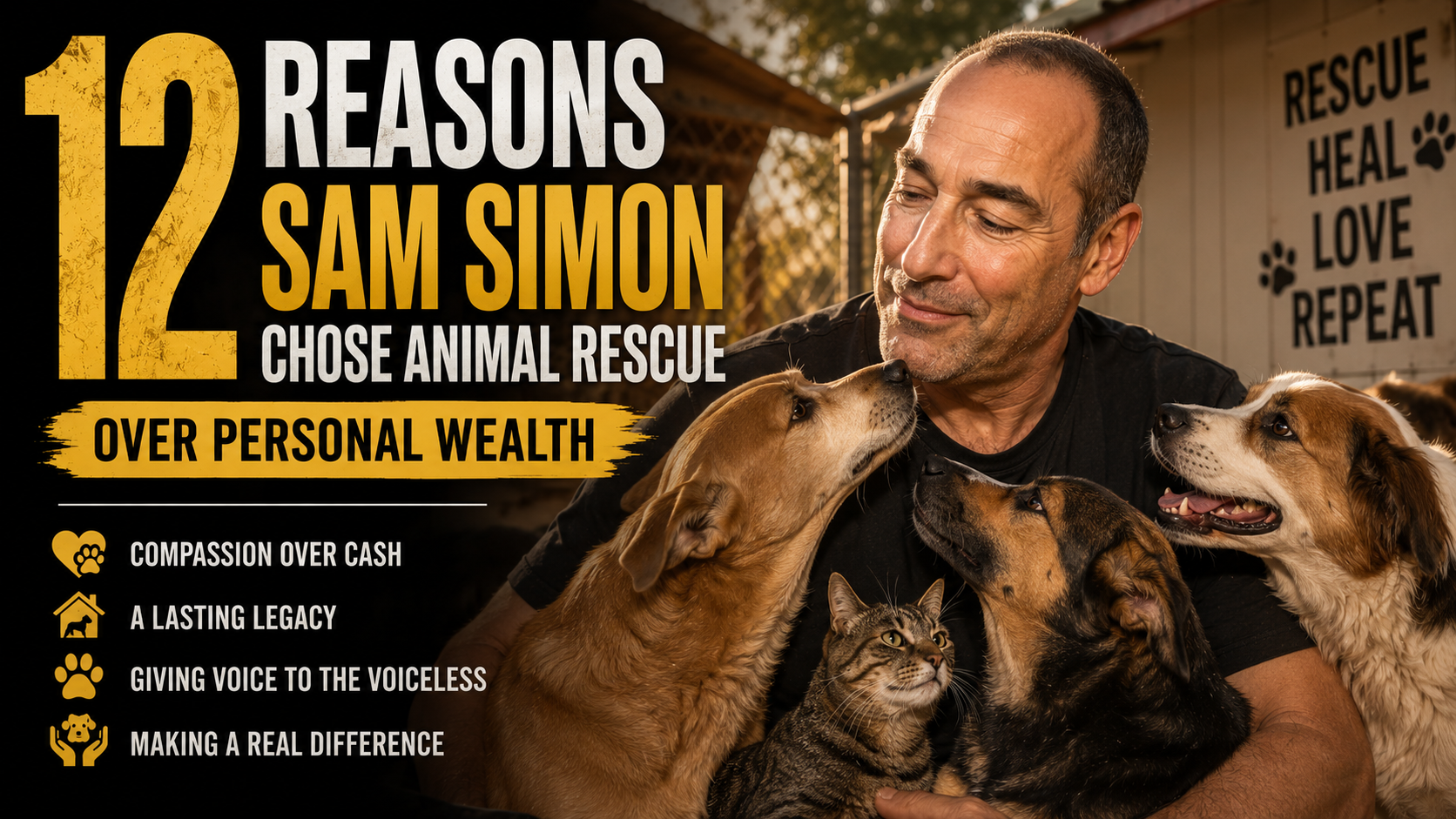
Success often brings choices. Some people use their fortune to acquire bigger homes, luxury cars, or exclusive experiences. Others decide to invest their resources in causes they believe can make a lasting difference. Few examples illustrate this contrast more clearly than the life of Sam Simon.
Best known as one of the creative forces behind the groundbreaking animated series The Simpsons, Sam Simon achieved extraordinary financial success during his career in television. Yet what made him truly remarkable wasn’t the wealth he accumulated—it was what he chose to do with it.
In the years following his entertainment success, Simon became deeply involved in philanthropy, particularly animal welfare and rescue efforts. Rather than focusing on expanding his personal fortune, he directed significant time, energy, and financial resources toward helping animals in need.
His commitment inspired animal advocates, rescue organizations, and everyday people around the world. More importantly, it demonstrated that wealth can become a powerful tool for compassion when placed in the service of others.
Here are 12 reasons why Sam Simon dedicated so much of his fortune to animal rescue and why his choices continue to inspire people today.
1. He Believed Compassion Should Extend Beyond Humans
Many people care deeply about family, friends, and their communities. Simon embraced a broader perspective.
He believed that kindness should not stop with human beings. Animals, in his view, deserved care, protection, and respect as well.
This philosophy guided much of his charitable work. He saw vulnerable animals as living creatures capable of experiencing fear, pain, and comfort, just like people.
By extending compassion beyond traditional boundaries, Simon encouraged others to think differently about their relationship with animals.
His example reminds us that empathy can become even more meaningful when it includes those who cannot speak for themselves.
2. He Understood That Wealth Creates Responsibility
Financial success provides opportunities, but it also raises an important question: What should be done with those resources?
For Simon, wealth represented more than personal freedom. It represented the ability to create positive change.
Many successful individuals donate to charity, but Simon took philanthropy to another level by making it a central part of his life’s mission.
Rather than viewing his fortune as something to protect or endlessly expand, he viewed it as a tool that could improve lives.
This perspective reflects a growing belief that success carries a responsibility to contribute to the broader good.
3. Animal Rescue Delivered Immediate Impact
Some charitable causes focus on long-term societal change, while others provide direct and immediate relief.
Animal rescue offered Simon the opportunity to see tangible results.
A rescued dog finding a home, an injured animal receiving medical treatment, or a neglected pet gaining a second chance all represent outcomes that are visible and meaningful.
This immediate impact can be incredibly motivating.
People often feel inspired when they can witness the difference their efforts are making, and animal welfare work provides many opportunities to do exactly that.
4. He Wanted to Give a Voice to the Voiceless
One of the most powerful aspects of animal advocacy is that animals cannot advocate for themselves.
Unlike people facing hardship, animals have limited ability to seek help, explain suffering, or protect their own interests.
Simon recognized this reality and used his platform to raise awareness about issues that might otherwise receive less attention.
By supporting rescue efforts, he became an advocate for those who had no public voice.
His actions highlighted the importance of standing up for vulnerable populations, whether human or animal.
5. He Found Purpose Beyond Professional Success
Career achievements can be deeply rewarding, but many successful individuals eventually search for meaning beyond professional accomplishments.
Simon had already achieved what many people spend a lifetime pursuing. He helped create one of television’s most influential shows and enjoyed extraordinary financial success.
Yet he continued searching for ways to make a difference.
Animal rescue provided a sense of purpose that extended beyond entertainment.
Helping living creatures, supporting rescue organizations, and improving animal welfare allowed him to channel his energy into something deeply meaningful.
His story illustrates how purpose often becomes one of life’s most valuable rewards.
6. He Recognized the Human-Animal Connection
Animals have a remarkable ability to enrich human lives.
Countless studies have shown that pets can reduce stress, combat loneliness, encourage physical activity, and provide emotional support.
Simon understood this special bond.
By helping animals, he was also helping people.
Every successful rescue, adoption, or rehabilitation effort created opportunities for meaningful relationships between animals and families.
This understanding reinforced his commitment to animal welfare and highlighted the broader social benefits of rescue work.
7. He Wanted to Address Preventable Suffering
One reason animal welfare advocates become so passionate about their work is the knowledge that much animal suffering is preventable.
Neglect, abandonment, abuse, and inadequate care often stem from human decisions rather than unavoidable circumstances.
Simon believed that these situations could be improved through education, advocacy, and direct intervention.
By funding rescue efforts and supporting organizations dedicated to animal care, he helped address problems that many considered solvable.
His commitment reflected a belief that preventable suffering deserves action, not indifference.
8. He Used His Influence to Inspire Others
Celebrity involvement can bring valuable attention to important causes.
Simon understood that his public profile allowed him to reach audiences that animal welfare organizations might otherwise struggle to engage.
Rather than using his influence solely for self-promotion, he used it to spotlight issues he cared about.
This visibility encouraged donations, volunteerism, and greater public awareness.
One person’s commitment can inspire thousands of others to become involved, and Simon leveraged his influence in exactly that way.
9. He Valued Legacy Over Luxury
Many people measure success through possessions.
Simon appeared to focus on something different: impact.
Luxury purchases may provide temporary enjoyment, but charitable work can create benefits that last for years or even generations.
By investing heavily in animal rescue and welfare initiatives, he chose a legacy defined by compassion rather than consumption.
This decision resonates because it challenges common assumptions about wealth.
His actions suggest that true success may be measured less by what we own and more by what we contribute.
10. He Believed Every Life Has Value
At the heart of animal rescue lies a simple but powerful principle: every life matters.
Whether helping a neglected dog, rescuing an abandoned cat, or supporting broader animal welfare initiatives, Simon consistently demonstrated this belief.
He did not evaluate lives based on status, profitability, or public attention.
Instead, he focused on the intrinsic value of living beings.
This philosophy resonates with people because it reflects a universal ethical principle—the idea that compassion should not depend on convenience or circumstance.
11. He Wanted to Create Lasting Change
Short-term charitable efforts can provide immediate relief, but Simon also supported initiatives designed to create sustainable improvements.
Animal rescue involves more than emergency intervention. It includes education, adoption programs, medical care, advocacy, and community outreach.
By investing in long-term solutions, he helped address root causes rather than only responding to symptoms.
This strategic approach amplified the impact of his philanthropy and increased the likelihood that positive changes would continue long after his direct involvement.
12. He Found Joy in Helping Others
One of the most overlooked aspects of generosity is that helping others often benefits the giver as well.
Research consistently shows that acts of kindness can increase personal fulfillment and overall well-being.
Simon frequently expressed genuine enthusiasm for his philanthropic work.
Animal rescue wasn’t merely an obligation—it was something that brought him satisfaction and happiness.
This lesson may be the most inspiring of all.
Generosity is not solely about sacrifice. It can also become a source of purpose, connection, and joy.
Why Sam Simon’s Story Continues to Inspire
Years after his charitable efforts gained widespread recognition, Simon’s story remains relevant because it challenges traditional ideas about wealth and success.
Society often celebrates financial achievement, but Simon demonstrated that what we do with our success may matter even more.
His commitment to animal rescue showed that compassion can become a defining life mission regardless of career accomplishments.
For animal lovers, his story provides hope. For philanthropists, it offers inspiration. For everyone else, it serves as a reminder that meaningful change is possible when resources are directed toward helping others.
The Bigger Lesson About Giving Back
While most people will never possess the financial resources that Sam Simon had, the principles behind his choices are accessible to everyone.
You don’t need millions of dollars to support a cause you believe in.
People can volunteer at local shelters, foster animals, donate supplies, advocate for animal welfare policies, or simply educate others about responsible pet ownership.
Small actions often create significant cumulative impact.
Simon’s example demonstrates that generosity is not defined by the size of a contribution but by the intention behind it.
Why Animal Rescue Matters
Animal rescue organizations perform essential work in communities around the world.
They provide shelter, medical care, rehabilitation, and adoption services for animals that might otherwise face uncertain futures.
These organizations often operate with limited resources while addressing significant challenges.
Support from donors, volunteers, and advocates allows them to continue their mission.
By dedicating substantial resources to this cause, Simon helped raise awareness about the critical role these organizations play and the lives they save every day.
Final Thoughts
Sam Simon’s decision to prioritize animal rescue over personal wealth remains one of the most inspiring examples of purpose-driven philanthropy in recent memory.
Through compassion, advocacy, and generosity, he demonstrated that financial success can become a powerful force for positive change when guided by empathy and vision.
His commitment to protecting vulnerable animals reflected values that resonate far beyond the world of philanthropy: kindness, responsibility, service, and respect for life.
More importantly, his story reminds us that a meaningful legacy is not built solely through professional accomplishments or financial achievements. It is built through the lives we improve, the causes we support, and the difference we choose to make.
In that sense, Sam Simon’s greatest contribution may not have been the entertainment he helped create, but the compassion he chose to share with the world.







