Life rarely unfolds exactly as planned. Most people will face seasons of uncertainty, disappointment, grief, stress, or unexpected change. Whether it’s the loss of a loved one, financial hardship, health concerns, relationship struggles, or simply the pressures of daily life, difficult moments are an unavoidable part of the human experience.
What often determines how people navigate these challenges is not the absence of hardship but the presence of inner resilience. Emotional resilience—the ability to adapt, recover, and continue moving forward despite adversity—is one of the most valuable qualities a person can develop.
For many individuals, spiritual belief plays a significant role in building that resilience.
Spirituality can take many forms. For some, it is expressed through organized religion. For others, it may involve personal faith, prayer, meditation, reflection, or a sense of connection to something greater than themselves. While beliefs differ widely, countless people report that spirituality provides strength during life’s most challenging periods.
Research has frequently explored the connection between spiritual practices and emotional well-being. Many studies suggest that spiritual beliefs can help people manage stress, maintain hope, and find meaning in difficult experiences.
While spirituality is not a cure for hardship, it can provide valuable tools for navigating life’s challenges with greater confidence and perspective.
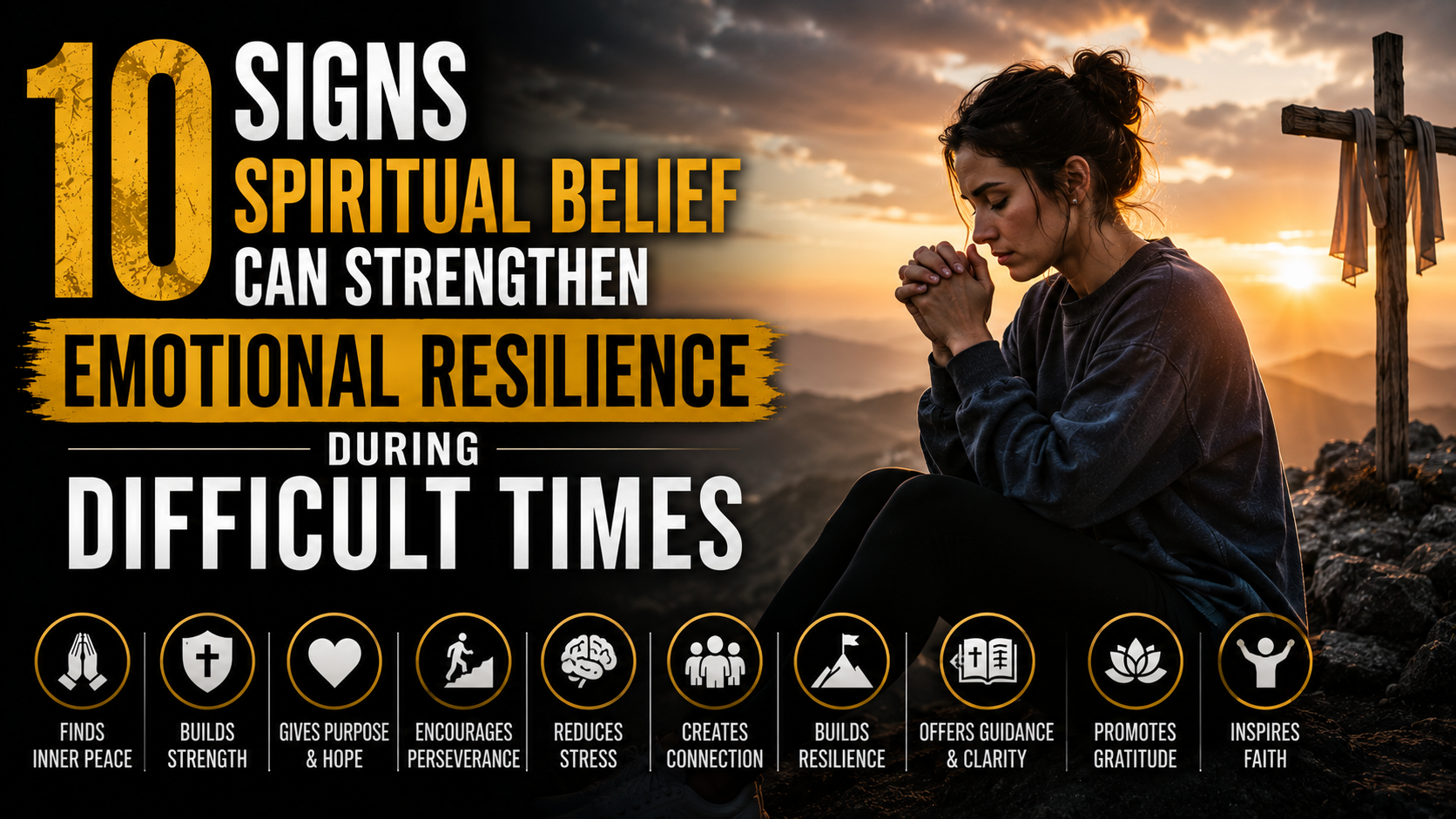
Here are ten signs that spiritual belief may be helping strengthen emotional resilience during difficult times.
1. You Find Hope Even When Circumstances Are Uncertain
One of the clearest signs of resilience is the ability to maintain hope during challenging situations.
Hope does not mean ignoring reality or pretending problems do not exist. Instead, it involves believing that positive outcomes remain possible despite current difficulties.
Spiritual belief often supports this mindset by encouraging people to focus on possibilities rather than limitations.
When circumstances feel overwhelming, faith can provide reassurance that current struggles are not necessarily permanent.
This sense of hope can become a powerful source of motivation.
People who maintain hope are often more willing to continue taking constructive action even when immediate solutions are not visible.
2. You Feel Less Alone During Difficult Moments
Hardship can sometimes create feelings of isolation.
People facing major challenges often feel as though nobody truly understands what they are experiencing.
Spirituality can help counter those feelings.
Many individuals describe a sense of connection that extends beyond ordinary relationships. Whether through faith in a higher power, participation in a spiritual community, or a belief in something larger than themselves, they experience a greater sense of support.
This feeling of connection can provide comfort during periods of loneliness and uncertainty.
Knowing that you are not facing life’s challenges entirely on your own often makes them easier to manage.
3. You Focus More on Meaning Than Circumstances
One characteristic shared by resilient individuals is the ability to find meaning in difficult experiences.
This does not mean every hardship has an obvious purpose or lesson.
Rather, resilient people often ask questions such as:
- What can I learn from this?
- How can I grow through this experience?
- What values can guide me right now?
Spiritual beliefs frequently encourage this type of reflection.
Instead of focusing solely on what has happened, people begin exploring how they can respond in meaningful ways.
This shift in perspective can transform adversity from a purely negative experience into an opportunity for personal growth.
4. You Recover More Quickly From Setbacks
Resilience does not mean avoiding emotional pain.
Everyone experiences disappointment, frustration, and grief.
The difference lies in how people respond over time.
Spiritual practices often provide coping tools that support recovery.
Prayer, meditation, reflection, worship, and community involvement can help individuals process emotions more effectively.
These practices create opportunities for emotional regulation and perspective.
As a result, setbacks may feel less overwhelming and recovery may occur more smoothly.
The challenge remains difficult, but the ability to move forward becomes stronger.
5. Gratitude Remains Present Even During Hard Times
When life becomes difficult, it is easy to focus exclusively on problems.
Yet many spiritually grounded individuals maintain a sense of gratitude even during challenging seasons.
This does not mean they ignore pain.
Instead, they intentionally recognize positive aspects of life that still exist.
They may appreciate supportive relationships, small moments of joy, personal strengths, or opportunities for growth.
Gratitude helps balance perspective.
Research consistently suggests that grateful individuals often experience lower stress levels and improved emotional well-being.
Spiritual traditions frequently emphasize gratitude as a daily practice because it encourages resilience and emotional stability.
6. You Feel More Comfortable Accepting What You Cannot Control
One major source of stress is the desire to control outcomes that remain uncertain.
People naturally want answers, certainty, and predictability.
Unfortunately, many aspects of life remain beyond personal control.
Spiritual belief often encourages acceptance without resignation.
Acceptance involves recognizing reality while continuing to focus on what can be influenced.
This mindset reduces unnecessary anxiety.
Rather than exhausting energy fighting uncontrollable circumstances, people can direct attention toward productive actions.
The result is often greater peace of mind and improved emotional resilience.
7. You Have a Stronger Sense of Purpose
Purpose provides direction during difficult times.
When people understand what matters most to them, challenges often feel more manageable.
Spirituality frequently strengthens this sense of purpose by connecting daily experiences to larger values and beliefs.
Purpose helps answer important questions:
- Why should I keep going?
- What am I working toward?
- What gives my life meaning?
Individuals who possess a strong sense of purpose are often better equipped to navigate adversity because they remain focused on long-term goals rather than temporary obstacles.
Purpose becomes an anchor during periods of uncertainty.
8. Compassion Becomes Easier to Practice
Pain can affect people in different ways.
Some become more withdrawn and defensive.
Others develop greater empathy for those facing similar struggles.
Spiritual beliefs often encourage compassion, forgiveness, and understanding.
These qualities can improve emotional resilience because they strengthen relationships and reduce feelings of bitterness or resentment.
Compassion also creates opportunities for connection.
Helping others frequently reminds people of their own strengths and reinforces a sense of meaning.
Many individuals discover that supporting others becomes part of their own healing process.
9. You View Challenges as Part of a Larger Journey
Resilient individuals often possess a broader perspective on life.
Instead of viewing setbacks as defining moments, they see them as chapters within a larger story.
Spiritual belief frequently reinforces this perspective.
Difficult experiences become temporary events rather than permanent identities.
This shift in thinking can be remarkably powerful.
A challenge that feels overwhelming in the present may appear more manageable when viewed within the context of a larger journey.
People become less likely to lose hope because they understand that current circumstances do not necessarily determine the future.
Perspective creates resilience.
10. You Maintain Faith in the Future
Perhaps the strongest sign of all is the ability to continue believing that life can improve.
Resilient people do not deny difficulties.
They acknowledge them honestly.
At the same time, they maintain confidence that positive possibilities still exist.
Spiritual belief often reinforces this confidence by encouraging trust, perseverance, and patience.
Faith in the future helps people continue taking meaningful action despite uncertainty.
It supports emotional endurance during long periods of challenge.
And it reminds individuals that today’s difficulties are not the entire story.
This future-oriented mindset often becomes one of resilience’s most powerful foundations.
Why Emotional Resilience Matters More Than Ever
Modern life presents unique challenges.
Rapid change, constant information, economic uncertainty, social pressures, and global events can create significant stress.
As a result, emotional resilience has become increasingly important.
Resilient individuals are generally better equipped to:
- Manage stress
- Adapt to change
- Recover from setbacks
- Maintain healthy relationships
- Pursue goals despite obstacles
- Protect their mental well-being
While resilience can be developed through many different methods, spirituality remains one of the most meaningful sources of strength for millions of people worldwide.
The Connection Between Spirituality and Mental Well-Being
It’s important to recognize that spirituality and emotional resilience are not identical.
Not every spiritual person automatically becomes resilient, and resilience can certainly exist without spiritual belief.
However, spirituality often provides resources that support emotional health.
These may include:
- Community support
- Shared values
- Reflection practices
- Hope and optimism
- A sense of meaning
- Opportunities for gratitude
- Emotional comfort during uncertainty
Together, these elements create conditions that can strengthen resilience over time.
Building Resilience Through Daily Practices
One reason spiritual belief can be so effective is that it often encourages regular habits that reinforce emotional strength.
Examples include:
- Prayer or meditation
- Journaling and reflection
- Acts of service
- Participation in supportive communities
- Gratitude practices
- Reading inspirational texts
- Spending time in nature
These activities help individuals maintain perspective and develop healthy coping mechanisms.
Resilience is rarely built through a single moment.
It develops gradually through consistent habits and intentional choices.
A Balanced Perspective on Difficult Times
Spirituality does not eliminate pain.
People of faith still experience grief, disappointment, anxiety, and hardship.
The difference is often found in how those experiences are interpreted and managed.
Rather than removing challenges, spiritual belief may provide tools for navigating them more effectively.
It offers hope during uncertainty, meaning during confusion, and connection during isolation.
These resources help people endure difficulties without losing sight of the possibility of growth and recovery.
Final Thoughts
Difficult seasons are an inevitable part of life, but emotional resilience can make those seasons easier to navigate.
For many people, spiritual belief serves as a powerful source of strength during times of adversity. By fostering hope, purpose, gratitude, acceptance, compassion, and a broader perspective, spirituality can help individuals recover from setbacks and move forward with confidence.
The ten signs outlined above illustrate how faith and spiritual practices often contribute to emotional resilience. They do not remove life’s challenges, but they can provide valuable support while facing them.
Ultimately, resilience is not about avoiding hardship. It is about developing the ability to adapt, grow, and continue moving forward despite it.
And for countless individuals around the world, spiritual belief remains one of the most meaningful tools for doing exactly that.







