In sports, it’s common to hear athletes thank God after a victory. Championship celebrations, post-game interviews, and award speeches often include expressions of faith and gratitude. For many competitors, spiritual beliefs play an important role in their lives and careers.
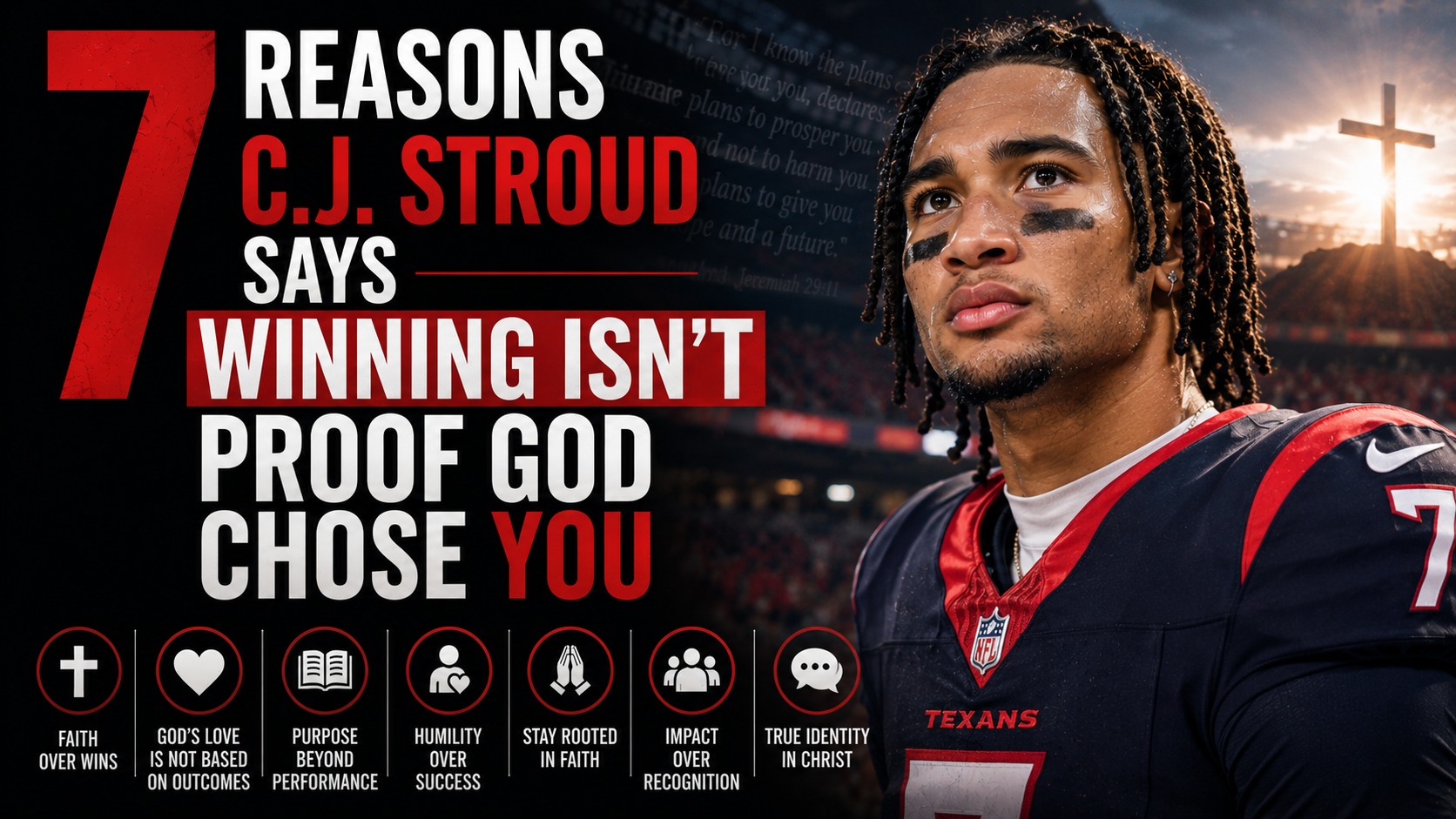
However, some athletes have offered a deeper perspective on the relationship between faith and success. Among them is NFL quarterback C.J. Stroud, whose comments about faith, winning, and purpose have sparked thoughtful conversations among fans and observers alike.
At the heart of Stroud’s message is a simple but powerful idea: winning a game doesn’t automatically mean God favors one person over another. Likewise, losing doesn’t mean someone has been abandoned or forgotten.
This perspective challenges a common assumption that success is evidence of divine approval while failure reflects the opposite. Instead, it encourages people to view faith through a broader lens—one focused on character, purpose, gratitude, and growth rather than trophies and scoreboards.
Whether you’re religious or not, the principles behind this viewpoint offer valuable lessons about humility, resilience, and how we define success.
Here are seven reasons C.J. Stroud’s perspective resonates with so many people and what it teaches about faith and achievement.
1. Success Doesn’t Determine Human Worth
One of the most important lessons behind Stroud’s message is that achievement and personal value are not the same thing.
Modern culture often measures people by visible accomplishments. Championships, promotions, awards, wealth, and public recognition frequently become markers of success.
But if winning automatically determined worth, what would that say about everyone who loses?
In sports, every game produces both winners and losers. Yet both sides often train equally hard, make sacrifices, and dedicate years to their craft.
The same reality exists outside athletics.
People work hard and still experience setbacks. They pursue goals and sometimes fall short. Those outcomes do not diminish their value as individuals.
Stroud’s perspective reminds people that identity should not depend entirely on results.
Human worth extends beyond performance.
2. Faith Is Bigger Than a Scoreboard
Sports provide memorable moments, but games ultimately represent only a small part of life.
A scoreboard reflects what happened during a specific contest. Faith, by contrast, often addresses much larger questions about meaning, purpose, character, and relationships.
When faith becomes tied exclusively to winning, it risks becoming conditional.
What happens when victories stop coming?
What happens during injuries, disappointments, or difficult seasons?
Stroud’s viewpoint encourages people to see faith as something that remains meaningful regardless of outcomes.
This approach creates stability because it is not dependent on external circumstances.
Whether things are going well or poorly, values and beliefs can continue providing guidance and perspective.
3. Hard Work Is Not a Guarantee of Victory
One reason sports are so compelling is that effort does not always guarantee success.
Two teams may prepare extensively. Both may believe deeply in their goals. Both may demonstrate tremendous discipline.
Yet only one side wins.
This reality highlights an important truth: outcomes are influenced by many factors beyond effort alone.
Recognizing this helps prevent simplistic assumptions about why certain results occur.
It also encourages humility.
Winning may reflect preparation and skill, but it does not necessarily prove superiority in every sense.
Likewise, losing does not erase hard work or dedication.
Understanding this distinction helps people maintain perspective during both victories and defeats.
4. Gratitude Matters More Than Recognition
One theme that frequently appears in Stroud’s public comments is gratitude.
Gratitude shifts focus away from entitlement and toward appreciation.
People who view success as a gift rather than a guarantee often develop healthier perspectives on achievement.
Instead of believing they deserve every positive outcome, they recognize opportunities, support systems, and circumstances that contributed to their journey.
This mindset encourages humility.
It also reduces the tendency to define life solely through accomplishments.
Gratitude allows people to appreciate the process rather than becoming obsessed with results.
Whether someone wins a championship or faces a difficult setback, gratitude provides a foundation that remains steady.
5. Adversity Can Be Just as Meaningful as Success
Many people associate blessings exclusively with positive experiences.
Yet some of life’s most valuable lessons emerge during challenging periods.
Athletes often describe injuries, losses, setbacks, and disappointments as experiences that shaped them in important ways.
These moments can develop resilience, patience, empathy, and character.
Stroud’s perspective encourages people to avoid interpreting every hardship as evidence of failure or abandonment.
Difficult experiences may still contain opportunities for growth.
While adversity is rarely enjoyable, it often becomes a powerful teacher.
Looking back, many successful individuals identify setbacks as turning points that ultimately contributed to their development.
6. Humility Creates Stronger Leadership
One reason Stroud’s comments resonate is that they reflect humility.
Humble leaders recognize that success involves many contributors.
Teammates, coaches, family members, mentors, and supporters all play important roles in helping athletes achieve their goals.
Viewing victory as proof of personal superiority can create arrogance.
Viewing success with humility fosters gratitude and respect.
People tend to trust leaders who remain grounded regardless of circumstances.
They appreciate individuals who share credit, acknowledge support, and maintain perspective after major achievements.
In sports and beyond, humility often enhances leadership effectiveness.
It strengthens relationships and encourages collaboration.
7. Purpose Should Outlast Success
Perhaps the most significant lesson behind Stroud’s message is that purpose should not depend entirely on outcomes.
Winning is exciting.
Achievements are meaningful.
Success deserves celebration.
But eventually, every season ends.
Every athlete retires.
Every accomplishment becomes part of the past.
If purpose depends solely on achievement, people may struggle when those achievements fade.
Stroud’s perspective suggests a different approach.
Purpose can be rooted in values, relationships, personal growth, service, and faith rather than temporary victories.
This broader foundation provides stability across changing circumstances.
It allows people to remain grounded regardless of whether they are experiencing success or setbacks.
Why This Perspective Resonates Beyond Sports
Although these ideas emerged from a sports context, they apply to many areas of life.
People often connect self-worth to outcomes:
- Career advancement
- Financial success
- Academic performance
- Social status
- Awards and recognition
- Personal achievements
When results become the sole measure of value, disappointment can feel overwhelming.
A broader perspective creates balance.
It allows individuals to celebrate accomplishments without becoming defined by them.
It also helps people navigate setbacks without losing confidence or purpose.
This balance is one reason Stroud’s comments have attracted attention beyond football fans.
The principles are universally relevant.
The Difference Between Confidence and Pride
One misconception is that humility reduces confidence.
In reality, confidence and humility can coexist.
Confidence involves believing in your abilities.
Pride often involves believing your achievements make you inherently superior to others.
Humility allows people to recognize strengths while remaining aware of limitations and dependencies.
Athletes need confidence to perform under pressure.
At the same time, humility helps them continue learning and improving.
The combination is powerful.
People who balance confidence with humility tend to handle both success and adversity more effectively.
They remain motivated without becoming consumed by ego.
Why Losing Doesn’t Mean Failure
Another important lesson from this perspective is the distinction between losing and failing.
In sports, losing is inevitable.
Even elite teams experience defeats.
Failure, however, is often more complex.
Someone can lose a game while demonstrating discipline, integrity, perseverance, and growth.
Conversely, someone can win while neglecting those qualities.
This distinction encourages people to evaluate success more thoughtfully.
Outcomes matter, but they are not the only measure of achievement.
Character, effort, learning, and resilience are equally important.
Understanding this helps create healthier attitudes toward competition and personal development.
Lessons for Everyday Life
The principles behind Stroud’s comments offer practical insights for anyone pursuing goals:
Focus on Effort, Not Just Outcomes
Results are not always fully controllable.
Effort, preparation, and attitude usually are.
Concentrating on controllable factors reduces unnecessary stress and improves long-term performance.
Stay Grateful During Success
Achievements are easier to enjoy when accompanied by gratitude.
Recognizing support from others helps maintain perspective.
Learn From Setbacks
Difficult experiences often contain valuable lessons.
Viewing challenges as opportunities for growth encourages resilience.
Build Identity Around Values
Careers, accomplishments, and circumstances can change.
Values provide a more stable foundation for self-worth and purpose.
Celebrate Others
Success does not diminish when shared.
Recognizing the accomplishments of others strengthens relationships and encourages collaboration.
The Broader Message About Faith and Achievement
Ultimately, Stroud’s perspective invites people to think more deeply about what success means.
If winning automatically proved divine favor, then countless hardworking, faithful, and dedicated individuals would be unfairly excluded.
Life is more complicated than that.
People experience victories and setbacks for many reasons.
Faith, according to this viewpoint, is not validated solely through positive outcomes.
Instead, it influences how people respond to both triumph and adversity.
This approach encourages humility, gratitude, resilience, and compassion.
Those qualities often matter far more than any final score.
Final Thoughts
C.J. Stroud’s observation that winning is not proof God chose you offers a refreshing perspective in a culture often obsessed with results.
His message challenges the idea that success automatically signals greater worth, stronger faith, or special favor. Instead, it emphasizes humility, gratitude, purpose, and personal growth.
The seven lessons behind this viewpoint remind us that achievements are meaningful but not definitive.
Victories can be celebrated.
Losses can be learned from.
Neither determines a person’s value.
Whether on a football field, in a workplace, or in everyday life, the most important qualities often emerge not from what we accomplish but from how we handle both success and adversity.
And perhaps that’s the deepest lesson of all: a meaningful life is measured by more than wins and losses. It’s measured by character, purpose, relationships, and the way we treat others along the journey.







