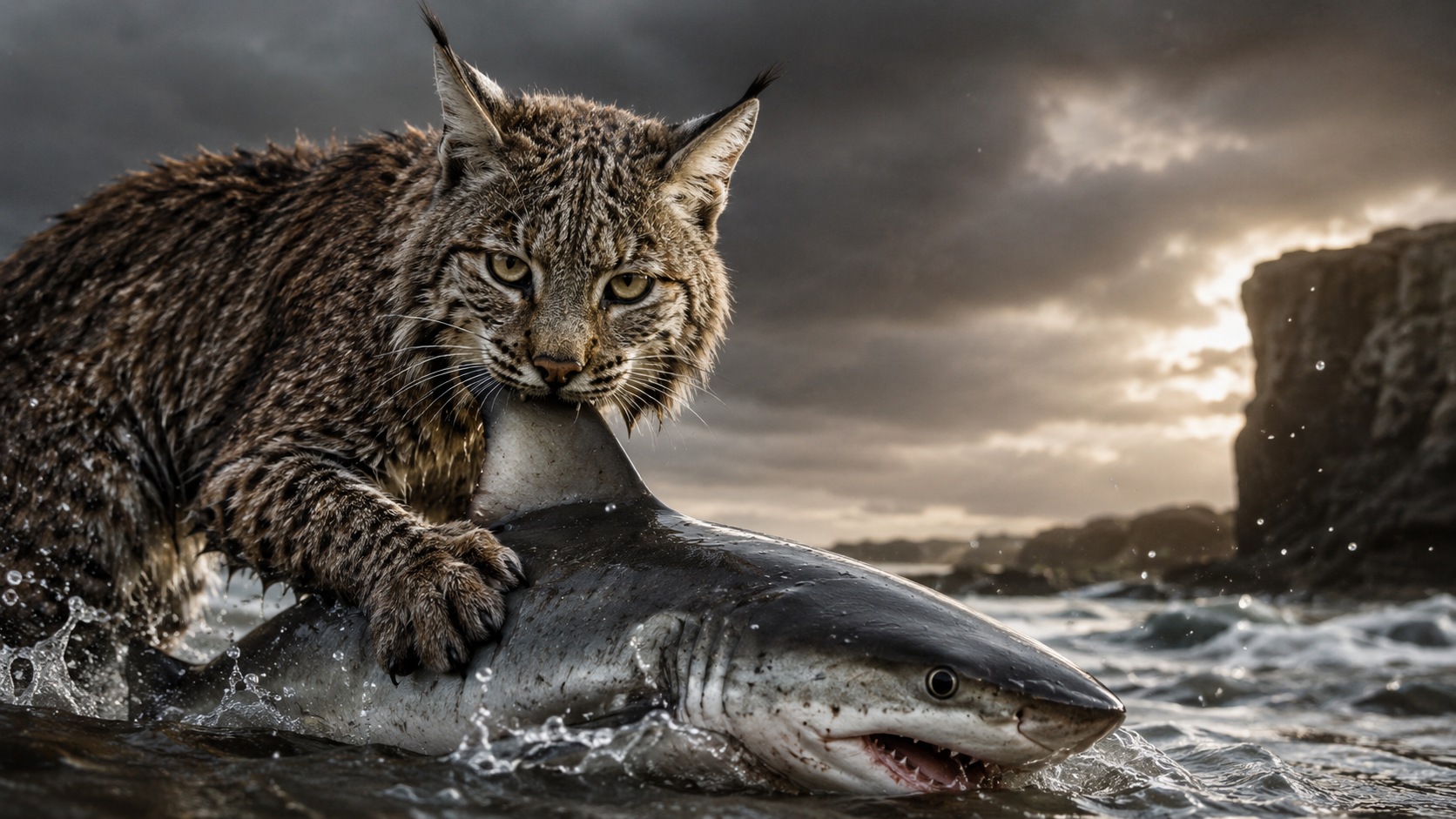
Nature is full of unexpected stories, but few are as astonishing as the tale of a bobcat reportedly turning to sharks as a food source. Bobcats are typically associated with forests, deserts, and grasslands, where they hunt rabbits, rodents, birds, and other small animals. Sharks, on the other hand, belong to an entirely different world beneath the waves.
Yet in rare coastal environments, wildlife sometimes displays remarkable adaptability when traditional food sources become scarce. When survival is at stake, animals can develop behaviors that seem almost unbelievable. The idea of a bobcat targeting sharks may sound like something from a movie, but it highlights the incredible flexibility and resilience found in the natural world.
Here are ten surprising facts about what happens when a bobcat is forced to pursue one of the ocean’s most formidable predators.
1. Bobcats Are More Adaptable Than Most People Realize
Many people think of bobcats as specialized hunters that stick to familiar prey. In reality, they are highly adaptable predators capable of adjusting their diet based on available food sources.
Across North America, bobcats have been observed eating everything from rodents and rabbits to reptiles, birds, fish, and even carrion. Their willingness to take advantage of unusual feeding opportunities is one reason they have successfully survived in such diverse habitats.
A coastal bobcat facing limited prey may be far more flexible than many would expect.
2. Sharks Near Shore Can Become Vulnerable
When people imagine sharks, they often picture large predators cruising deep ocean waters. However, many shark species regularly enter shallow coastal areas.
Young sharks, in particular, often use tidal flats, estuaries, and shoreline habitats as nursery grounds. During low tides or in extremely shallow water, some sharks can become temporarily vulnerable to land-based predators.
This creates rare opportunities for opportunistic hunters willing to take the risk.
3. The Hunt Requires Perfect Timing
Unlike aquatic predators that can pursue prey underwater, a bobcat must rely on timing and patience.
A successful attack would likely occur when a shark is stranded, trapped in a shallow channel, or momentarily restricted by changing tides. Rather than engaging in a prolonged chase, the bobcat would take advantage of a brief window of opportunity.
This strategy demonstrates the importance of observation and timing in the animal kingdom.
4. Survival Often Drives Unusual Behavior
Animals do not follow strict rules about what they should or should not eat. Their primary goal is survival.
When traditional prey becomes scarce due to drought, habitat changes, seasonal shifts, or competition, predators may experiment with entirely new food sources.
What seems shocking to humans is often simply a practical response to environmental pressures. Survival frequently encourages innovation in the wild.
5. Bobcats Are Surprisingly Powerful for Their Size
Although smaller than mountain lions, bobcats are strong, agile predators equipped with sharp claws and powerful jaws.
They routinely capture prey that appears larger than expected for an animal of their size. Their muscular build allows them to grapple with struggling animals and deliver precise bites.
This physical capability helps explain how they can sometimes tackle prey that seems well outside their normal range.
6. Coastal Ecosystems Create Unexpected Encounters
The meeting of land and sea creates some of the most dynamic environments on Earth.
Coastal marshes, mangroves, beaches, and estuaries bring together species that rarely interact elsewhere. In these habitats, terrestrial predators may encounter marine animals under unusual circumstances.
Such environments often produce wildlife stories that challenge assumptions about predator-prey relationships.
7. Opportunistic Feeding Is a Key Survival Skill
Many successful predators share one important trait: opportunism.
Rather than limiting themselves to a narrow menu, adaptable hunters take advantage of whatever food sources become available. This behavior helps them survive periods when preferred prey is difficult to find.
For a bobcat, an unexpected meal can represent a significant energy boost, making the risk worthwhile.
The ability to seize opportunities often separates thriving predators from struggling ones.
8. Intelligence Plays a Major Role
Adaptable predators are not simply strong—they are observant.
Bobcats constantly assess their surroundings, learn from experience, and adjust their behavior based on changing conditions. If an animal discovers a reliable food source, it may return repeatedly.
This problem-solving ability allows predators to exploit resources that less flexible species might overlook.
In many cases, intelligence can be just as important as physical strength.
9. Nature Frequently Defies Expectations
Stories involving unusual predator-prey interactions remind us how much there is still to learn about wildlife behavior.
Many of the world’s most fascinating discoveries occur when animals behave in ways scientists did not anticipate. Predators sometimes consume unexpected prey, develop new hunting techniques, or adapt to changing environments with remarkable creativity.
These observations challenge long-held assumptions and reveal the complexity of ecological relationships.
10. The Story Highlights the Power of Resilience
Perhaps the most remarkable aspect of a bobcat hunting sharks is what it says about resilience.
Wild animals face constant challenges, including food shortages, habitat changes, competition, and environmental pressures. Those that survive are often the ones most capable of adapting.
The willingness to explore new opportunities, take calculated risks, and adjust behavior when circumstances change is a hallmark of successful predators.
In that sense, the story is not just about a bobcat or a shark. It is about the extraordinary determination that helps wildlife endure in an ever-changing world.
Why Unusual Wildlife Stories Matter
Extraordinary encounters capture public attention because they reveal how dynamic nature truly is. Animals are not robots programmed to follow rigid behaviors. They are constantly responding to their environment, making decisions, and adapting to new challenges.
Stories like this encourage people to look beyond simple stereotypes about wildlife. Predators are often far more versatile than we imagine, and ecosystems contain countless interactions that remain poorly understood.
Every unusual observation provides another glimpse into the remarkable creativity of survival.
Final Thoughts
The idea of a bobcat hunting sharks may sound improbable, but it underscores an important truth about nature: survival often rewards adaptability. Whether facing changing habitats, limited food supplies, or unexpected challenges, wild animals frequently develop surprising strategies to stay alive.
From exploiting coastal opportunities to demonstrating intelligence, patience, and resilience, a bobcat capable of pursuing such unusual prey represents the extraordinary flexibility found throughout the natural world.
Ultimately, this remarkable story serves as a reminder that nature is still full of surprises—and some of its most fascinating lessons emerge when animals do the unexpected.







