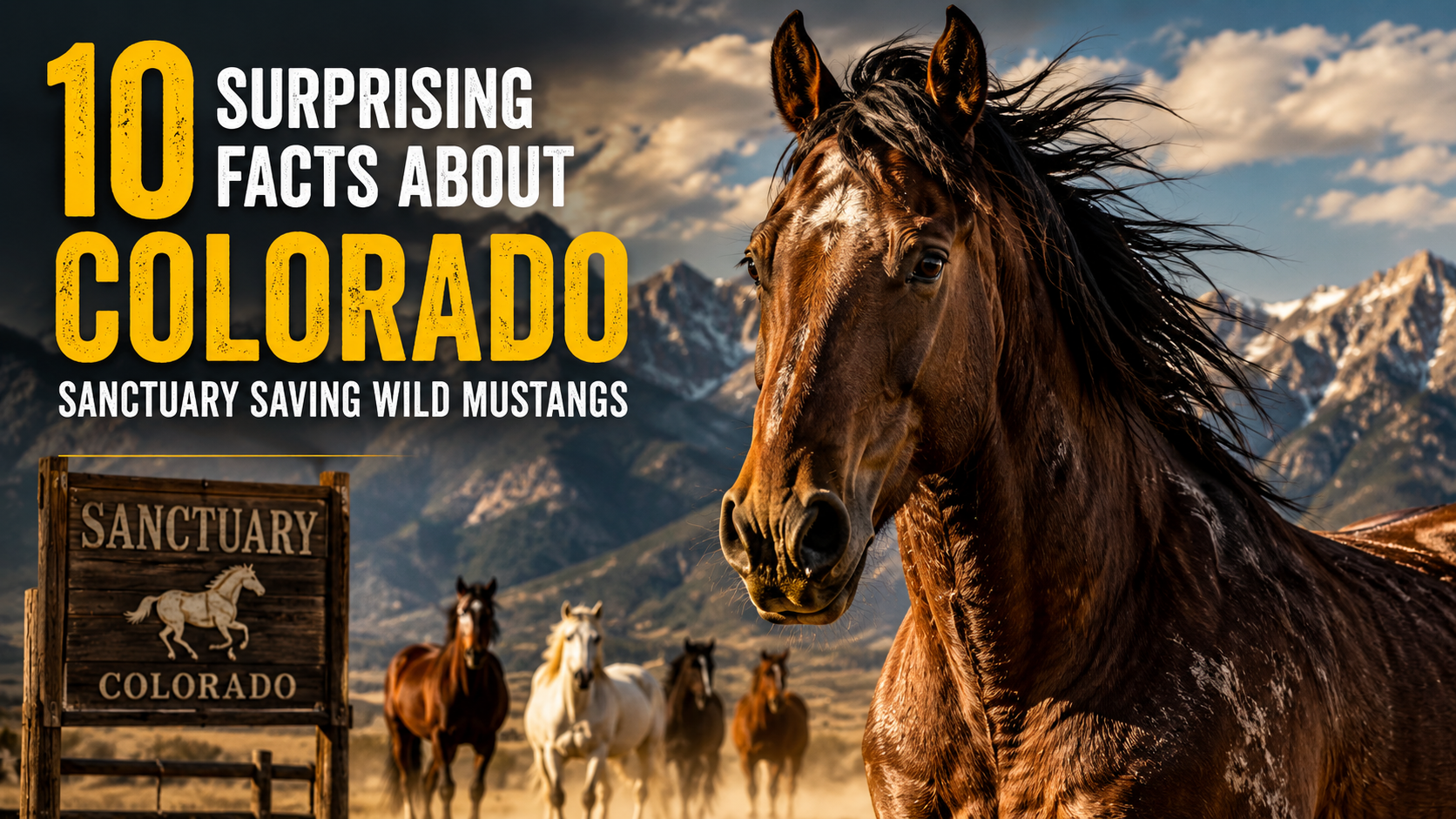
Wild mustangs have long symbolized freedom, resilience, and the untamed spirit of the American West. For centuries, these iconic horses have roamed vast landscapes, surviving harsh weather and adapting to challenging environments. Yet despite their legendary status, thousands of wild horses face an uncertain future due to habitat loss, overpopulation concerns, and limited resources.
Amid these challenges, a remarkable sanctuary in Colorado has become a beacon of hope for many of these magnificent animals. Dedicated to providing a safe and natural environment, the sanctuary not only protects wild mustangs but also educates visitors about their history and importance. Its efforts are helping preserve a living piece of America’s heritage.
Here are ten surprising facts about the Colorado sanctuary that is making a difference in the lives of wild mustangs.
1. The Sanctuary Provides Hundreds of Acres of Open Space
Unlike traditional horse facilities that rely on stalls and small paddocks, the sanctuary allows mustangs to roam across expansive areas of natural terrain. These large spaces enable the horses to graze, run, and socialize much as they would in the wild.
Providing room to move freely is essential for maintaining the horses’ physical and emotional well-being. The open environment helps preserve natural behaviors that can be lost in more confined settings.
2. Many of the Horses Were Once at Risk
A significant number of the mustangs living at the sanctuary were rescued from uncertain circumstances. Some came from overcrowded holding facilities, while others were removed from public lands where environmental pressures made long-term survival difficult.
For many of these horses, the sanctuary represents a second chance. Instead of facing an uncertain future, they now live in a protected setting where they receive care and monitoring.
3. Every Mustang Has a Unique Personality
Visitors are often surprised to learn that wild mustangs have distinct temperaments and social preferences. Some are naturally curious and willing to approach people, while others remain cautious and prefer to stay within their bands.
Caretakers spend years observing individual horses and often recognize unique traits, leadership styles, and friendships within the herds.
4. The Horses Maintain Complex Family Bonds
Mustangs are highly social animals that form strong relationships. Family groups, known as bands, typically consist of mares, their offspring, and a dominant stallion.
The sanctuary works hard to keep these family units together whenever possible. Preserving these bonds reduces stress and allows the horses to continue their natural social interactions.
5. The Sanctuary Helps Preserve an Important Piece of American History
Wild mustangs are descendants of horses brought to North America by Spanish explorers centuries ago. Over time, these animals became deeply woven into the culture and mythology of the American West.
Protecting wild horses is about more than safeguarding animals. It is also about preserving an important chapter of American history and maintaining a living connection to the nation’s frontier heritage.
6. Mustangs Are Remarkably Adaptable
One of the most surprising traits of wild mustangs is their incredible resilience. They can survive in a wide range of conditions, from dry deserts to snowy mountain regions.
The sanctuary’s environment allows the horses to continue displaying their natural adaptability. They navigate changing seasons, locate food sources, and adjust their behaviors according to weather conditions.
7. The Sanctuary Plays an Educational Role
Beyond caring for horses, the sanctuary serves as an educational resource. Visitors can learn about the history of mustangs, the challenges they face, and the efforts being made to protect them.
Educational programs help dispel myths surrounding wild horses and encourage greater appreciation for their ecological and cultural significance.
8. The Horses Receive Care While Remaining as Wild as Possible
The sanctuary follows an approach that balances protection with minimal interference. Staff members monitor the horses’ health and provide assistance when necessary, but they avoid excessive human interaction.
This philosophy allows the mustangs to retain their wild instincts and natural social structures rather than becoming fully domesticated.
9. The Sanctuary Depends on Public Support
Caring for large herds of horses requires substantial resources. Land management, veterinary care, infrastructure maintenance, and conservation programs all involve significant costs.
Many sanctuaries rely heavily on donations, volunteers, and community partnerships. Public support plays a vital role in ensuring these horses continue to receive protection and care.
10. Every Saved Mustang Represents a Victory for Conservation
Each horse living within the sanctuary tells a story of survival. Some endured difficult conditions, while others narrowly avoided uncertain outcomes. Their presence demonstrates what dedicated conservation efforts can accomplish.
The sanctuary’s work extends beyond individual rescues. It raises awareness about the future of America’s wild horses and inspires people to value and protect these remarkable animals.
Why Sanctuaries Like This Matter
Wild mustangs are more than beautiful horses running across open landscapes. They are symbols of endurance, independence, and the pioneering spirit that shaped the American West. However, modern challenges continue to threaten their long-term future.
Colorado’s wild horse sanctuary provides a powerful example of how conservation and compassion can work together. By offering protection, preserving natural behaviors, and educating the public, it gives these iconic animals the opportunity to thrive.
In a rapidly changing world, the sight of wild mustangs galloping across open land remains a reminder that some pieces of our natural and cultural heritage are worth preserving. Thanks to the dedication of sanctuaries like this one, countless wild horses continue to live with the freedom and dignity that have defined them for generations.







