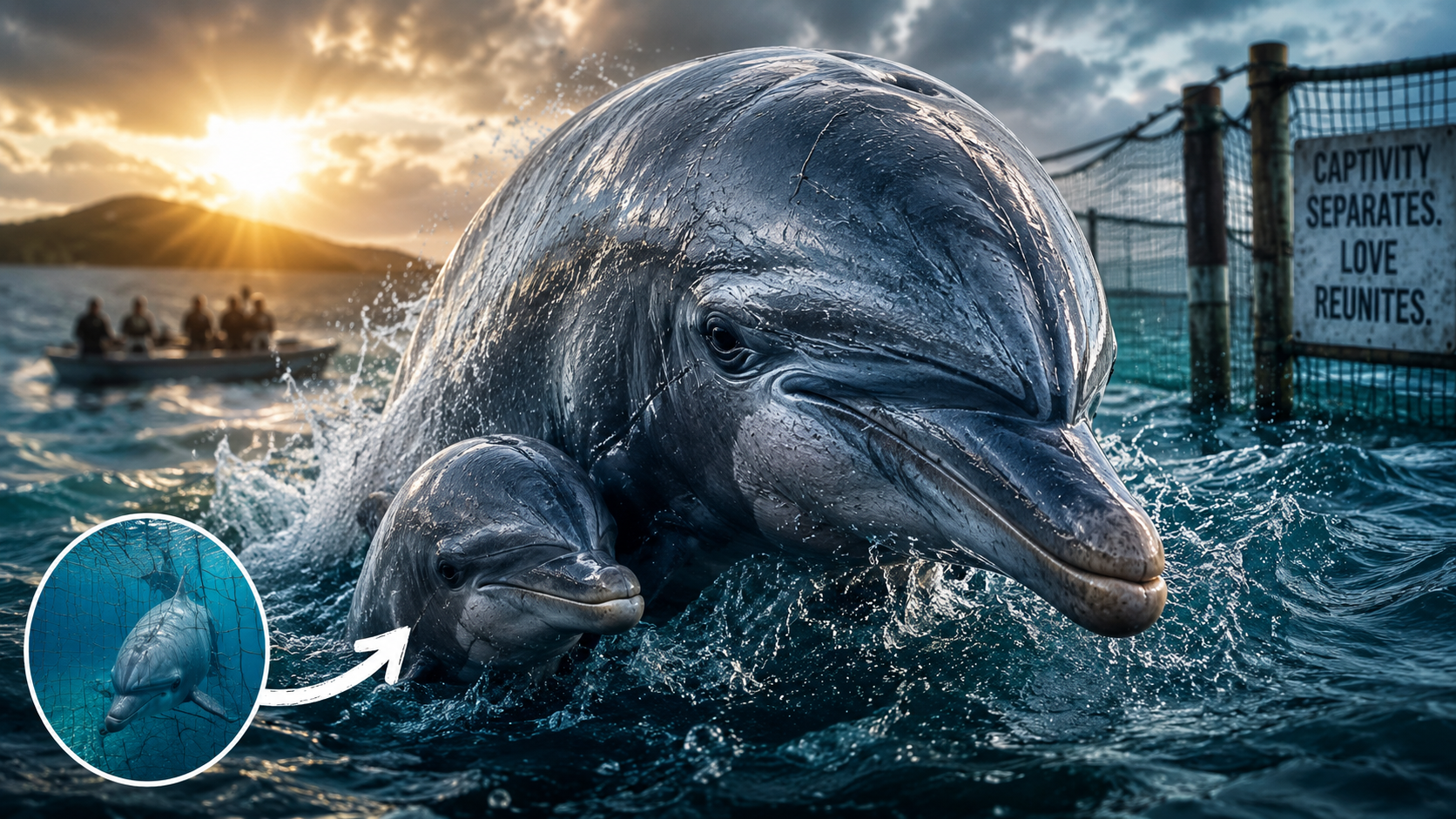
The bond between a mother and her child is one of nature’s most powerful forces. While humans often recognize this connection in people, the animal kingdom is filled with equally moving examples of maternal devotion. Few stories illustrate this better than that of a dolphin mother who reportedly escaped confinement in an apparent attempt to reunite with her calf.
The story captured global attention because it highlighted something scientists have long understood—dolphins are highly intelligent, emotional, and deeply social animals. Their relationships are complex, and the connection between a mother and her calf can be remarkably strong.
Whether viewed as a tale of determination, maternal instinct, or animal intelligence, the story offers valuable insights into the lives of these extraordinary marine mammals. Here are ten surprising facts about the dolphin mother who escaped to find her calf.
1. Mother Dolphins Form Exceptionally Strong Bonds With Their Calves
From the moment a calf is born, a mother dolphin becomes its primary source of protection, nourishment, and guidance.
Unlike many animals that become independent shortly after birth, dolphin calves remain closely attached to their mothers for several years. During this time, mothers teach them essential survival skills, including how to hunt, communicate, and navigate their environment.
This long period of care creates an incredibly deep emotional bond.
2. Dolphin Mothers Recognize Their Calves by Unique Sounds
Dolphins communicate using an impressive range of clicks, whistles, and body movements.
Researchers have discovered that each dolphin develops a unique “signature whistle,” similar to an individual name. Mothers and calves learn to recognize one another through these distinctive sounds, allowing them to stay connected even when temporarily separated.
This sophisticated form of communication reflects the remarkable social intelligence of dolphins.
3. Separation Can Be Extremely Stressful
Dolphins are highly social animals that depend heavily on close relationships.
Studies suggest that prolonged separation from family members can cause noticeable changes in behavior and increased signs of stress. Mothers and calves often remain in near-constant contact during the early years of life, making separation particularly difficult.
The reported escape resonated with many people because it reflected the universal instinct to reunite with loved ones.
4. Dolphin Mothers Are Among the Most Devoted Parents in the Ocean
Caring for a calf requires enormous dedication.
Mother dolphins nurse their young for extended periods and remain highly attentive to their needs. They protect calves from predators, assist them while swimming, and guide them through their early development.
This level of parental investment demonstrates just how important the mother-calf relationship is within dolphin society.
5. Dolphins Possess Remarkable Problem-Solving Abilities
One reason stories like this capture attention is that dolphins are known for their intelligence.
They have demonstrated impressive abilities in memory, learning, cooperation, and problem-solving. Dolphins can adapt their behavior to changing situations and often display curiosity and persistence when facing challenges.
Their cognitive abilities continue to fascinate researchers around the world.
6. Dolphins Live in Complex Social Communities
Dolphin groups are far more sophisticated than they may initially appear.
Many species live within intricate social networks where individuals form lasting relationships and cooperate with one another. Family bonds and social connections play vital roles in their daily lives.
These complex societies help explain why dolphins can exhibit behaviors that seem deeply emotional and purposeful.
7. Calves Depend on Their Mothers for Years
A dolphin calf is not born with all the skills necessary for survival.
Young dolphins spend years learning from their mothers. They observe hunting techniques, practice communication, and gradually gain the experience needed to live independently.
Because this learning process takes so long, maintaining close contact with their mothers is crucial for their development and well-being.
8. Dolphin Mothers Frequently Show Protective Behavior
Mother dolphins are known for their vigilance.
They often position themselves between their calves and potential threats, carefully monitor their surroundings, and stay close during periods of danger. Some dolphins have even been observed supporting exhausted or injured calves near the water’s surface to help them breathe.
Such protective behavior highlights the extraordinary commitment mothers have toward their offspring.
9. The Story Sparked Conversations About Animal Emotions
The dolphin mother’s escape touched people because it raised important questions about the emotional lives of animals.
Scientists continue to explore the extent of animal emotions, but growing evidence suggests that many species experience complex social attachments and display behaviors associated with grief, affection, and caregiving.
Stories like this encourage greater appreciation for the emotional richness that exists throughout the natural world.
10. The Tale Reminds Us That Family Bonds Exist Across Species
Perhaps the most powerful lesson from this story is that the desire to protect and remain close to one’s offspring is not unique to humans.
Across the animal kingdom, parents make extraordinary efforts to ensure the safety and survival of their young. Dolphins are among the clearest examples of this devotion, demonstrating care, patience, and protection throughout their calves’ early years.
The dolphin mother’s determination to find her calf became a symbol of one of nature’s most enduring truths: the bond between a parent and child can be incredibly strong.
Why This Story Resonated Around the World
People everywhere were moved by the idea of a mother overcoming obstacles to reach her young. The story transcended species because it reflected emotions and relationships that are universally understood.
At the same time, it highlighted the remarkable intelligence and social complexity of dolphins. These marine mammals are not simply graceful swimmers; they are highly social beings that form deep connections and rely on cooperation and communication.
The story also served as a reminder that many animals experience relationships and attachments that deserve both respect and understanding.
A Window Into the Lives of Dolphins
The dolphin mother who escaped to find her calf captured global attention because her actions appeared to embody determination, love, and resilience. While scientists continue studying the full depth of dolphin emotions and cognition, there is little doubt that mother-calf relationships play a central role in dolphin society.
Their long periods of parental care, advanced communication abilities, and intricate social structures reveal a species far more complex than many people realize.
Ultimately, the story encourages us to view dolphins not merely as fascinating marine creatures but as intelligent social animals whose family bonds and behaviors can teach us valuable lessons about connection, devotion, and the powerful instincts that unite life across the natural world.







