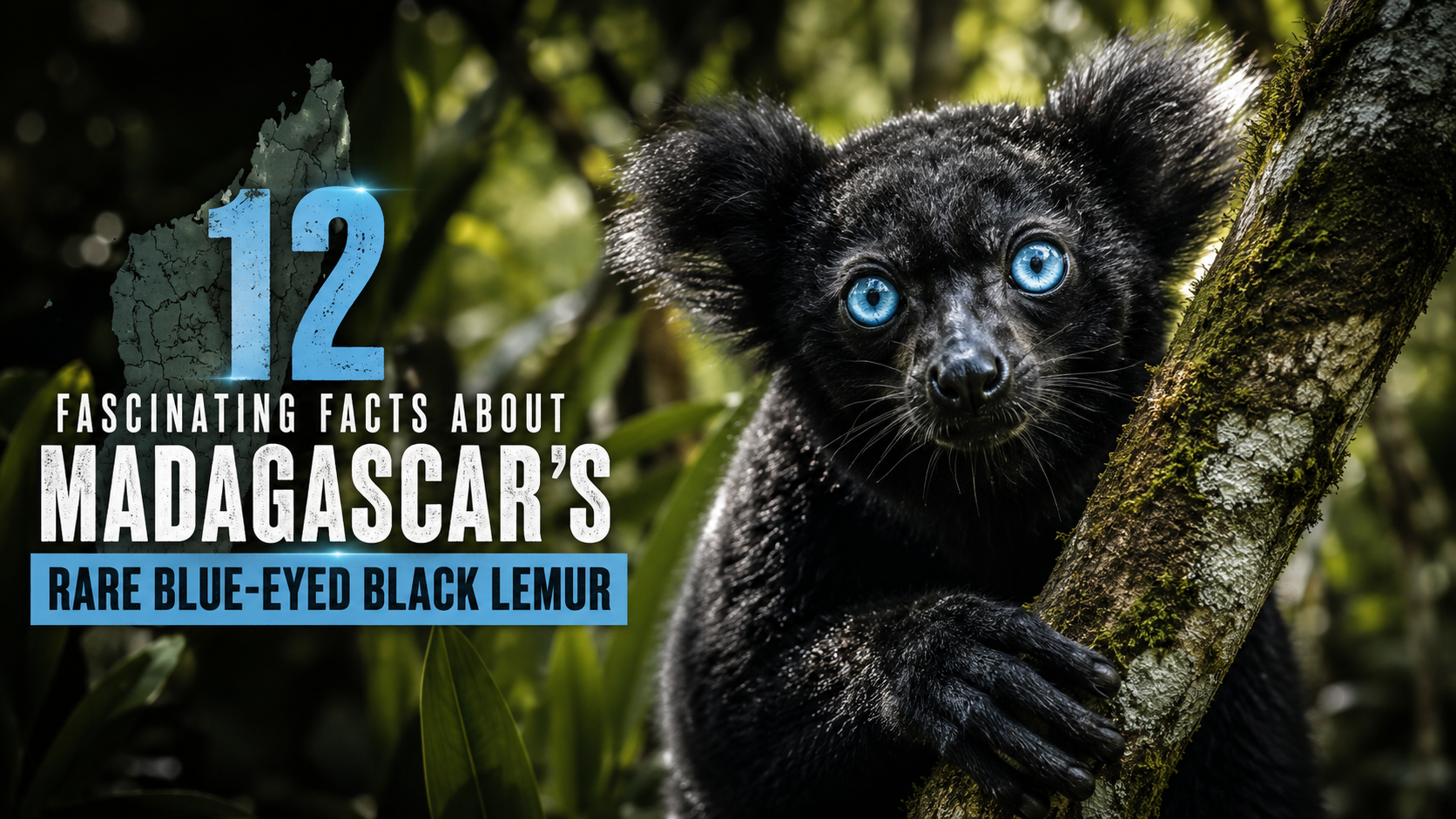
Madagascar is famous for its extraordinary wildlife, but few animals are as striking and mysterious as the blue-eyed black lemur. With its piercing blue eyes and playful personality, this rare primate looks almost unreal. Unlike most primates, which have brown or amber eyes, the blue-eyed black lemur stands out because of its vivid blue gaze, making it one of the most distinctive mammals on Earth.
Found only in a small region of Madagascar, these remarkable creatures face increasing threats from habitat loss and human activity. Scientists and conservationists have been working hard to understand and protect them before their populations decline further.
Here are twelve fascinating facts about Madagascar’s rare blue-eyed black lemur.
1. It Is One of the World’s Only Naturally Blue-Eyed Primates
Perhaps the most astonishing feature of the blue-eyed black lemur is its eye color. Very few primates naturally possess blue eyes, making this species exceptionally rare.
Researchers are still studying how these lemurs evolved such striking eyes. Their vivid blue color immediately sets them apart from nearly every other primate species on the planet and has made them a favorite among wildlife photographers and scientists alike.
2. They Exist Only in Madagascar
Blue-eyed black lemurs are found nowhere else in the world except the island of Madagascar.
They inhabit a relatively small area in the northwestern part of the island, primarily within tropical forests. This limited distribution makes them particularly vulnerable because any environmental changes in their habitat can significantly affect their survival.
3. Males and Females Look Surprisingly Different
One of the most interesting characteristics of this species is its dramatic difference in appearance between males and females.
Males are covered in glossy black fur, giving the species its common name. Females, however, are usually reddish-brown or gray with lighter facial features. This noticeable difference between the sexes is known as sexual dichromatism and is relatively uncommon among primates.
4. They Are Extremely Social Animals
Blue-eyed black lemurs thrive in social groups that typically include several adults and their offspring.
They spend much of their day interacting with one another through grooming, playing, vocalizing, and foraging together. These social bonds are essential for group stability and help strengthen relationships within the troop.
5. They Communicate Through an Impressive Variety of Sounds
These lemurs are surprisingly vocal creatures.
Researchers have documented numerous calls that they use for different situations, including warning signals, maintaining contact with group members, and expressing excitement or alarm. Their vocal communication plays a crucial role in helping them coordinate activities and remain connected in dense forest environments.
6. Their Diet Changes Throughout the Year
Blue-eyed black lemurs are highly adaptable eaters.
They primarily consume fruit but also feed on leaves, flowers, nectar, seeds, and occasionally insects. Their dietary flexibility helps them survive seasonal changes when certain foods become scarce.
This ability to switch food sources allows them to make the most of Madagascar’s changing forest conditions.
7. They Are Important Forest Gardeners
Although they may seem like ordinary fruit eaters, blue-eyed black lemurs perform an essential ecological role.
As they move through the forest and consume fruit, they disperse seeds across large areas. This natural seed distribution helps regenerate vegetation and maintain the health and diversity of Madagascar’s forests.
Without animals like these lemurs, many plant species would struggle to spread and reproduce effectively.
8. Females Often Hold Higher Social Status
Unlike many mammal species where males dominate, lemur societies frequently place females in leadership roles.
Female blue-eyed black lemurs often take priority when feeding and may direct group movements and social interactions. Scientists believe this female dominance evolved as an adaptation to Madagascar’s challenging and unpredictable environment.
9. They Are Most Active During Cooler Parts of the Day
Blue-eyed black lemurs usually avoid the hottest periods by concentrating their activities during the morning and late afternoon.
During these cooler hours, they forage, groom one another, and travel through the forest canopy. Resting during peak heat helps conserve energy and reduces the risk of overheating in Madagascar’s tropical climate.
10. Their Population Is Alarmingly Small
Unfortunately, blue-eyed black lemurs are among Madagascar’s most threatened primates.
Habitat destruction caused by agriculture, logging, and forest clearing has significantly reduced their available living space. Hunting and human encroachment have created additional challenges for already vulnerable populations.
Conservation organizations estimate that only a relatively small number of individuals remain in the wild, making protection efforts increasingly urgent.
11. Conservation Programs Are Working to Save Them
The rarity of the blue-eyed black lemur has inspired numerous conservation initiatives.
Protected areas have been established in parts of their habitat, and researchers continue to monitor populations and study their behavior. Conservation groups also work with local communities to promote sustainable practices that protect forests while supporting human livelihoods.
Captive breeding programs and educational initiatives have further increased awareness about the species and the need for immediate conservation action.
12. They Symbolize Madagascar’s Extraordinary Biodiversity
The blue-eyed black lemur represents much more than a single endangered species.
Madagascar is home to countless plants and animals found nowhere else on Earth, making it one of the planet’s most important biodiversity hotspots. The survival of this rare lemur highlights the importance of preserving these unique ecosystems for future generations.
Protecting the blue-eyed black lemur also means safeguarding countless other species that share its fragile forest home.
Why the Blue-Eyed Black Lemur Matters
The blue-eyed black lemur is a remarkable example of nature’s creativity and diversity. From its brilliant blue eyes and unusual social structure to its vital role in forest regeneration, every aspect of this species reveals something extraordinary about life on Madagascar.
Yet its story also serves as a reminder of how vulnerable unique species can be. Because these lemurs live in such a limited area, even small environmental changes can have significant consequences for their future.
Conservation efforts offer hope, but the continued survival of the blue-eyed black lemur depends on protecting Madagascar’s remaining forests and supporting the communities that live alongside them.
The next time you see a photograph of this striking primate with its piercing blue eyes, remember that you are looking at one of the world’s rarest and most fascinating mammals—a living treasure that represents both the wonder and fragility of our natural world.







