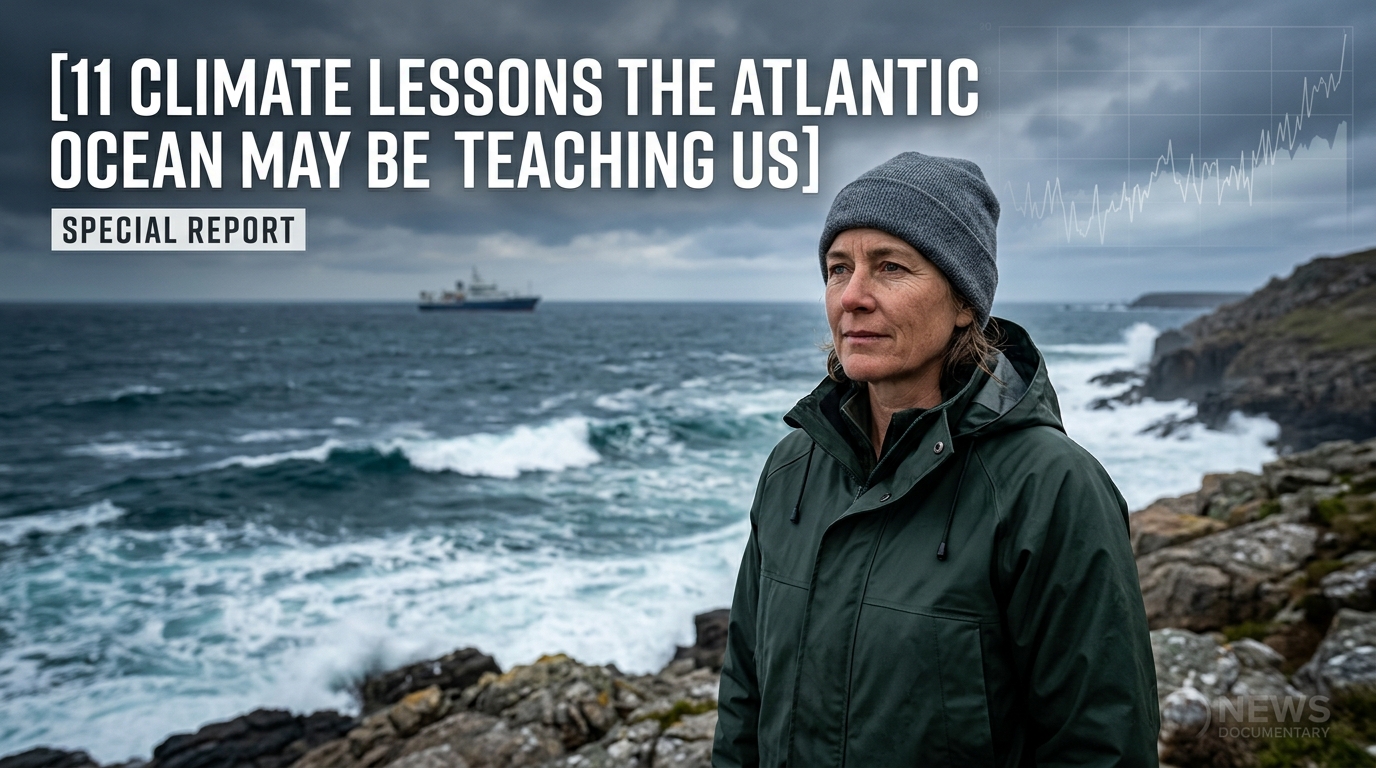
The Atlantic Ocean is more than a vast body of water separating continents. It is one of Earth’s most influential climate systems, affecting weather patterns, ocean currents, ecosystems, and even economies across the globe. Stretching from the Arctic to Antarctica, the Atlantic acts like a giant engine that helps regulate temperatures and distribute heat around the planet.
For scientists studying climate change, the Atlantic Ocean has become an invaluable source of information. Its changing temperatures, shifting currents, rising sea levels, and evolving marine ecosystems provide clues about how Earth’s climate is transforming. In many ways, the Atlantic is not just responding to climate change—it is helping us understand it.
Researchers continue to monitor the ocean closely because what happens in the Atlantic rarely stays in the Atlantic. Changes occurring beneath its surface can influence weather thousands of miles away, affecting everything from hurricane seasons to rainfall patterns and fisheries.
Here are 11 important climate lessons the Atlantic Ocean may be teaching us about the future of our planet.
1. Oceans Absorb More Heat Than Most People Realize
One of the most significant climate lessons from the Atlantic is that oceans act as Earth’s largest heat storage system.
While discussions about climate change often focus on air temperatures, the majority of excess heat trapped by greenhouse gases ends up in the oceans. The Atlantic has absorbed enormous amounts of this heat over recent decades, helping to slow the rate of atmospheric warming.
However, this buffering effect comes with consequences. Warmer ocean temperatures can alter marine ecosystems, intensify storms, and contribute to sea-level rise through thermal expansion.
The Atlantic reminds us that climate change is not just happening in the atmosphere—it is happening throughout the entire Earth system.
2. Small Temperature Changes Can Have Big Impacts
A shift of just one or two degrees may not sound dramatic in everyday life, but in the ocean, even slight temperature increases can produce significant effects.
Warmer Atlantic waters influence weather systems, ocean circulation, and marine species distributions. Certain fish populations move toward cooler waters, while coral ecosystems become increasingly vulnerable to stress.
These changes highlight an important climate lesson: relatively small averages can create major environmental consequences when applied across entire ecosystems.
The Atlantic demonstrates how sensitive natural systems can be to even modest warming trends.
3. Ocean Currents Help Regulate Global Climate
The Atlantic is home to one of the world’s most important circulation systems.
Often referred to as the Atlantic Meridional Overturning Circulation (AMOC), this vast network of currents helps transport warm water northward and cold water southward. It plays a crucial role in regulating temperatures across Europe, North America, and beyond.
Scientists continue studying whether climate change could affect the strength of these currents. Any significant alteration could influence regional weather patterns and long-term climate conditions.
The lesson is clear: ocean circulation is not a background process. It is a critical component of the climate system that deserves careful attention.
4. Sea-Level Rise Is Already Happening
The Atlantic coastline provides a visible reminder that sea-level rise is not merely a future concern.
Many coastal communities are already experiencing more frequent flooding, higher storm surges, and increased erosion. Rising seas result from a combination of melting land ice and the expansion of warming ocean water.
The Atlantic’s changing shoreline offers an important lesson about the long-term nature of climate change. Even if greenhouse gas emissions were reduced immediately, some degree of sea-level rise would continue due to heat already stored in the oceans.
Planning and adaptation have therefore become essential parts of climate resilience.
5. Stronger Storms Thrive on Warm Water
The Atlantic hurricane season attracts global attention every year, and ocean temperatures play a major role in storm development.
Hurricanes draw energy from warm ocean water. As sea surface temperatures increase, storms may gain access to more fuel, potentially increasing rainfall intensity and strengthening some weather systems.
While many factors influence hurricanes, the Atlantic demonstrates the close relationship between ocean conditions and extreme weather.
This lesson underscores how interconnected Earth’s climate systems truly are.
6. Marine Ecosystems Are Powerful Indicators of Change
Fish, whales, seabirds, coral communities, and plankton all respond to environmental conditions.
Because marine species often react quickly to changing temperatures, scientists use them as indicators of broader climate trends. Shifts in migration patterns, breeding seasons, and habitat ranges can provide early signs of environmental change.
The Atlantic serves as a living laboratory where researchers can observe how ecosystems adapt—or struggle to adapt—to evolving conditions.
These biological responses often reveal climate impacts long before they become obvious to human observers.
7. The Ocean Is Absorbing Carbon Dioxide
The Atlantic does more than absorb heat. It also removes significant amounts of carbon dioxide from the atmosphere.
Through physical and biological processes, the ocean acts as an important carbon sink, helping reduce the concentration of greenhouse gases in the air.
This natural service has slowed some aspects of climate change. However, there is a trade-off.
As seawater absorbs more carbon dioxide, ocean chemistry changes, leading to a phenomenon known as ocean acidification. This process can affect shell-forming organisms and disrupt marine food webs.
The Atlantic teaches us that nature can help moderate climate change, but those systems also have limits.
8. Climate Effects Do Not Respect Borders
The Atlantic touches numerous countries and influences weather across multiple continents.
A temperature shift in one region can affect rainfall elsewhere. Changes in ocean circulation can influence weather thousands of miles away. Storm systems can travel across entire ocean basins.
This interconnectedness provides a powerful climate lesson: environmental challenges are rarely confined to a single nation.
International cooperation becomes essential when dealing with systems as vast and interconnected as the Atlantic Ocean.
Climate change is ultimately a global issue that requires global awareness.
9. Long-Term Monitoring Matters
Much of what scientists know about climate trends comes from decades of careful observation.
Ocean buoys, satellites, research vessels, underwater instruments, and climate models have allowed researchers to track changes occurring throughout the Atlantic. Without these long-term datasets, many climate patterns would remain hidden.
The Atlantic teaches us the value of patience in science. Meaningful trends often emerge over years or decades rather than days or weeks.
Continued monitoring remains essential for understanding what changes are occurring and how quickly they are unfolding.
10. Nature Can Be Resilient—But Not Unlimited
One encouraging lesson from the Atlantic is that ecosystems often possess remarkable resilience.
Many species adapt to changing conditions, and some ecosystems recover after disturbances. Ocean life has survived natural climate shifts throughout Earth’s history.
However, resilience has limits.
When environmental changes occur too rapidly or become too severe, ecosystems can struggle to keep pace. Species may lose habitat, food sources, or breeding grounds faster than they can adapt.
The Atlantic highlights both the strength and vulnerability of natural systems, reminding us that resilience should not be taken for granted.
11. Climate Change Is Easier to Understand When You See It
For many people, climate change can feel abstract.
Graphs, statistics, and scientific reports are important, but they may seem distant from everyday experience. The Atlantic Ocean offers visible, tangible examples of climate-related changes that people can observe directly.
Coastal flooding, changing fisheries, warmer waters, stronger rainfall events, and shifting ecosystems make climate science more relatable and understandable.
The ocean helps transform a global issue into something people can see, measure, and experience.
That visibility may be one of its most important lessons.
Why the Atlantic Ocean Matters So Much
The Atlantic is often described as one of the planet’s climate regulators, and for good reason.
Its currents transport energy around the globe. Its waters absorb heat and carbon dioxide. Its ecosystems support biodiversity and fisheries. Its weather systems influence millions of people across multiple continents.
Because the Atlantic interacts with so many aspects of Earth’s environment, changes occurring there often serve as early indicators of broader climate trends.
Scientists study the Atlantic not because it is isolated, but because it is deeply connected to everything else.
Understanding its behavior helps us better understand the planet as a whole.
What Researchers Are Watching Closely
Looking ahead, scientists continue monitoring several important developments within the Atlantic.
These include changes in ocean circulation, rising sea temperatures, sea-level trends, hurricane behavior, marine biodiversity, and carbon absorption capacity.
Each of these factors offers valuable insights into how Earth’s climate system is evolving.
Advances in satellite technology, underwater robotics, and climate modeling are providing researchers with more detailed information than ever before. As a result, our understanding of the Atlantic’s role in climate dynamics continues to improve.
Every new observation contributes another piece to a complex global puzzle.
Final Thoughts
The Atlantic Ocean is far more than a geographic feature on a map. It is one of Earth’s most important climate storytellers.
From warming waters and shifting currents to rising seas and changing ecosystems, the Atlantic provides a powerful window into the challenges and opportunities facing our planet. Its lessons remind us that climate change is not a distant concept—it is an ongoing process affecting interconnected systems around the world.
Perhaps the most important message the Atlantic offers is one of awareness. By paying attention to the signals emerging from the ocean, we gain a clearer understanding of how our world is changing and what actions may help shape a more resilient future.
As researchers continue to study this vast and dynamic ocean, the Atlantic will undoubtedly remain one of our greatest teachers in the ongoing effort to understand Earth’s changing climate.







