Addiction is one of the most misunderstood topics in modern health and psychology. For decades, many people viewed addiction as simply a lack of willpower or a series of poor choices. However, scientific research has painted a far more complex picture.
Today, experts understand that addiction involves changes in the brain, behavior, emotions, and environment. It can affect people from every age group, income level, and background. Whether the addiction involves nicotine, alcohol, prescription medications, gambling, or other behaviors, the underlying mechanisms often share surprising similarities.
While researchers continue to learn more about addiction every year, several important findings have remained remarkably consistent. These discoveries have helped reshape public understanding and improve approaches to prevention, treatment, and recovery.
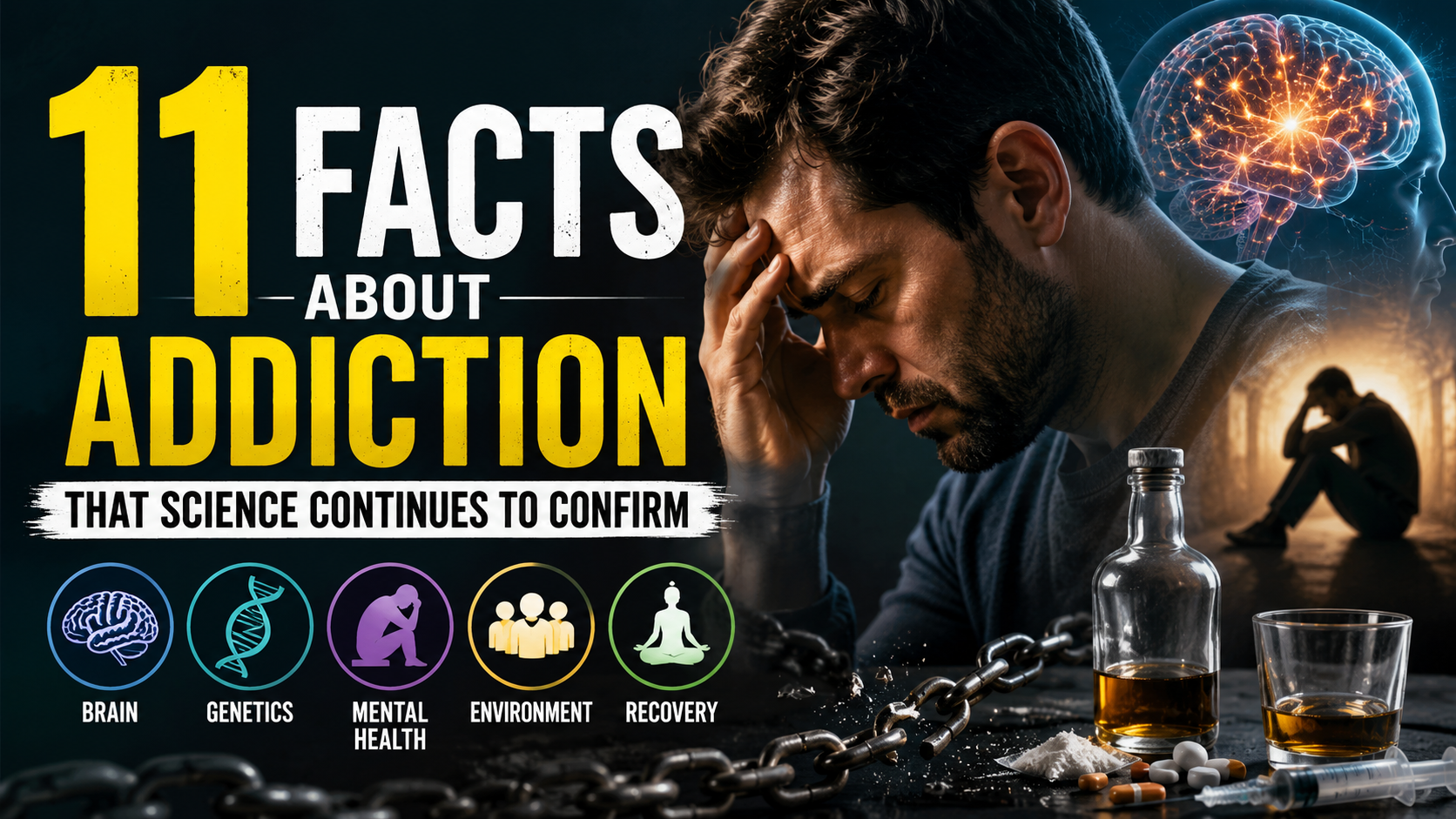
Here are 11 facts about addiction that science continues to support.
1. Addiction Is a Brain Disorder, Not Simply a Lack of Willpower
One of the most important discoveries in addiction science is that addiction changes how the brain functions.
Repeated exposure to addictive substances or behaviors can alter brain circuits involved in motivation, reward, decision-making, and self-control. These changes can make it increasingly difficult for a person to stop, even when they understand the negative consequences.
This doesn’t mean individuals lose all responsibility for their actions. Rather, it explains why quitting is often far more challenging than simply deciding to stop.
Understanding addiction as a health condition rather than a moral failure has helped reduce stigma and encourage more effective treatment approaches.
2. The Brain’s Reward System Plays a Central Role
The human brain is designed to reward behaviors that support survival and well-being.
Activities such as eating, socializing, learning, and achieving goals activate reward pathways that create feelings of pleasure and satisfaction.
Addictive substances and behaviors can trigger these same systems—but often much more intensely.
Over time, the brain begins associating the addictive behavior with reward, making cravings stronger and increasing the desire to repeat the activity.
Scientists continue to find that these reward pathways are a key component in understanding how addiction develops and persists.
3. Genetics Can Influence Risk
Research consistently shows that genetics contribute to addiction vulnerability.
Having a family history of addiction does not guarantee that someone will develop a substance use disorder. However, inherited traits may affect how individuals respond to certain substances, how strongly they experience rewards, and how susceptible they are to dependence.
Genetics are only one piece of the puzzle.
Environmental factors, personal experiences, mental health, and lifestyle choices also play major roles in determining risk.
The interaction between genes and environment remains one of the most studied areas of addiction science.
4. Stress Often Increases Vulnerability
Chronic stress is strongly linked to addictive behaviors.
When people experience ongoing stress, anxiety, trauma, or emotional distress, they may be more likely to seek temporary relief through substances or behaviors that provide comfort or escape.
Scientists have found that stress can influence both the development of addiction and the likelihood of relapse during recovery.
This connection helps explain why effective treatment often addresses emotional well-being alongside the addiction itself.
Managing stress through healthy coping strategies can be an important part of long-term recovery.
5. Addiction Can Affect Anyone
Many stereotypes suggest addiction only affects certain groups of people.
Scientific evidence tells a different story.
Addiction does not discriminate based on age, education, profession, income, or social status. People from every background can develop substance use disorders or behavioral addictions.
While risk factors vary, no one is completely immune.
Recognizing this reality helps reduce judgment and encourages a more compassionate understanding of those affected.
6. Mental Health and Addiction Are Often Connected
Researchers frequently observe a strong relationship between addiction and mental health conditions.
Individuals struggling with depression, anxiety disorders, post-traumatic stress disorder (PTSD), or other psychological challenges may face a higher risk of developing addiction.
In some cases, people use substances to temporarily cope with emotional pain. In other situations, substance use can worsen existing mental health symptoms.
Because these issues often influence one another, many treatment programs now address both addiction and mental health simultaneously.
This integrated approach has been shown to improve outcomes for many individuals.
7. Recovery Is Possible at Any Stage
One of the most encouraging findings in addiction research is that recovery remains possible—even after years of struggle.
The brain has an extraordinary ability to adapt and heal.
Scientists have discovered that many brain functions affected by addiction can improve over time when individuals receive support, treatment, and maintain recovery efforts.
Progress may not happen overnight, and setbacks can occur, but meaningful improvement is achievable.
Countless people have rebuilt healthy, productive lives after overcoming severe addiction challenges.
8. Relapse Does Not Mean Failure
Recovery is often a long-term process rather than a single event.
Many people experience setbacks along the way. Scientists compare addiction recovery to the management of other chronic health conditions, where symptoms may occasionally return despite treatment.
A relapse should not automatically be viewed as proof that recovery has failed.
Instead, it may signal that treatment plans need adjustment, additional support is required, or certain triggers need better management.
Viewing relapse through a medical rather than moral lens helps encourage continued recovery efforts.
9. Social Support Improves Recovery Outcomes
Human connection plays a powerful role in overcoming addiction.
Research consistently shows that individuals with strong support systems often experience better recovery outcomes than those who feel isolated.
Support can come from many sources:
- Family members
- Friends
- Counselors
- Support groups
- Recovery communities
- Healthcare professionals
Positive relationships provide accountability, encouragement, and emotional stability.
Feeling connected to others can significantly strengthen long-term recovery efforts.
10. Environment Influences Behavior More Than Many People Realize
Addiction is not driven solely by internal factors.
External environments also play an important role.
People are often influenced by their surroundings, including social circles, availability of substances, community norms, stress levels, and daily routines.
Certain environments may increase temptation and exposure to triggers.
Conversely, supportive environments can encourage healthier behaviors and reduce risk.
Modern addiction science increasingly recognizes that successful recovery often involves making changes not only within the individual but also within their environment.
11. Prevention Is Often More Effective Than Treatment
While treatment can be highly effective, prevention remains one of the most powerful tools available.
Researchers continue to find that early education, healthy coping skills, strong family support, positive social environments, and mental health resources can significantly reduce addiction risk.
The earlier protective factors are introduced, the greater their potential impact.
Prevention efforts help individuals develop resilience before addiction takes hold, reducing both personal suffering and broader public health challenges.
Why Addiction Remains So Misunderstood
Despite decades of research, misconceptions about addiction remain widespread.
Part of the confusion stems from the visible behaviors associated with addiction. People often see the actions but not the biological, psychological, and environmental forces driving them.
Additionally, addiction affects judgment and decision-making, which can make behavior appear contradictory or irrational to outside observers.
Scientific research continues to show that addiction is rarely caused by a single factor. Instead, it emerges from a complex combination of genetics, brain chemistry, life experiences, emotional health, social influences, and environmental conditions.
This complexity is one reason why treatment approaches must often be personalized rather than one-size-fits-all.
What Science Says About Compassion
One of the most important lessons from addiction research is the value of compassion.
Studies suggest that stigma and shame can discourage people from seeking help. Fear of judgment often prevents individuals from discussing their struggles openly.
Supportive responses, on the other hand, can increase treatment engagement and improve recovery outcomes.
Compassion does not mean ignoring harmful behavior. It means recognizing that addiction is a serious health challenge that deserves evidence-based solutions and understanding.
As public awareness grows, many communities are shifting toward approaches that prioritize treatment, education, and support rather than blame alone.
The Future of Addiction Research
Scientists continue exploring new ways to prevent and treat addiction.
Current research is examining areas such as:
- Brain imaging technologies
- Personalized treatment strategies
- Mental health integration
- Digital recovery tools
- Medication-assisted therapies
- Early intervention programs
- Behavioral science techniques
These advancements may help improve outcomes and expand access to care in the years ahead.
The growing body of evidence continues to reinforce a simple but powerful message: addiction is treatable, recovery is possible, and understanding the science can help reduce stigma while supporting healthier lives.
Final Thoughts
Addiction is far more complex than many people realize. Scientific research has repeatedly shown that it involves brain function, genetics, environment, mental health, and social influences working together in powerful ways.
The 11 facts explored here highlight a consistent theme: addiction is not simply a matter of choice or character. It is a multifaceted health condition that requires understanding, support, and evidence-based solutions.
Perhaps the most encouraging finding of all is that recovery remains possible. With the right combination of treatment, support, education, and resilience, people can overcome addiction and build meaningful, healthy futures.
As science continues to advance, our understanding of addiction becomes clearer—and with that understanding comes greater hope for prevention, recovery, and lasting change.







