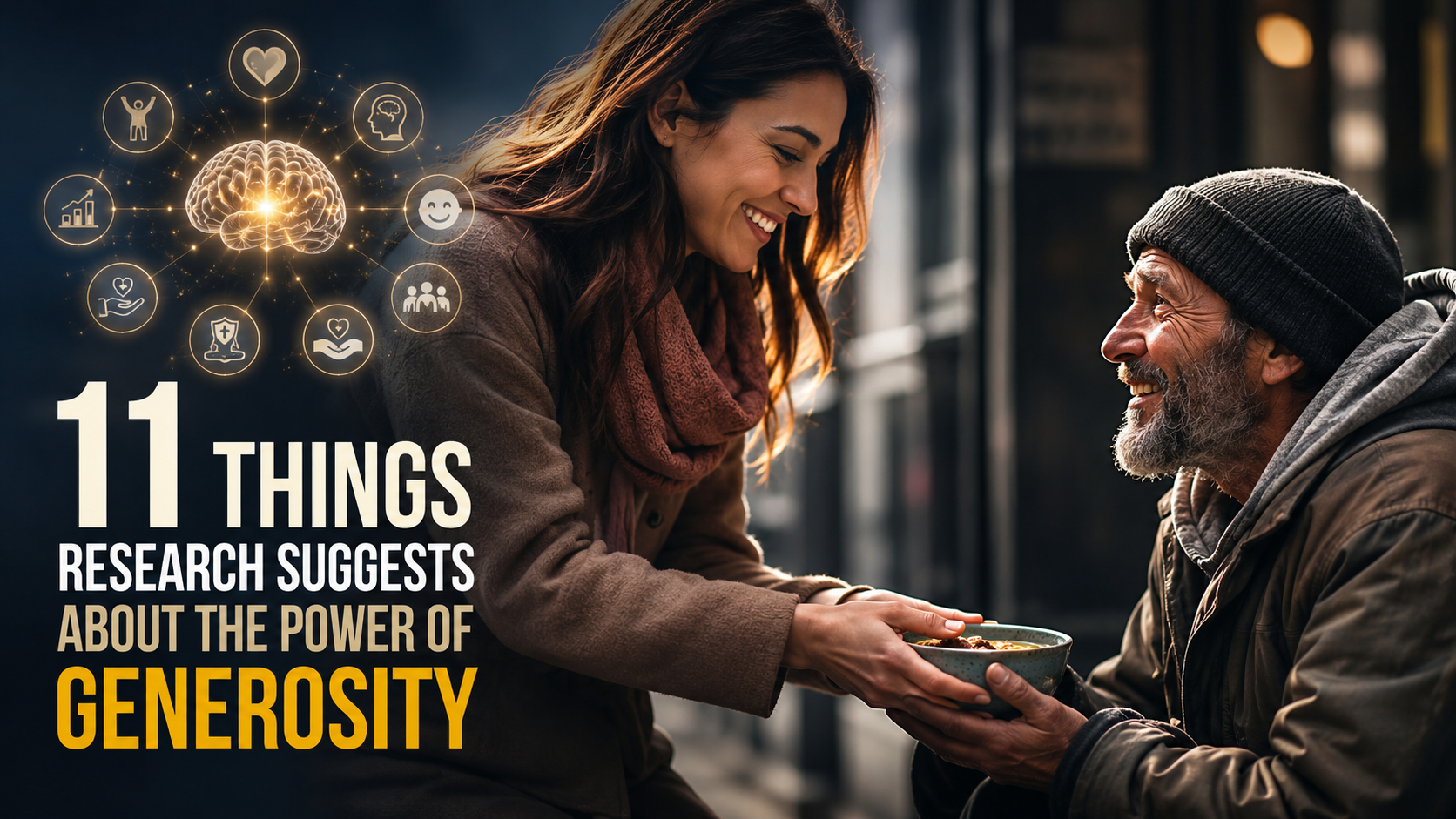
Generosity is often thought of as a simple act of kindness—helping a neighbor, donating to a worthy cause, or offering support to someone in need. While these actions undoubtedly benefit others, a growing body of research suggests that generosity may have far-reaching effects that extend well beyond the recipient.
Scientists, psychologists, and social researchers have spent decades studying how acts of giving influence individuals, relationships, and communities. Their findings reveal that generosity is more than just a moral virtue. It can positively affect mental well-being, strengthen social bonds, improve physical health, and even contribute to greater life satisfaction.
Whether generosity takes the form of donating money, volunteering time, sharing knowledge, or offering emotional support, the impact can be surprisingly powerful. Here are 11 things research suggests about the remarkable power of generosity.
1. Generosity Can Increase Happiness
One of the most consistent findings in research is the connection between giving and happiness.
Studies have shown that people often experience positive emotions after helping others. Whether donating to charity, buying a gift for someone, or volunteering for a cause, acts of generosity can create feelings of fulfillment and joy.
Researchers believe this occurs because helping others activates reward centers in the brain associated with pleasure and satisfaction. Many people report that giving provides a deeper and more lasting sense of happiness than spending resources solely on themselves.
2. It Helps Strengthen Social Connections
Human beings are naturally social creatures, and generosity plays a major role in building relationships.
Acts of kindness foster trust, cooperation, and goodwill between individuals. When people help one another, they create stronger personal and professional connections that can lead to lasting friendships and supportive communities.
Strong social relationships are linked to greater well-being and resilience, making generosity an important tool for cultivating meaningful human connections.
3. Giving Can Reduce Feelings of Stress
Helping others may also provide benefits during stressful periods.
Research suggests that people who regularly engage in charitable or supportive activities often report lower levels of stress. Acts of generosity can shift attention away from personal worries and create a greater sense of perspective.
Supporting others can also promote feelings of purpose and control, both of which may help individuals cope more effectively with life’s challenges.
4. Generosity Encourages a Sense of Purpose
Many people find meaning in contributing to something larger than themselves.
Whether mentoring a student, volunteering in the community, or supporting a charitable cause, generosity can provide a sense of direction and significance. Knowing that one’s actions are making a positive difference often reinforces feelings of purpose.
Research has consistently linked purpose-driven activities with greater life satisfaction and emotional well-being.
5. It Can Improve Community Well-Being
The effects of generosity are not limited to individuals.
Communities where people frequently help one another often experience higher levels of trust, cooperation, and social cohesion. Generous actions create networks of support that make communities more resilient during difficult times.
When people contribute their time, resources, and energy to local causes, the benefits can ripple outward, improving the quality of life for many others.
6. Giving May Support Better Mental Health
Research has found connections between generosity and positive mental health outcomes.
Acts of kindness can help reduce feelings of loneliness and isolation while increasing feelings of belonging. Helping others often promotes positive emotions such as gratitude, compassion, and empathy.
Although generosity is not a substitute for professional mental health care, engaging in meaningful acts of giving may contribute to overall emotional well-being and psychological resilience.
7. Volunteering Is Associated With Positive Outcomes
Volunteering is one of the most widely studied forms of generosity.
People who volunteer frequently report higher levels of life satisfaction and social engagement. Volunteering can provide opportunities to develop skills, meet new people, and contribute to causes that align with personal values.
Researchers have also observed that volunteers often experience a stronger sense of connection to their communities, which can further enhance overall well-being.
8. Generosity Can Inspire Others to Give
Kindness is often contagious.
When people witness acts of generosity, they are more likely to engage in similar behaviors themselves. This phenomenon creates a ripple effect that can spread throughout families, workplaces, schools, and communities.
A single generous action may encourage others to help, creating a chain reaction that multiplies positive outcomes far beyond the original gesture.
9. It Strengthens Relationships
Healthy relationships are built on mutual support, trust, and care.
Generosity contributes to these foundations by demonstrating concern for the well-being of others. Whether through small daily acts or significant sacrifices, giving helps reinforce emotional bonds and deepen connections.
Research suggests that individuals who consistently show generosity within relationships often experience greater relationship satisfaction and stronger interpersonal trust.
10. Generous People Often Report Greater Life Satisfaction
Many studies have found a link between generosity and overall life satisfaction.
People who regularly help others often describe their lives as more meaningful and rewarding. This does not necessarily mean that generosity eliminates difficulties or guarantees happiness, but it may contribute to a broader sense of fulfillment.
Giving can help individuals focus on values, relationships, and experiences that bring lasting significance rather than temporary gratification.
11. Generosity Creates Lasting Positive Impact
Perhaps the most powerful aspect of generosity is its ability to create change that extends far beyond a single moment.
A donation can support a family in need. A mentor can influence a student’s future. A volunteer can strengthen an entire community program. Even simple acts of kindness can leave lasting impressions that affect people for years.
Research continues to show that generosity often produces benefits for both the giver and the recipient, creating positive outcomes that can spread across generations.
Why Humans Are Naturally Drawn to Generosity
Scientists believe generosity may have deep evolutionary and social roots.
Throughout human history, cooperation and mutual support helped communities survive and thrive. Individuals who shared resources, protected one another, and worked together often increased their chances of success.
As a result, many researchers believe that generosity became an important part of human social behavior. Today, acts of giving continue to strengthen relationships and contribute to the well-being of groups and societies.
Small Acts Can Make a Big Difference
One common misconception is that generosity requires significant wealth or resources.
In reality, some of the most meaningful acts of generosity involve simple gestures. Listening to a friend, helping a neighbor, offering encouragement, or volunteering a few hours of time can have a substantial impact.
Research suggests that even small acts of kindness can produce positive emotional effects and contribute to stronger social connections.
The value of generosity often lies not in the size of the gesture but in the intention behind it.
The Ripple Effect of Giving
Generosity rarely ends with a single act.
When people receive kindness, they often feel inspired to help others. This creates a ripple effect that spreads through families, workplaces, and communities. A supportive teacher may inspire future educators. A generous mentor may encourage others to guide the next generation.
Over time, these acts accumulate, contributing to cultures of compassion, cooperation, and mutual support.
This ripple effect helps explain why generosity can have such a profound influence on society as a whole.
Final Thoughts
Research continues to reveal what many people have long believed: generosity is a powerful force for positive change. From increasing happiness and reducing stress to strengthening relationships and improving community well-being, acts of giving can benefit both individuals and society.
The beauty of generosity is that it is accessible to nearly everyone. It does not always require money or grand gestures. Sometimes the most meaningful forms of generosity involve offering time, attention, compassion, or encouragement.
These 11 research-backed insights highlight the remarkable impact that kindness and giving can have on our lives. In a world often focused on what people can gain, generosity reminds us of the value of what we can share—and how those simple acts can make a lasting difference for ourselves and others.







