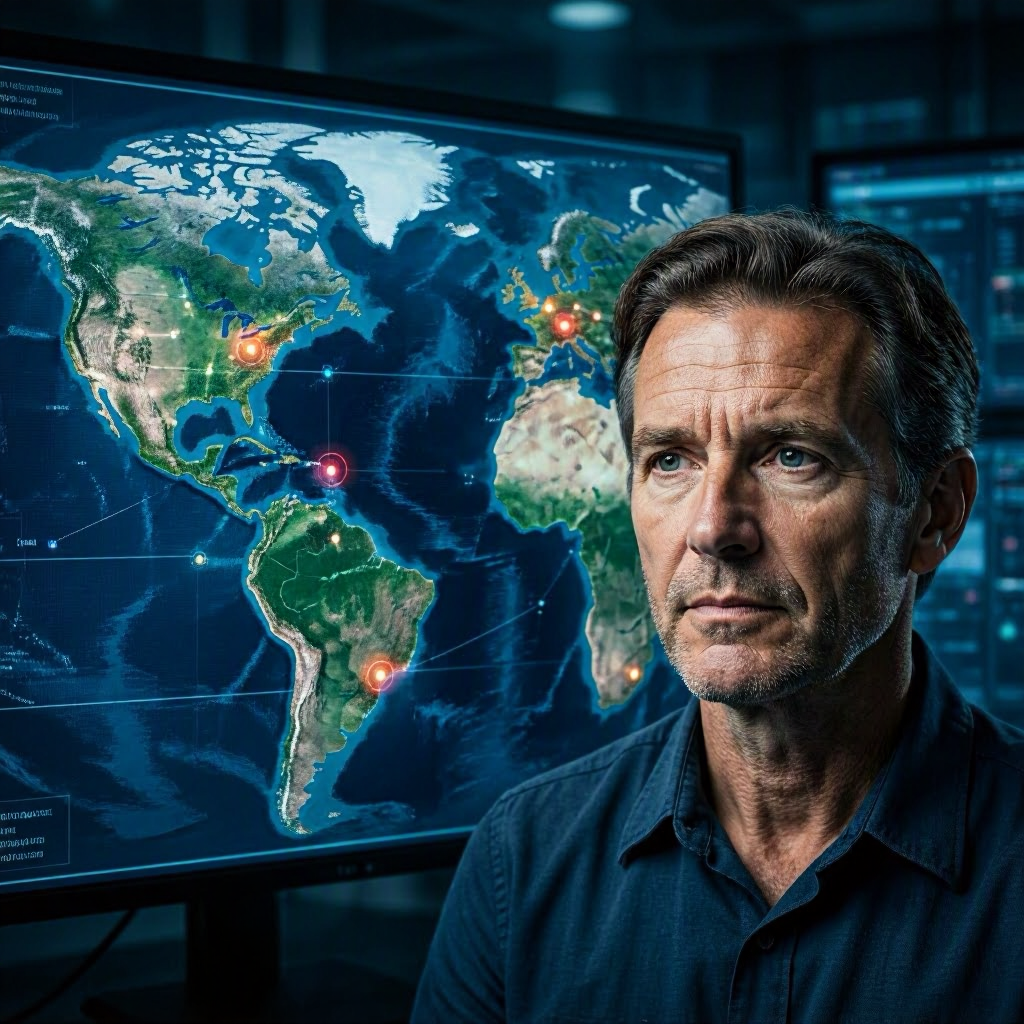
In an age of instant communication, major alerts can travel around the world in seconds. Yet few warnings capture global attention quite like those triggered by powerful natural events that affect multiple countries at once. Whether caused by a massive undersea earthquake, a tsunami threat, or another large-scale emergency, a global alert that stretches across oceans is a remarkable demonstration of both nature’s power and humanity’s interconnectedness.
When such alerts are issued, millions—and sometimes billions—of people may receive warnings within minutes. Governments coordinate responses, scientists analyze real-time data, and communities prepare for potential impacts. Behind every major international alert lies a fascinating story of technology, science, and cooperation.
Here are 12 incredible facts about the global alerts that have spanned oceans and captured the world’s attention.
1. A Single Event Can Trigger Warnings Across Multiple Continents
Many people assume emergency alerts are local or regional. However, powerful geological events can have consequences thousands of miles away.
A major undersea earthquake, for example, may generate concerns across entire ocean basins. In some cases, warnings are issued to dozens of countries scattered across multiple continents.
What begins in one location can quickly become a matter of international concern.
2. Modern Detection Systems Operate Around the Clock
The world is constantly monitored by networks of sensors, satellites, seismographs, and ocean buoys.
These systems work 24 hours a day, detecting unusual activity within seconds. Scientists can often identify the location, depth, and magnitude of a major event almost immediately after it occurs.
This rapid detection is essential when every minute counts.
3. Alerts Can Reach Millions Within Minutes
Decades ago, warning distant communities could take hours.
Today, emergency notifications can spread through mobile phones, television broadcasts, radio systems, social media platforms, and government communication networks almost instantly.
In some situations, people receive alerts before they even learn what caused the emergency.
4. Ocean Monitoring Technology Is More Advanced Than Most People Realize
Specialized instruments are stationed throughout the world’s oceans to monitor changes in water pressure and sea levels.
These devices can detect unusual ocean movements and relay information to monitoring centers in real time. Combined with satellite observations, they provide valuable data that helps experts determine whether a threat is developing.
The technology quietly protects millions of people every day.
5. International Cooperation Is Essential
No single country can monitor an entire ocean alone.
Major warning systems rely on cooperation between governments, scientific organizations, research institutions, and emergency agencies. Data is shared across borders to create the most accurate picture possible.
This global partnership is one of the most successful examples of international scientific collaboration.
6. Most Alerts Are Issued Out of Caution
When authorities issue a large-scale warning, it doesn’t necessarily mean disaster is certain.
Emergency officials often act on incomplete information during the early stages of an event. Warnings may be expanded or adjusted as additional data becomes available.
The goal is to protect lives by providing communities with enough time to prepare.
7. Satellites Play a Critical Role
Modern satellites provide an extraordinary view of Earth’s oceans and atmosphere.
They help scientists track changes in sea levels, monitor weather conditions, and support communication networks that distribute alerts worldwide.
Without satellites, coordinating large-scale warnings across vast distances would be far more difficult.
8. Coastal Communities Often Have Detailed Response Plans
Many regions vulnerable to ocean-related hazards conduct regular drills and preparedness exercises.
Schools, businesses, emergency responders, and local governments often practice evacuation procedures long before any real threat appears.
These preparations can significantly reduce confusion when an actual alert is issued.
9. Social Media Has Changed Emergency Communication
In previous generations, people relied primarily on television and radio for urgent updates.
Today, information spreads instantly through social media platforms, allowing emergency agencies to communicate directly with the public. This can accelerate awareness, though it also increases the importance of verifying information through official sources.
Accurate communication has become as important as rapid communication.
10. The Largest Alerts Can Affect Hundreds of Millions of People
Some international warnings cover enormous geographic areas.
Entire coastlines may be placed on alert simultaneously, affecting populations that collectively number in the hundreds of millions. Even if the final impact is limited, the scale of coordination involved is extraordinary.
Few other events require such a broad and rapid response.
11. Science Continues to Improve Forecast Accuracy
Researchers are constantly refining the models used to predict how natural hazards will behave.
Advances in computing power, artificial intelligence, satellite monitoring, and sensor networks are helping experts issue more accurate forecasts than ever before.
Every major event provides valuable data that improves future warning systems.
12. Global Alerts Demonstrate How Connected Humanity Has Become
Perhaps the most remarkable aspect of any ocean-spanning alert is what it reveals about our modern world.
A single event occurring in one corner of the planet can prompt responses from governments, scientists, and citizens thousands of miles away. Information travels almost instantly, and people separated by oceans often follow the same updates in real time.
These moments remind us that while geography may divide us, technology and shared challenges increasingly connect us.
Why These Alerts Matter
Global alerts are far more than emergency notifications. They represent the combined efforts of scientists, engineers, emergency managers, governments, and communication networks working together to protect lives.
Each alert highlights both the immense power of nature and the remarkable capabilities of modern technology. From deep-ocean sensors to satellites orbiting Earth, countless systems operate behind the scenes to provide critical warnings when they are needed most.
As technology continues to advance, future alerts will likely become even faster, more precise, and more effective. But their core purpose will remain the same: ensuring that people have the information they need to stay safe when events on one side of the world have the potential to affect communities on the other.







