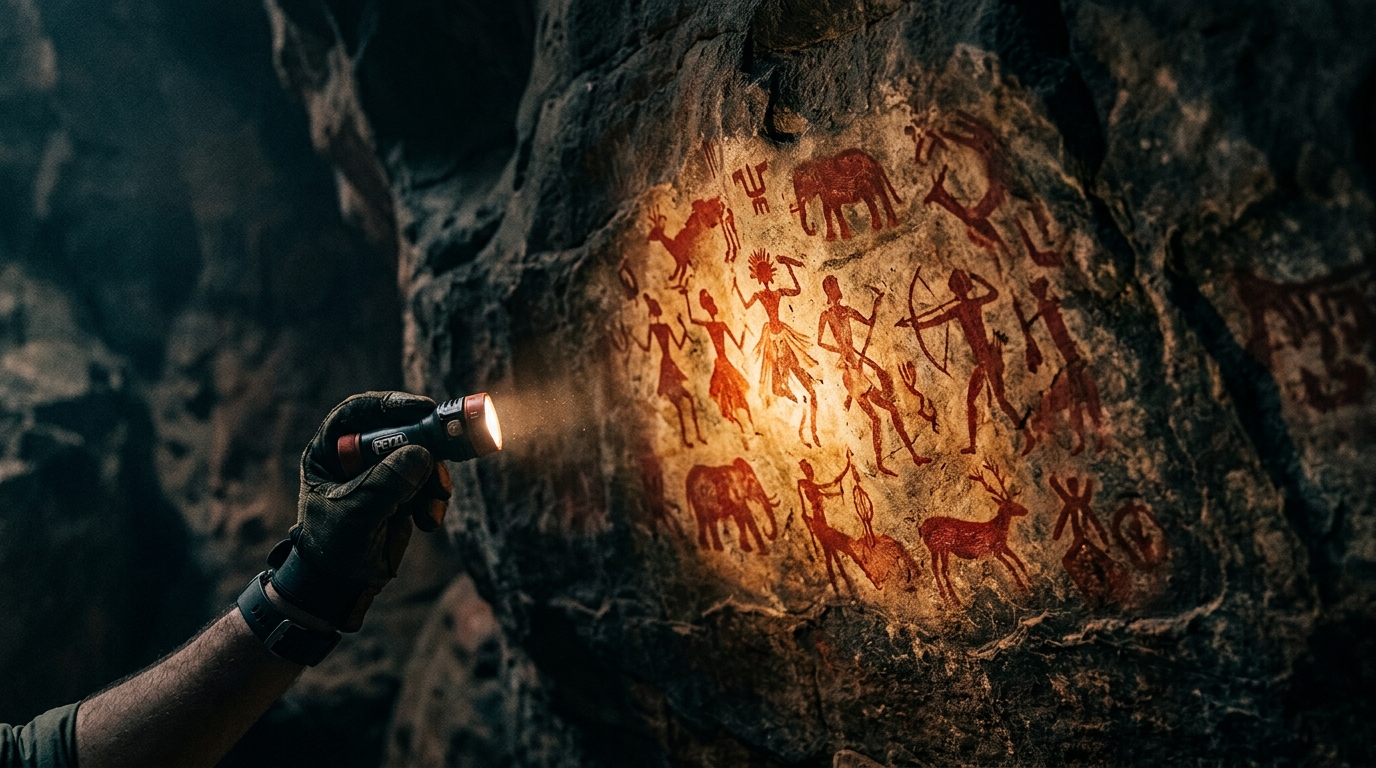
Humanity has always had a desire to tell stories, record experiences, and express ideas through art. Long before written languages emerged, early people painted on cave walls and rocky surfaces, leaving behind visual records of their lives and beliefs. Among the world’s most remarkable examples of prehistoric art are the ancient rock paintings found across India.
Some of these artworks are believed to be thousands of years old, making them among the oldest surviving expressions of human creativity in South Asia. Found in caves and rock shelters, these paintings depict animals, hunting scenes, dancing figures, and everyday activities, offering rare glimpses into the lives of people who lived in a distant and vastly different world.
Here are twelve reasons why ancient rock paintings in India continue to fascinate researchers.
1. They Are Thousands of Years Old
One of the most astonishing aspects of India’s ancient rock paintings is their incredible age.
Many of these artworks were created long before modern civilizations emerged. Some are estimated to be several thousand years old, preserving images made by people who lived during prehistoric periods.
The paintings allow researchers to study human creativity and behavior across an enormous span of time.
2. They Offer a Window Into Prehistoric Life
Unlike written records, prehistoric paintings communicate through images.
Scenes showing hunting, gathering, celebrations, and interactions with animals provide valuable clues about how ancient communities lived. Researchers can learn about daily activities, survival strategies, and social behaviors that would otherwise remain unknown.
The paintings function as visual messages sent across millennia.
3. They Reveal Early Artistic Talent
People sometimes underestimate the creative abilities of prehistoric humans.
However, many of India’s rock paintings display remarkable skill and attention to detail. Artists used lines, shapes, and movement to create dynamic scenes that still capture viewers’ imaginations today.
The artwork demonstrates that creativity has been a fundamental part of human nature for a very long time.
4. They Depict Animals That Once Roamed the Region
Many paintings feature animals such as deer, bison, wild boars, and other creatures.
These images help researchers understand the environments in which ancient people lived. In some cases, they provide evidence of species that were once present in regions where they are no longer commonly found.
The paintings contribute valuable information to both archaeology and environmental history.
5. They Suggest Complex Social Lives
The artwork frequently portrays groups of people participating in activities together.
Scenes of dancing, hunting, and community gatherings suggest that prehistoric societies were socially organized and capable of cooperation. Researchers study these images to better understand how early human communities interacted and functioned.
The paintings indicate that social connections and collective activities were important parts of ancient life.
6. The Colors Have Survived for Millennia
One of the most surprising aspects of these paintings is their durability.
Ancient artists often used natural pigments made from minerals, charcoal, and plant materials. Despite the passage of thousands of years, many paintings remain visible today.
Their preservation offers researchers opportunities to study ancient artistic techniques and material choices.
7. They Raise Questions About Symbolism and Meaning
Not every image can be interpreted easily.
Some figures and patterns may have held ceremonial, spiritual, or symbolic significance that remains difficult to fully understand. Researchers continue debating the meanings behind certain images and why they were created.
These mysteries are part of what makes the paintings so intriguing.
8. They Demonstrate Humanity’s Long History of Storytelling
Humans have been communicating through images long before the invention of writing.
The rock paintings suggest that early people wanted to record experiences, share information, and perhaps preserve memories for future generations. Storytelling appears to have deep roots in human history.
The artwork reminds us that the desire to communicate creatively is an enduring human trait.
9. They Help Trace Cultural Development
Archaeologists often examine differences in style, subject matter, and techniques among paintings from different periods.
These variations can provide clues about changing environments, technological advances, and evolving cultural practices. The paintings become valuable tools for reconstructing long-term patterns of human development.
Each image contributes to a broader understanding of the past.
10. They Continue to Inspire Modern Artists and Scholars
Ancient rock art is not merely an object of scientific interest.
Its beauty and creativity continue to inspire contemporary artists, historians, and educators. The paintings serve as reminders that artistic expression transcends time and connects people across generations.
Their influence extends far beyond archaeology.
11. They Highlight India’s Extraordinary Archaeological Heritage
India possesses one of the world’s richest cultural and historical landscapes.
The country’s ancient rock paintings represent an important part of this heritage, preserving evidence of human creativity that spans thousands of years. They attract researchers from around the world who seek to better understand early societies and artistic traditions.
These sites are invaluable cultural treasures.
12. They Remind Us How Much of Human History Remains Mysterious
Perhaps the most fascinating aspect of India’s ancient rock paintings is that they still raise more questions than answers.
Who exactly created every image? Why were certain locations chosen? What stories, beliefs, and emotions inspired the artists? Many mysteries remain unsolved.
The paintings remind us that much of humanity’s distant past is still waiting to be fully understood. Every new study brings additional insights while also revealing how much remains unknown.
Final Thoughts
The ancient rock paintings of India continue to captivate researchers because they provide rare and vivid glimpses into the lives of prehistoric people. They reveal artistic talent, social organization, environmental knowledge, and humanity’s enduring desire to communicate through images.
More importantly, these paintings create a remarkable connection between the present and the distant past. Thousands of years ago, individuals stood before rocky surfaces and transformed their experiences into art. Today, researchers and visitors continue to look at those same images and wonder about the people who created them.
In many ways, the paintings serve as timeless reminders that curiosity, creativity, and storytelling have always been part of what makes us human.







