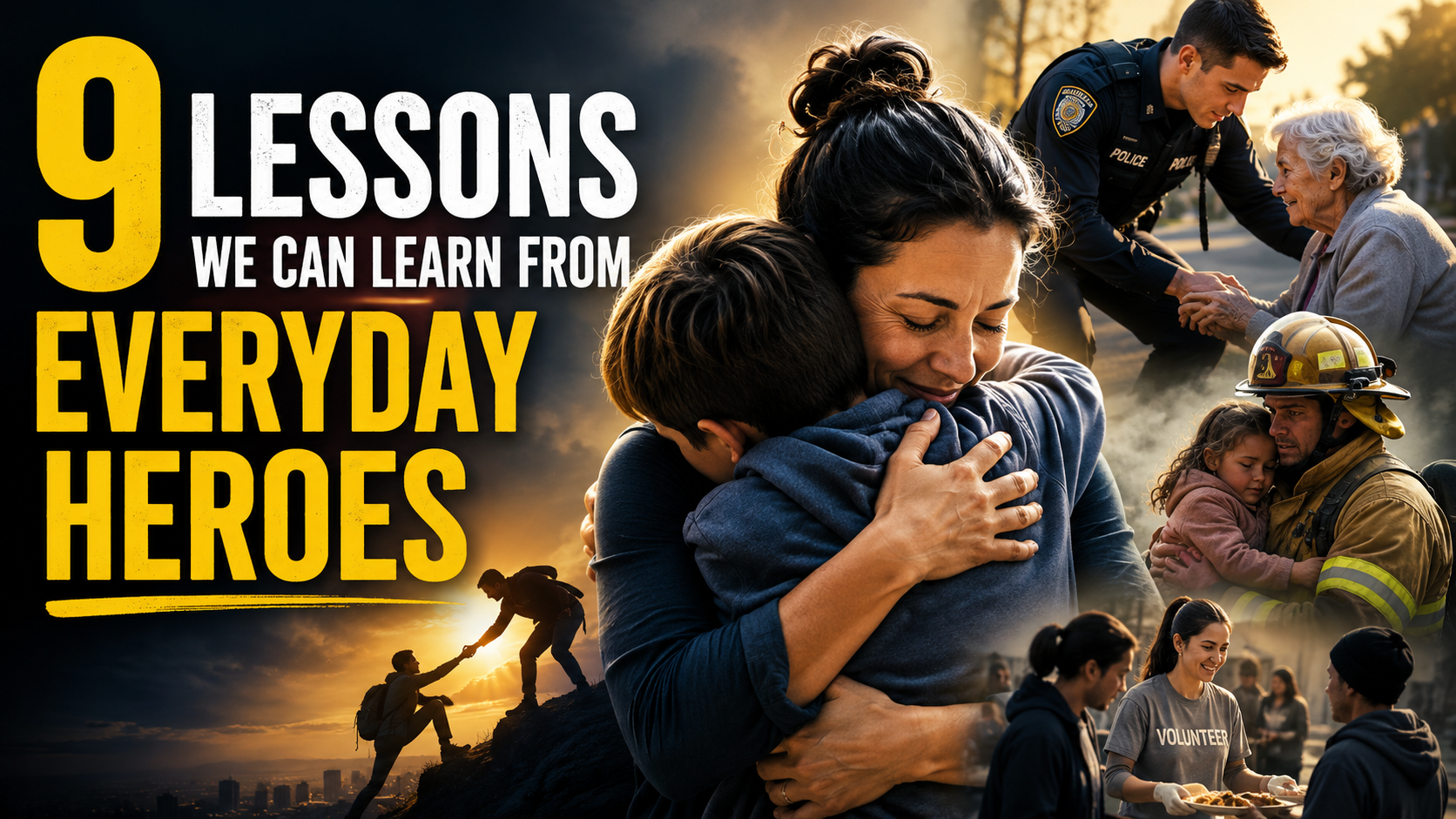
When most people hear the word “hero,” they often think of famous figures, first responders, military personnel, or individuals who perform extraordinary acts under extreme circumstances. While those examples certainly deserve recognition, heroism isn’t limited to headline-making moments.
In reality, heroes walk among us every day. They are teachers who inspire struggling students, neighbors who help families during difficult times, volunteers who dedicate countless hours to their communities, and ordinary people who choose kindness when it would be easier to look the other way.
Everyday heroes rarely seek attention or praise. Their actions are often quiet, consistent, and driven by compassion rather than recognition. Yet their impact can be enormous. They remind us that courage, generosity, and integrity aren’t reserved for a select few—they are qualities that anyone can develop.
Perhaps the greatest gift everyday heroes offer is the lessons they teach through their actions. Here are nine powerful lessons we can learn from the ordinary people who make an extraordinary difference.
1. Courage Often Begins With Small Decisions
Many people imagine courage as a dramatic act performed during a crisis. However, real courage frequently appears in much smaller forms.
It can mean speaking up when something feels wrong. It might involve defending someone being treated unfairly, admitting a mistake, or making a difficult decision despite uncertainty.
Everyday heroes teach us that courage is rarely the absence of fear. Instead, it is the willingness to act despite fear.
Small moments of bravery often lead to larger acts of confidence over time. By practicing courage in everyday situations, people build the strength needed to face bigger challenges when they arise.
2. Kindness Can Have a Lasting Impact
One of the most common traits shared by everyday heroes is kindness.
A simple act—offering encouragement, helping a stranger, listening without judgment, or checking on someone who is struggling—can have a profound effect.
The person receiving that kindness may remember it for years.
Research consistently shows that kindness benefits both the giver and the recipient. It strengthens social connections, improves emotional well-being, and encourages others to behave more compassionately.
Everyday heroes remind us that changing someone’s day doesn’t always require grand gestures. Sometimes the smallest acts leave the deepest impression.
3. You Don’t Need Recognition to Make a Difference
Modern culture often celebrates visibility. Social media, awards, and public recognition can make it seem as though every meaningful contribution should be noticed.
Yet many heroes work quietly behind the scenes.
They volunteer without seeking praise. They help others without expecting anything in return. They focus on the impact of their actions rather than the attention those actions might generate.
This lesson is especially important in a world where validation can sometimes become a goal in itself.
True service is often motivated by genuine care rather than personal gain.
The most meaningful contributions are not always the most visible ones.
4. Compassion Is a Powerful Strength
Some people mistakenly view compassion as a sign of weakness. Everyday heroes prove the opposite.
Showing empathy requires emotional strength. It means taking the time to understand another person’s experiences, challenges, and feelings.
Compassion allows people to connect across differences and support those who may be struggling.
Whether caring for a sick family member, mentoring a young person, or helping someone through a difficult period, compassionate individuals demonstrate remarkable resilience.
Their example teaches us that empathy is one of the most powerful forces for positive change.
5. Leadership Is About Service
Many people associate leadership with authority, status, or professional titles.
However, everyday heroes reveal a different definition of leadership.
True leaders often focus on helping others succeed. They guide, support, encourage, and empower those around them.
A teacher helping students reach their potential is demonstrating leadership. A community volunteer organizing local initiatives is demonstrating leadership. A parent making sacrifices for their family is demonstrating leadership.
These examples show that leadership is less about position and more about service.
The most respected leaders are often those who put the needs of others before their own recognition.
6. Resilience Helps People Overcome Difficult Challenges
Life is filled with setbacks, disappointments, and unexpected obstacles.
Everyday heroes frequently face challenges that would discourage many people. Yet they continue moving forward.
Resilience doesn’t mean ignoring hardship or pretending everything is fine. It means adapting, learning, and finding ways to keep going despite difficulties.
Many inspiring stories involve individuals who overcame personal struggles while continuing to help others.
Their experiences remind us that adversity does not define a person’s future. What matters most is how they respond to it.
Resilience allows people to transform obstacles into opportunities for growth.
7. Small Actions Can Create Ripple Effects
One reason everyday heroes are so influential is that their actions often inspire others.
A single act of kindness can encourage additional acts of kindness. A volunteer may motivate others to get involved. A mentor may inspire future leaders.
These ripple effects can spread far beyond the original action.
History offers countless examples of positive change that began with one person deciding to help.
The lesson is simple but powerful: never underestimate the impact of a small action.
What may seem insignificant today could influence many lives tomorrow.
8. Integrity Matters Even When No One Is Watching
Character is often revealed in moments when there is no audience.
Everyday heroes consistently demonstrate honesty, responsibility, and ethical behavior, even when doing so is inconvenient.
They keep promises, accept accountability, and make decisions based on values rather than personal advantage.
Integrity builds trust, strengthens relationships, and creates credibility over time.
While dishonest shortcuts may provide temporary benefits, long-term respect is usually earned through consistent ethical behavior.
Everyday heroes show that doing the right thing matters—even when nobody notices.
9. Positive Change Starts With Individual Action
Many people see large social problems and feel powerless to make a difference.
Everyday heroes challenge that mindset.
Rather than waiting for perfect circumstances, they begin with what they can do right now. They focus on helping one person, solving one problem, or improving one situation.
Their actions demonstrate an important truth: meaningful change often starts at the individual level.
Communities become stronger because individuals choose to contribute. Movements grow because people decide to take action. Progress occurs because someone is willing to take the first step.
The lesson is empowering. You don’t have to change the entire world at once. You only need to start where you are.
Why Everyday Heroes Matter More Than Ever
In a world dominated by fast-moving news cycles and social media headlines, it’s easy to overlook the positive actions happening around us every day.
Yet everyday heroes play a crucial role in maintaining the social fabric of communities.
They provide support during difficult times, create opportunities for others, and strengthen the bonds that connect people.
Their actions remind us that society functions best when individuals look out for one another.
At a time when many people feel disconnected or overwhelmed, stories of everyday heroism offer hope and perspective.
They demonstrate that compassion, courage, and generosity remain alive in communities everywhere.
The Psychology Behind Heroic Behavior
Researchers have spent decades studying why some people choose to help others, even when doing so involves personal sacrifice.
Interestingly, heroic behavior is often linked to empathy, moral values, and a strong sense of responsibility toward others.
People who consistently help tend to focus less on personal rewards and more on the needs of those around them.
Psychologists also suggest that small acts of helping can strengthen a person’s identity as someone who contributes positively to society.
Over time, those habits become part of who they are.
This means heroism is not necessarily an inborn trait. In many cases, it develops through repeated choices and behaviors.
How Anyone Can Apply These Lessons
The most encouraging aspect of everyday heroism is that it is accessible to everyone.
You don’t need special training, wealth, or extraordinary abilities to make a difference.
You can apply these lessons by:
- Offering support to someone who needs it
- Volunteering in your community
- Practicing kindness in daily interactions
- Standing up for what is right
- Mentoring or encouraging others
- Acting with honesty and integrity
- Looking for opportunities to help
These actions may seem small, but collectively they create stronger relationships and healthier communities.
Final Thoughts
Everyday heroes rarely appear on magazine covers or receive international recognition. Most continue their lives without expecting applause, simply doing what they believe is right.
Yet their influence often reaches farther than they realize.
Through courage, kindness, compassion, resilience, integrity, and service, they teach valuable lessons about what it means to live with purpose and character.
Their stories remind us that heroism is not reserved for extraordinary individuals. It is found in ordinary people who choose to care, help, and act when others might remain silent.
Perhaps the most important lesson of all is this: every person has the potential to become someone else’s hero.
Not through fame or fortune, but through simple actions that make life better for those around them.
And sometimes, those small actions change more lives than we ever know.