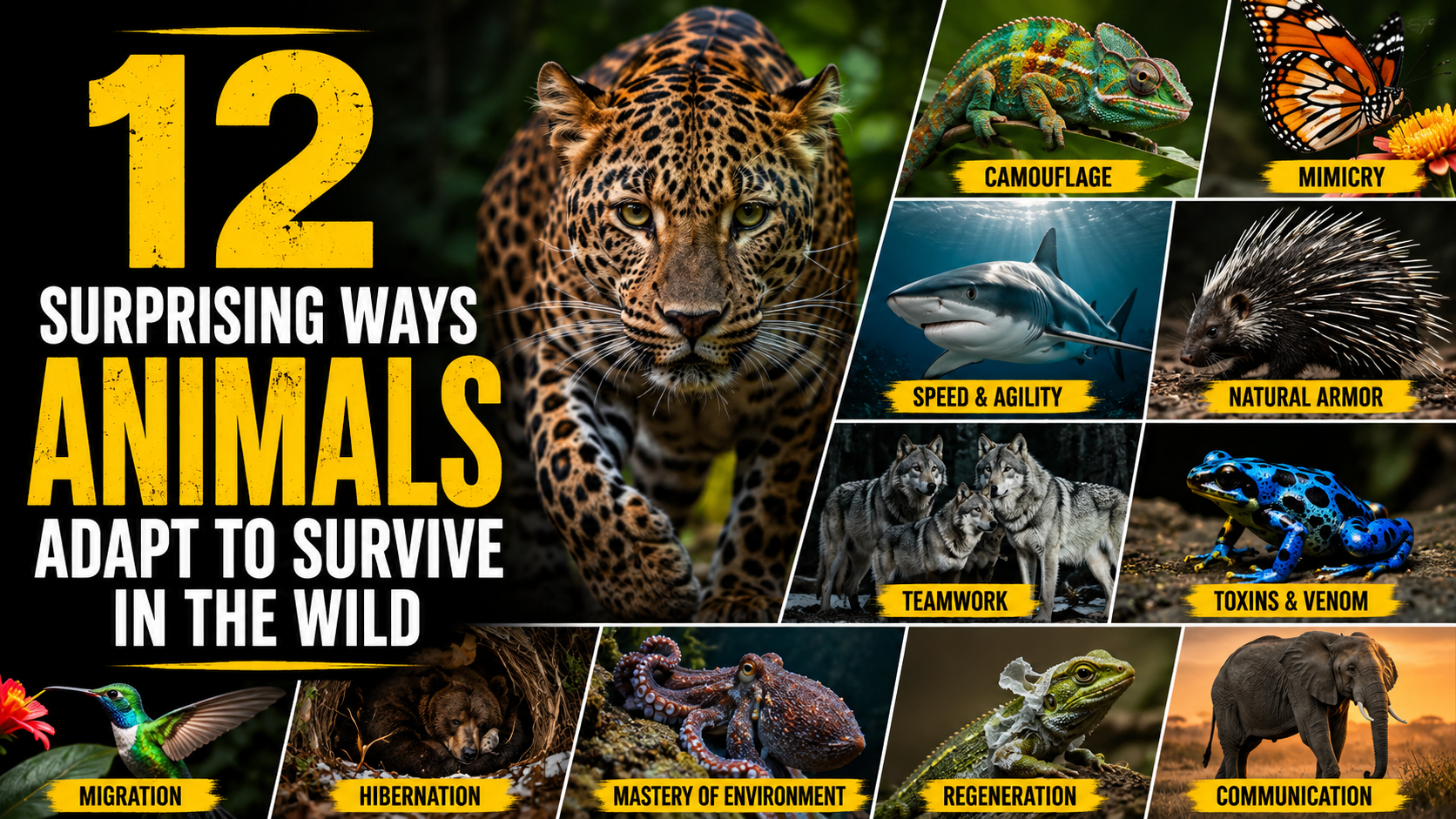
The natural world is full of constant challenges. From extreme temperatures and scarce food to predators and environmental changes, survival in the wild is never easy. Yet animals have developed extraordinary strategies to overcome these challenges over millions of years.
Evolution has shaped creatures in ways that often seem almost unbelievable. Every species carries unique adaptations that help it survive, reproduce, and thrive in its environment.
Here are 12 surprising ways animals adapt to survive in the wild.
1. Camouflage That Makes Animals Nearly Invisible
One of the most remarkable survival strategies is camouflage.
Many animals blend into their surroundings so effectively that they become almost impossible to detect. This helps them both avoid predators and ambush prey.
Examples include:
- Chameleons changing color to match their environment
- Stick insects resembling twigs
- Arctic hares blending into snowy landscapes
- Leopards using spotted coats to hide in grasslands
Camouflage is one of nature’s most effective defense mechanisms.
2. Mimicry That Tricks Predators and Prey
Some animals survive by copying the appearance or behavior of other species.
This adaptation, called mimicry, helps them avoid danger.
For example:
- Some harmless snakes imitate venomous species
- Certain butterflies resemble toxic varieties
- Octopuses can mimic the shape and movement of other sea creatures
By pretending to be something they are not, these animals gain a survival advantage.
3. Extreme Migration Over Long Distances
Migration is another powerful adaptation.
Many species travel thousands of kilometers each year in search of food, breeding grounds, or better climates.
Notable examples include:
- Arctic terns traveling from pole to pole
- Wildebeests crossing African plains
- Monarch butterflies migrating across continents
These journeys are dangerous but essential for survival.
4. Hibernation to Survive Harsh Winters
When food becomes scarce and temperatures drop, some animals enter hibernation.
During this state, their metabolism slows dramatically, conserving energy.
Animals that hibernate include:
- Bears
- Bats
- Ground squirrels
- Certain reptiles
Hibernation allows them to survive long periods without food or activity.
5. Nocturnal Behavior to Avoid Danger
Many animals have adapted to become active at night.
This helps them avoid predators, reduce competition, and take advantage of cooler temperatures.
Nocturnal animals include:
- Owls
- Foxes
- Leopards
- Hedgehogs
Their enhanced night vision and hearing give them a survival edge in darkness.
6. Venom and Poison as Defense Mechanisms
Some animals produce venom or toxins to defend themselves or capture prey.
This adaptation is especially common among reptiles, insects, and marine life.
Examples include:
- Snakes with powerful venom
- Poison dart frogs with toxic skin
- Jellyfish with stinging cells
These chemical defenses make predators think twice before attacking.
7. Speed and Agility for Escape or Hunting
Physical speed is one of the simplest yet most effective survival strategies.
Fast animals can escape predators or catch prey more efficiently.
Examples include:
- Cheetahs, the fastest land animals
- Falcons diving at extreme speeds
- Gazelles making quick directional changes
Speed often determines survival in predator-prey relationships.
8. Protective Armor and Body Structures
Some animals rely on physical protection rather than speed.
Hard shells, thick skin, or spines provide defense against attackers.
Examples include:
- Turtles with protective shells
- Armadillos rolling into armored balls
- Porcupines with sharp quills
These structures make it difficult for predators to cause harm.
9. Group Living and Herd Behavior
Safety in numbers is a powerful survival strategy.
Many animals live and travel in groups to reduce individual risk.
Benefits include:
- Better protection from predators
- Increased chances of finding food
- Cooperative care of young
Examples include:
- Elephants living in herds
- Fish moving in schools
- Wolves hunting in packs
Group behavior increases survival odds significantly.
10. Communication Signals for Survival
Animals use a variety of signals to communicate danger, food availability, or mating readiness.
These signals include sounds, colors, body movements, and even chemical scents.
Examples:
- Bees performing “waggle dances”
- Prairie dogs using warning calls
- Fireflies using light signals
Communication helps coordinate survival strategies.
11. Regeneration of Lost Body Parts
Some animals have the extraordinary ability to regrow damaged or lost body parts.
This adaptation helps them recover from injury and survive attacks.
Examples include:
- Starfish regrowing arms
- Lizards regrowing tails
- Salamanders regenerating limbs
Regeneration is one of the most fascinating biological abilities in nature.
12. Specialized Diet Adaptations
Animals often evolve unique diets that help them survive in specific environments.
Some become highly specialized feeders, while others adapt to whatever food is available.
Examples include:
- Pandas primarily eating bamboo
- Koalas relying on eucalyptus leaves
- Vultures consuming carrion
Dietary specialization reduces competition and ensures survival in niche habitats.
Why Animal Adaptations Matter
Animal adaptations are not just interesting—they are essential to understanding evolution and biodiversity.
They show how life responds to environmental challenges over time. Each adaptation represents thousands or even millions of years of evolutionary refinement.
Studying these traits helps scientists understand:
- How ecosystems function
- How species evolve
- How climate affects survival
- How biodiversity is maintained
The Role of Evolution in Survival
Adaptations do not happen overnight.
They develop gradually through natural selection, where traits that improve survival are passed on to future generations.
Over time, these small changes create the remarkable diversity of life we see today.
From deep oceans to dense forests and frozen tundras, animals continue to evolve in response to their environments.
Final Thoughts
The animal kingdom is filled with incredible survival strategies that highlight the creativity of nature. Whether it’s camouflage, migration, venom, or regeneration, each adaptation tells a story of survival against the odds.
These strategies remind us that nature is constantly changing and adapting. Even in the harshest environments, life finds a way to persist, evolve, and thrive.
Understanding these adaptations not only deepens our appreciation for wildlife but also helps us better protect the ecosystems that support life on Earth.







