Modern technology has become deeply woven into everyday life. From smartphones and laptops to wearable devices and smart homes, people now spend more time connected to digital systems than ever before. While these tools offer convenience, communication, and productivity, researchers are also exploring how constant exposure to technology may influence human health.
Scientific studies in this area are still evolving, and many findings focus on correlations rather than direct cause-and-effect relationships. However, experts agree that understanding how technology interacts with the body and mind is becoming increasingly important in a digital world.
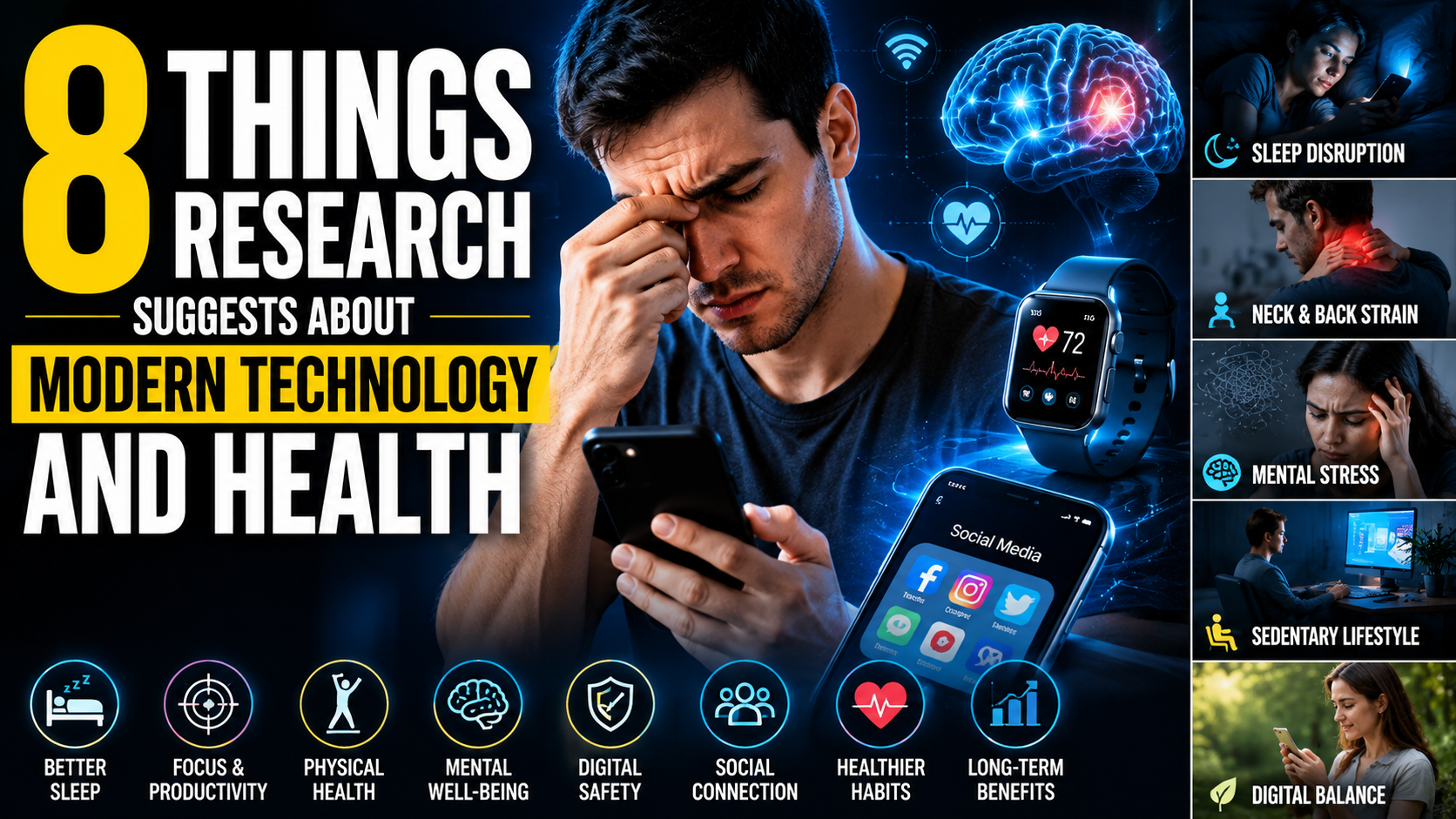
Here are eight key insights that research suggests about modern technology and health.
1. Screen Time May Influence Sleep Patterns
One of the most widely studied effects of modern technology is its impact on sleep.
Research suggests that prolonged exposure to screens—especially before bedtime—can interfere with the body’s natural sleep cycle. This is partly due to blue light emitted by phones, tablets, and computers, which may affect the production of melatonin, a hormone that regulates sleep.
Many studies indicate that excessive nighttime screen use is associated with:
- Difficulty falling asleep
- Reduced sleep quality
- Irregular sleep schedules
While individual responses vary, experts often recommend limiting screen use before bed to support healthier sleep habits.
2. Technology Use Can Affect Attention and Focus
Modern devices are designed to capture and hold attention. Notifications, social media feeds, and constant updates create an environment of frequent interruptions.
Research suggests that heavy multitasking between apps or digital tasks may reduce sustained attention over time.
Some studies indicate that:
- Frequent task switching can reduce productivity
- Constant notifications may disrupt concentration
- Short bursts of digital interaction can make long focus periods more difficult
However, researchers also note that the brain is adaptable, and focus skills can improve with intentional habits and digital boundaries.
3. Prolonged Device Use May Contribute to Physical Strain
Another area of interest in research is the physical impact of long-term device use.
Extended time spent on phones or computers can lead to repetitive strain on the body, particularly in the neck, shoulders, and hands.
Commonly discussed issues include:
- “Tech neck” from looking down at screens
- Eye strain from prolonged focus on digital displays
- Wrist or hand discomfort from repetitive typing or scrolling
These effects are often related to posture and usage habits rather than the technology itself, and they can often be managed through ergonomic adjustments and regular breaks.
4. Social Media May Influence Emotional Well-Being
Research into social media use has grown rapidly in recent years.
Studies suggest that online platforms can have both positive and negative effects on emotional health, depending on how they are used.
Potential influences include:
- Increased feelings of connection for some users
- Exposure to comparison-based stress
- Impact on self-esteem and body image
- Emotional responses to online feedback or validation
Experts emphasize that individual experience varies widely. Some users benefit socially and emotionally, while others may experience increased stress depending on usage patterns.
5. Technology Can Support Mental Health When Used Mindfully
While concerns exist, research also highlights the positive role technology can play in mental health support.
Digital tools are increasingly used for:
- Therapy and counseling platforms
- Meditation and mindfulness apps
- Mental health tracking tools
- Online support communities
Studies suggest that when used intentionally, these resources can improve access to mental health care and provide valuable emotional support, especially in areas with limited healthcare access.
6. Sedentary Behavior Linked to Technology May Affect Physical Health
One indirect effect of modern technology is increased sedentary behavior.
Because many digital activities involve sitting for extended periods, researchers have examined how reduced physical movement may influence health.
Findings often associate prolonged inactivity with:
- Lower cardiovascular fitness
- Reduced energy expenditure
- Increased risk of certain health conditions when combined with lifestyle factors
Experts emphasize that the issue is not technology itself, but the lack of movement that sometimes accompanies it. Regular physical activity is considered an important counterbalance.
7. Digital Overload May Increase Mental Fatigue
Constant exposure to information, notifications, and digital content can lead to cognitive overload.
Research suggests that excessive digital stimulation may contribute to:
- Mental fatigue
- Reduced decision-making efficiency
- Difficulty processing large amounts of information
- A sense of feeling overwhelmed
This phenomenon is sometimes referred to as “information fatigue,” and it reflects the brain’s limited capacity to process continuous input.
Experts often recommend digital breaks to help restore mental clarity and focus.
8. Healthy Technology Habits Can Reduce Potential Risks
Perhaps the most important insight from research is that habits matter more than technology itself.
Studies consistently show that balanced, intentional use of devices is associated with more positive outcomes than constant or uncontrolled use.
Healthy practices may include:
- Setting screen time boundaries
- Taking regular breaks from devices
- Prioritizing offline activities
- Creating tech-free zones or times
- Using digital tools with specific purpose rather than passive scrolling
These strategies help individuals maintain control over technology rather than feeling controlled by it.
The Bigger Picture: Technology and Human Health
Modern technology is neither entirely harmful nor entirely beneficial—it is a tool whose effects depend largely on how it is used.
Researchers continue to explore its long-term impact on physical health, mental well-being, and social behavior. While many findings are still emerging, one clear message stands out: balance is key.
Technology can enhance communication, education, healthcare, and productivity. At the same time, overuse or unintentional habits may contribute to physical strain, mental fatigue, or disrupted routines.
Understanding both sides allows individuals to make more informed choices in their daily lives.
Final Thoughts
As technology continues to evolve, so does scientific understanding of its effects on human health. Researchers are still uncovering how digital devices influence sleep, attention, behavior, and physical well-being.
What is clear so far is that technology itself is not inherently good or bad. Instead, its impact depends on how it is integrated into everyday life.
By adopting mindful habits and maintaining a healthy balance between online and offline activities, individuals can enjoy the benefits of modern technology while minimizing potential downsides.







