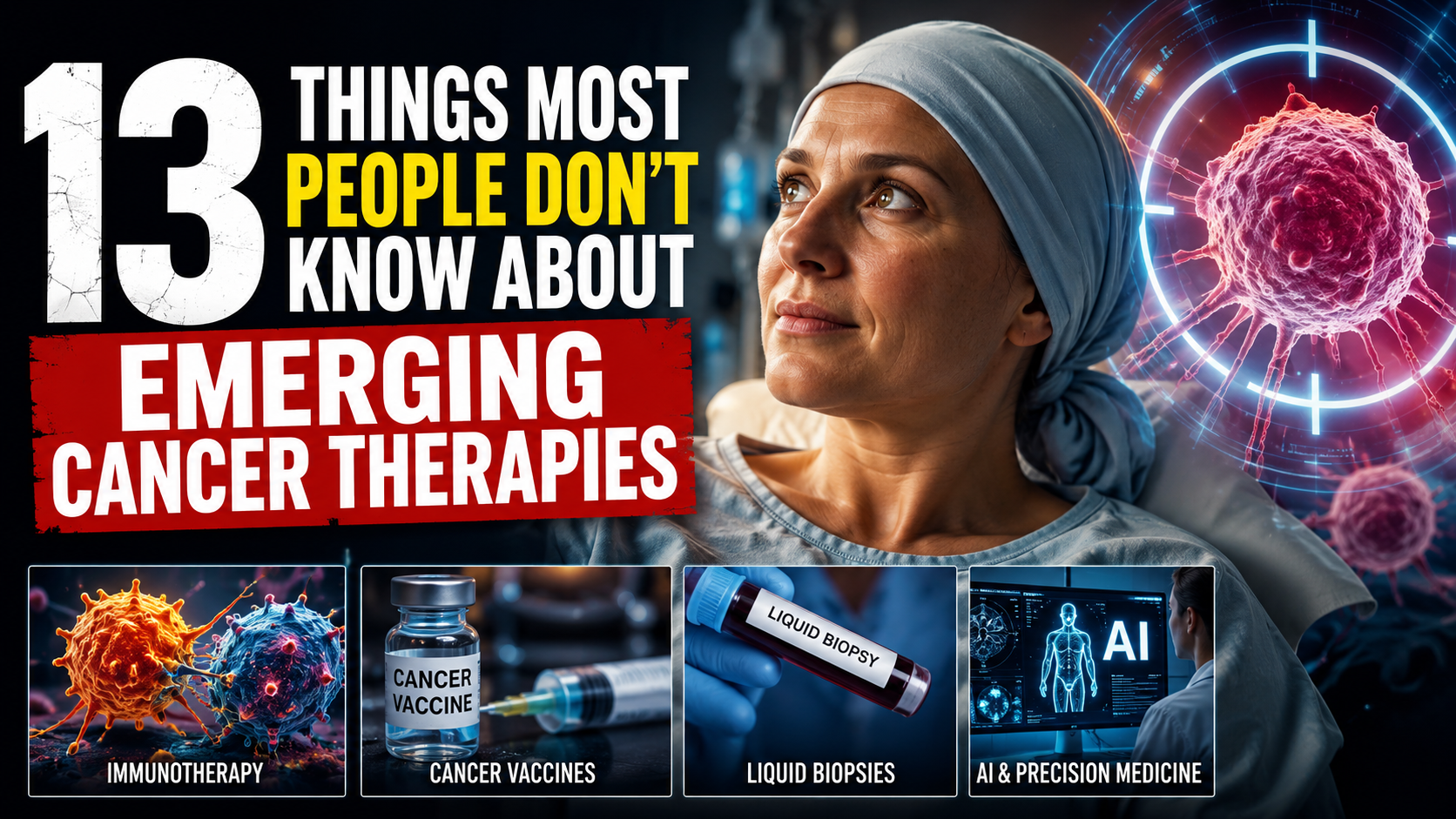
Cancer treatment has come a long way over the past few decades. Not long ago, the primary options available to patients were surgery, chemotherapy, and radiation therapy. While these treatments continue to save lives and remain essential parts of cancer care, researchers are now developing innovative approaches that may change how cancer is treated in the future.
Advances in genetics, immunology, biotechnology, and artificial intelligence are helping scientists understand cancer in ways that were once impossible. As a result, a new generation of therapies is emerging—many of which are designed to target cancer more precisely while reducing damage to healthy cells.
Despite growing media coverage, most people are still unaware of how dramatically cancer treatment is evolving. Here are 13 fascinating things many people don’t know about emerging cancer therapies and how they could shape the future of medicine.
1. The Immune System Is Becoming One of Medicine’s Most Powerful Weapons
For years, cancer treatment focused primarily on attacking tumors directly. Today, many researchers are exploring ways to help the body’s own immune system recognize and fight cancer.
Cancer cells can sometimes hide from immune defenses, allowing them to grow unnoticed. New immunotherapy approaches are designed to remove these “disguises” so immune cells can identify and destroy harmful cells more effectively.
This shift represents one of the most significant developments in modern oncology and has already changed treatment strategies for several types of cancer.
2. Not Every Cancer Patient Receives the Same Treatment Anymore
One of the biggest misconceptions about cancer care is that every patient with the same diagnosis receives identical treatment.
Modern medicine is moving toward personalized treatment plans. Doctors increasingly analyze a tumor’s unique genetic makeup before deciding which therapies may be most effective.
This approach recognizes that two patients with the same cancer type may have very different biological characteristics, requiring different treatment strategies.
The future of cancer care is becoming increasingly individualized.
3. Genetic Testing Is Playing a Larger Role Than Ever
Cancer often develops because of genetic changes within cells. Advances in DNA sequencing technology allow researchers to study these changes in remarkable detail.
Genetic testing can help identify mutations that may drive tumor growth. Once specific mutations are identified, doctors may be able to select therapies designed to target those exact abnormalities.
This level of precision was difficult to imagine just a generation ago.
4. Some Treatments Target Cancer Cells While Sparing Healthy Tissue
Traditional chemotherapy affects rapidly dividing cells, which can sometimes impact healthy tissues along with cancer cells.
Many newer therapies aim to be far more selective.
Targeted treatments are designed to interfere with specific molecules, pathways, or genetic mutations that cancer cells depend on for survival. Because these treatments focus on unique cancer characteristics, they may reduce some of the unintended effects associated with broader treatment approaches.
Researchers continue working to improve both effectiveness and precision.
5. Artificial Intelligence Is Helping Researchers Discover New Treatments
Artificial intelligence is becoming an increasingly valuable tool in cancer research.
AI systems can analyze enormous amounts of medical data much faster than humans. Researchers use these technologies to identify patterns, predict treatment responses, and discover promising drug candidates.
While AI does not replace doctors or scientists, it can accelerate research and help uncover insights that might otherwise take years to find.
This technology could play an important role in future medical breakthroughs.
6. Cancer Vaccines Are No Longer Just a Theory
Many people associate vaccines with preventing infectious diseases, but scientists are also developing vaccines designed to help fight cancer.
Some cancer vaccines aim to train the immune system to recognize specific cancer-related markers. Others are being explored as preventive tools for individuals at higher risk.
Research in this area continues to expand, and experts believe cancer vaccines may become an increasingly important part of future treatment strategies.
7. Liquid Biopsies Could Transform Cancer Detection
Traditionally, diagnosing cancer often requires removing tissue samples through surgical procedures or needle biopsies.
Researchers are now exploring liquid biopsies, which analyze blood samples for traces of tumor DNA or other cancer-related markers.
These tests may eventually help doctors detect cancer earlier, monitor treatment progress, and identify recurrence more quickly.
Although research is ongoing, many experts view liquid biopsy technology as one of the most promising developments in cancer diagnostics.
8. Some Emerging Therapies Are Designed to Work Across Multiple Cancer Types
Historically, treatments were developed for specific organs such as the lung, breast, or colon.
However, some newer therapies focus on genetic mutations rather than tumor location.
This means a treatment could potentially be effective against different cancers if they share the same molecular characteristics.
This shift is changing how researchers think about cancer classification and treatment development.
9. Researchers Are Exploring Injectable Immunotherapy Approaches
Among the most exciting areas of research are injectable therapies designed to stimulate immune responses directly within or around tumors.
Instead of treating the entire body, some experimental approaches aim to activate immune cells at the tumor site itself.
Scientists hope these strategies may improve effectiveness while reducing systemic side effects.
Although many of these therapies remain under investigation, early research has generated significant interest throughout the medical community.
10. Combination Therapies May Deliver Better Results
Researchers increasingly believe that combining multiple treatment approaches may improve outcomes for some patients.
Rather than relying on a single therapy, doctors may use combinations of immunotherapy, targeted therapy, radiation, surgery, or chemotherapy.
Different treatments can complement one another by attacking cancer through multiple mechanisms simultaneously.
This multi-pronged strategy is becoming an important area of clinical research.
11. Early Detection Technology Is Improving Rapidly
Treating cancer becomes significantly easier when it is discovered early.
Scientists are developing increasingly sophisticated screening tools that may identify cancer long before symptoms appear.
Advanced imaging systems, molecular diagnostics, blood-based screening tests, and AI-assisted detection technologies are all helping improve early diagnosis efforts.
Earlier detection may lead to more treatment options and better outcomes.
12. Researchers Are Studying Ways to Reduce Treatment Side Effects
Cancer treatment isn’t only about destroying tumors. Improving quality of life is also a major focus.
Scientists are investigating methods to reduce fatigue, nausea, immune suppression, nerve damage, and other treatment-related challenges.
Supportive care innovations can help patients tolerate treatment more comfortably and maintain a better quality of life throughout the treatment process.
This patient-centered approach is becoming increasingly important in modern oncology.
13. The Pace of Innovation Is Faster Than Most People Realize
Perhaps the most surprising fact is how quickly cancer research is advancing.
New discoveries are emerging from laboratories around the world at an unprecedented rate. Technologies that seemed futuristic only a decade ago are now entering clinical trials or becoming part of routine care.
Collaboration between scientists, physicians, technology companies, and research institutions is accelerating progress in ways that were previously unimaginable.
While challenges remain and no single treatment will eliminate every form of cancer, the pace of innovation continues to provide reasons for optimism.
Looking Ahead: The Future of Cancer Care
The future of cancer treatment is likely to look very different from the past. Personalized medicine, immunotherapy, genetic targeting, advanced diagnostics, and AI-driven research are all contributing to a rapidly changing landscape.
Importantly, many of these emerging therapies are not intended to replace existing treatments entirely. Instead, they may work alongside traditional approaches to create more effective, customized care plans.
Researchers continue to emphasize that every cancer type presents unique challenges, and progress often happens gradually. However, each breakthrough adds to a growing body of knowledge that could help improve outcomes for future patients.
Final Thoughts
Cancer remains one of the world’s most complex health challenges, but the science surrounding its treatment has never been more promising. From immunotherapy and cancer vaccines to liquid biopsies and personalized medicine, researchers are developing innovative tools that may reshape how cancer is diagnosed, monitored, and treated.
Many of these advances are still being studied, while others are already influencing patient care today. What is clear is that cancer treatment is entering a new era—one driven by precision, technology, and a deeper understanding of human biology.
For patients, families, and healthcare professionals alike, these emerging therapies represent more than scientific progress. They offer a glimpse into a future where cancer care becomes increasingly targeted, effective, and personalized, bringing new possibilities to millions of people around the world.







