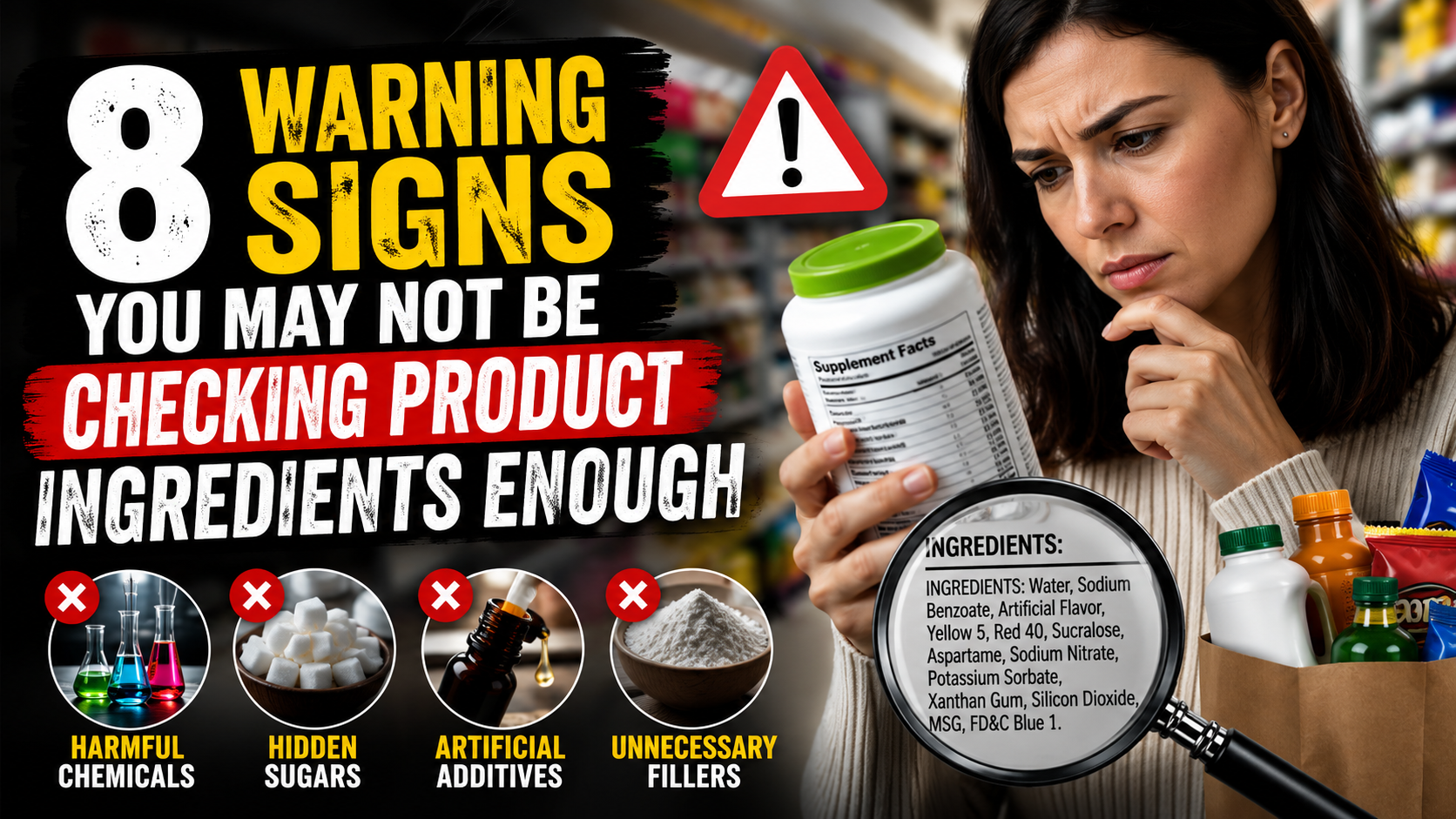
In today’s world, consumers are surrounded by products promising better health, beauty, convenience, and performance. From food and beverages to skincare, cosmetics, supplements, and household cleaners, countless items compete for our attention every day. Eye-catching packaging, persuasive marketing claims, and influencer recommendations often make products seem trustworthy before we ever take a closer look.
But there’s one important detail many people overlook: the ingredient list.
Most shoppers spend only a few seconds deciding whether to buy a product. Unfortunately, many make those decisions based on branding, advertising, or front-label claims rather than understanding what’s actually inside. While not every ingredient is harmful, failing to review product ingredients regularly can leave consumers uninformed about what they’re putting on or inside their bodies.
Learning how to read labels isn’t about becoming fearful of every unfamiliar ingredient. It’s about becoming a more informed consumer and making choices that align with your personal preferences, health goals, and lifestyle.
Here are eight warning signs that you may not be checking product ingredients closely enough.
1. You Buy Products Based Mainly on Packaging Claims
Modern marketing is incredibly effective.
Words like “natural,” “pure,” “clean,” “premium,” “healthy,” and “doctor recommended” are designed to capture attention and build trust. Many shoppers assume these terms automatically mean a product contains better ingredients.
However, front-package claims often tell only part of the story.
A food labeled “high protein” may still contain large amounts of sugar. A skincare product marketed as “natural” may contain a long list of synthetic additives. A supplement described as “premium” may offer little evidence to support that claim.
This doesn’t mean such products are bad. It simply means marketing language shouldn’t replace reading the ingredient label.
If you’re regularly purchasing products based solely on what appears on the front of the package, it may be time to start flipping them over and examining the details.
2. You Rarely Read Ingredient Lists Before Buying
This may seem obvious, but it’s one of the most common habits among consumers.
Many people compare prices, reviews, and brand names while completely skipping the ingredient list. As a result, they may have little idea what they’re actually purchasing.
Ingredient lists can reveal valuable information about product composition, processing methods, sweeteners, preservatives, fillers, fragrances, and additives.
The more familiar you become with reading labels, the easier it gets.
Even spending an extra 20 seconds reviewing ingredients can help you make more informed decisions and avoid surprises later.
3. You Assume Popular Products Must Be Safe for Everyone
Popularity can create a false sense of security.
When a product has thousands of positive reviews or is endorsed by celebrities and influencers, consumers often assume it’s automatically the best choice.
But every individual has unique needs, sensitivities, allergies, and preferences.
A product that works well for one person may not be ideal for someone else. Certain ingredients can trigger skin irritation, digestive discomfort, allergic reactions, or other unwanted effects in susceptible individuals.
Popularity may indicate customer satisfaction, but it doesn’t replace understanding what a product contains.
Smart consumers recognize that ingredients matter more than trends.
4. You Can’t Identify Most Ingredients in Products You Use Daily
Have you ever looked at a label and realized you couldn’t recognize half the ingredients?
This doesn’t automatically mean the product is unsafe. Many ingredients have scientific names that sound unfamiliar despite having legitimate purposes.
However, if you consistently use products without understanding anything about their contents, you may be missing important information.
You don’t need a chemistry degree to become ingredient-aware. Even basic research can help you understand common preservatives, sweeteners, emulsifiers, fragrances, and additives.
The goal isn’t to memorize every ingredient on the market. It’s to become curious and informed about the products you rely on most often.
5. You Never Compare Similar Products
Many consumers remain loyal to one brand without ever exploring alternatives.
While brand loyalty isn’t necessarily a problem, it can prevent shoppers from discovering products with simpler ingredients, better nutritional profiles, or fewer additives.
Take two products that appear nearly identical. One may contain a short, straightforward ingredient list while another includes numerous flavor enhancers, sweeteners, stabilizers, or preservatives.
Without comparison shopping, these differences often go unnoticed.
Checking ingredient lists side by side can reveal surprising contrasts between products that seem nearly identical on the shelf.
6. You Rely Heavily on Convenience Products
Convenience has become one of the strongest forces influencing consumer choices.
Busy lifestyles make ready-to-eat meals, packaged snacks, meal replacements, beauty products, and household solutions extremely appealing.
There’s nothing inherently wrong with convenience. In fact, many convenient products provide excellent value and functionality.
However, heavily processed products often contain additional ingredients designed to improve shelf life, texture, taste, appearance, or stability.
Again, this doesn’t automatically make them unhealthy. The key issue is awareness.
If convenience products make up a large portion of your daily routine and you rarely examine ingredient lists, you may be consuming or using far more additives than you realize.
7. You Believe “Natural” Always Means Better
Few marketing words influence consumers more than “natural.”
Many people instinctively associate natural products with safety, health, and quality. While some natural ingredients offer valuable benefits, the term itself can be misleading.
Natural substances can still cause allergic reactions, skin sensitivities, or other unwanted effects. Likewise, some synthetic ingredients have been extensively tested and may perform important functions safely and effectively.
The smartest approach is to evaluate products based on their complete ingredient profile rather than relying on a single marketing term.
Being ingredient-conscious means looking beyond labels and understanding what you’re actually buying.
8. You Never Research Ingredients That Raise Questions
Curiosity is one of the most valuable tools consumers have.
When people encounter unfamiliar ingredients, many simply ignore them and move on. Others assume that if a product is sold in stores, every ingredient must be perfectly understood and risk-free.
In reality, ingredient research is constantly evolving. Scientists continue studying the effects, benefits, and limitations of countless compounds used in food, cosmetics, supplements, and personal care products.
If a specific ingredient catches your attention, taking a few minutes to learn more can be worthwhile.
Reliable sources such as government agencies, medical organizations, academic institutions, and peer-reviewed research can help provide context and understanding.
Knowledge empowers better decision-making.
Why Ingredient Awareness Matters
Reading ingredient lists isn’t about becoming paranoid or eliminating every processed product from your life.
Instead, it’s about developing awareness.
When consumers understand what’s inside the products they purchase, they gain greater control over their choices. This awareness can help people:
- Avoid ingredients they prefer not to consume
- Identify potential allergens
- Compare product quality
- Understand nutritional value
- Make purchases that align with personal goals
- Reduce unnecessary exposure to unwanted additives
- Improve overall consumer confidence
Informed consumers are often more satisfied with their purchases because they understand exactly what they’re buying.
Simple Tips for Reading Ingredient Labels
If label reading feels overwhelming, start with a few simple habits:
Read the First Few Ingredients
Ingredients are typically listed in descending order by quantity. The first several ingredients often provide the clearest picture of what a product contains.
Compare Similar Products
Looking at multiple brands side by side can help identify major differences in formulation.
Watch for Multiple Forms of Sugar
Some products contain several sweeteners listed under different names. Understanding these variations can help provide a clearer picture of total sweetness.
Research Unfamiliar Ingredients
You don’t need to research every ingredient immediately. Start with those that appear frequently in products you use.
Focus on Patterns
Rather than obsessing over individual ingredients, pay attention to overall product composition and recurring ingredients across your purchases.
The Bigger Picture
Ingredient awareness is becoming increasingly important as product choices continue to expand. Today’s consumers have access to more information than ever before, making it easier to compare products and make thoughtful purchasing decisions.
At the same time, marketing has become more sophisticated. Attractive packaging and persuasive claims can sometimes distract shoppers from the information that matters most.
Developing the habit of reading ingredient labels creates a valuable layer of protection against impulse buying and uninformed choices.
It doesn’t require perfection. It simply requires attention.
Final Thoughts
Most people don’t intentionally ignore ingredient lists—they’re simply busy. Between work, family responsibilities, and daily life, it’s easy to grab familiar products without taking a closer look.
However, if you regularly buy products based on marketing claims, skip ingredient labels, rely heavily on convenience items, or assume popular products are automatically the best choice, you may not be paying enough attention to what’s inside the products you use every day.
The good news is that becoming a more informed consumer is easier than many people think. A few extra moments spent reading labels, comparing ingredients, and asking questions can lead to smarter purchasing decisions and greater confidence in the products you choose.
Ultimately, ingredient awareness isn’t about fear—it’s about knowledge. And in a marketplace filled with endless options, knowledge remains one of the most powerful tools any consumer can have.







