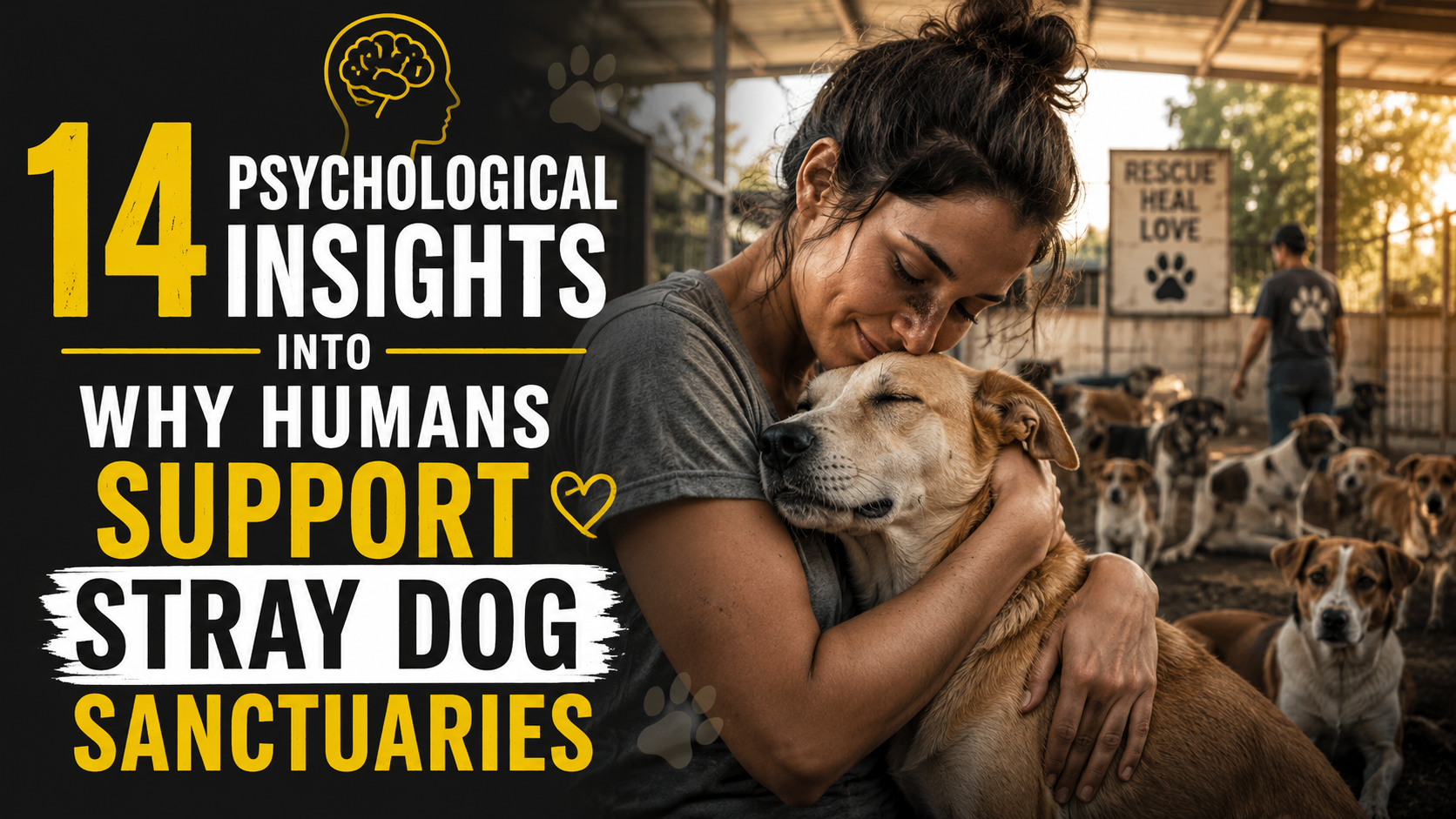
Across the world, more people are showing interest in animal welfare initiatives, especially those focused on stray dogs. From small community shelters to large lifelong sanctuaries, these projects continue to receive donations, volunteer support, and emotional engagement. But what exactly drives humans to care so deeply about stray dog sanctuaries?
The answer lies in psychology, empathy, and deeply rooted social behavior. Human beings are naturally wired to respond to vulnerability, and dogs—especially abandoned ones—often trigger strong emotional reactions. Below are 14 psychological insights that help explain why stray dog sanctuaries receive such widespread support.
1. Humans Are Wired for Empathy Toward Vulnerable Beings
One of the strongest psychological drivers is empathy. Humans naturally respond to creatures that appear weak, helpless, or in need of care. Stray dogs often fit this perception, triggering protective instincts.
This emotional response is not learned—it is deeply rooted in human evolution and survival behavior.
2. Dogs Activate the “Caregiving Instinct”
Studies show that interacting with dogs activates caregiving regions in the human brain. This instinct encourages nurturing and protection.
When people see stray dogs suffering or being abandoned, this caregiving response becomes even stronger, pushing them toward support actions like donations or volunteering.
3. Emotional Bond Between Humans and Dogs Is Unique
Dogs have lived alongside humans for thousands of years, creating a strong interspecies bond. Unlike many animals, dogs display expressive emotions that humans easily interpret.
This familiarity strengthens emotional attachment and makes people more likely to support dog-related causes.
4. Guilt and Moral Responsibility Play a Role
Many people experience a sense of guilt when they see animals suffering. Even if they are not directly responsible, they feel morally compelled to help.
Supporting sanctuaries becomes a way to reduce this emotional discomfort and restore a sense of ethical balance.
5. Compassion Is Strengthened by Visual Exposure
Images and stories of stray dogs struggling in harsh conditions have a powerful psychological impact. Visual exposure increases emotional engagement far more than statistics alone.
This is why social media campaigns and rescue stories often drive donations effectively.
6. People Seek Emotional Meaning in Helping Others
Helping stray dogs provides a sense of purpose. Many individuals find emotional satisfaction in contributing to something meaningful beyond themselves.
Supporting sanctuaries allows people to feel they are making a positive difference in the world.
7. “Helper’s High” Reinforces Support Behavior
Psychologists describe a phenomenon known as the “helper’s high,” where acts of kindness trigger positive emotional responses in the brain.
When people donate or volunteer for animal sanctuaries, they often experience happiness and fulfillment, encouraging repeated support.
8. Social Influence Encourages Participation
Human behavior is heavily influenced by social proof. When people see others supporting animal shelters or donating to stray dog sanctuaries, they are more likely to do the same.
This creates a ripple effect that increases overall awareness and engagement.
9. Dogs Are Perceived as Loyal and Trustworthy
Dogs are often seen as loyal companions, which strengthens emotional connection. Stray dogs, despite their circumstances, are still associated with trust and innocence.
This perception makes people more willing to protect and care for them.
10. Personal Experiences Shape Compassion Levels
People who have owned pets or grown up around dogs tend to show higher empathy toward stray animals.
Personal experiences create emotional memory links, making it easier to relate to the suffering of abandoned dogs.
11. Media Storytelling Enhances Emotional Response
Stories about rescue dogs, especially those with transformation journeys, are highly effective in generating support.
Narrative storytelling helps people emotionally connect with individual animals rather than seeing them as part of a large, abstract problem.
12. Humans Are Drawn to “Rescue and Redemption” Narratives
Psychologically, people are attracted to stories of rescue, survival, and second chances. Stray dog sanctuaries represent hope and recovery.
This narrative structure resonates deeply with human emotional patterns and cultural storytelling traditions.
13. Supporting Animals Strengthens Social Identity
For many individuals, supporting animal welfare becomes part of their identity. It reflects values such as kindness, responsibility, and compassion.
Being associated with these values reinforces positive self-image and social belonging.
14. People Want to Reduce Suffering in the World
At a fundamental level, humans are motivated to reduce visible suffering. Seeing stray dogs in distress creates discomfort, and supporting sanctuaries becomes a way to restore emotional balance.
This desire to improve the world, even in small ways, is one of the strongest drivers behind animal welfare support.
Why Stray Dog Sanctuaries Matter More Than Ever
Stray dog sanctuaries are not just shelters—they are long-term care environments that provide safety, medical treatment, food, and emotional stability for abandoned animals. As urban populations grow and stray animal challenges increase in many regions, these sanctuaries play a crucial role in balancing human-animal coexistence.
They also serve as educational spaces where communities learn about responsible pet ownership, sterilization programs, and humane treatment of animals.
The Emotional Connection Between Humans and Rescue Efforts
What makes stray dog sanctuaries particularly powerful is not just their function, but the emotional connection they create. People don’t just see a shelter—they see hope, recovery, and compassion in action.
This emotional connection drives ongoing support and encourages more people to participate in animal welfare initiatives.
Final Thoughts
The support for stray dog sanctuaries is rooted in a complex mix of psychology, empathy, and cultural values. From caregiving instincts to emotional storytelling, humans are naturally inclined to respond to the needs of vulnerable animals.
Understanding these psychological drivers helps explain why animal welfare continues to grow as a global movement. More importantly, it highlights the deep emotional bond between humans and dogs—a relationship built on trust, compassion, and shared history.
As awareness continues to rise, stray dog sanctuaries will likely remain a powerful symbol of kindness and responsibility in modern society.







