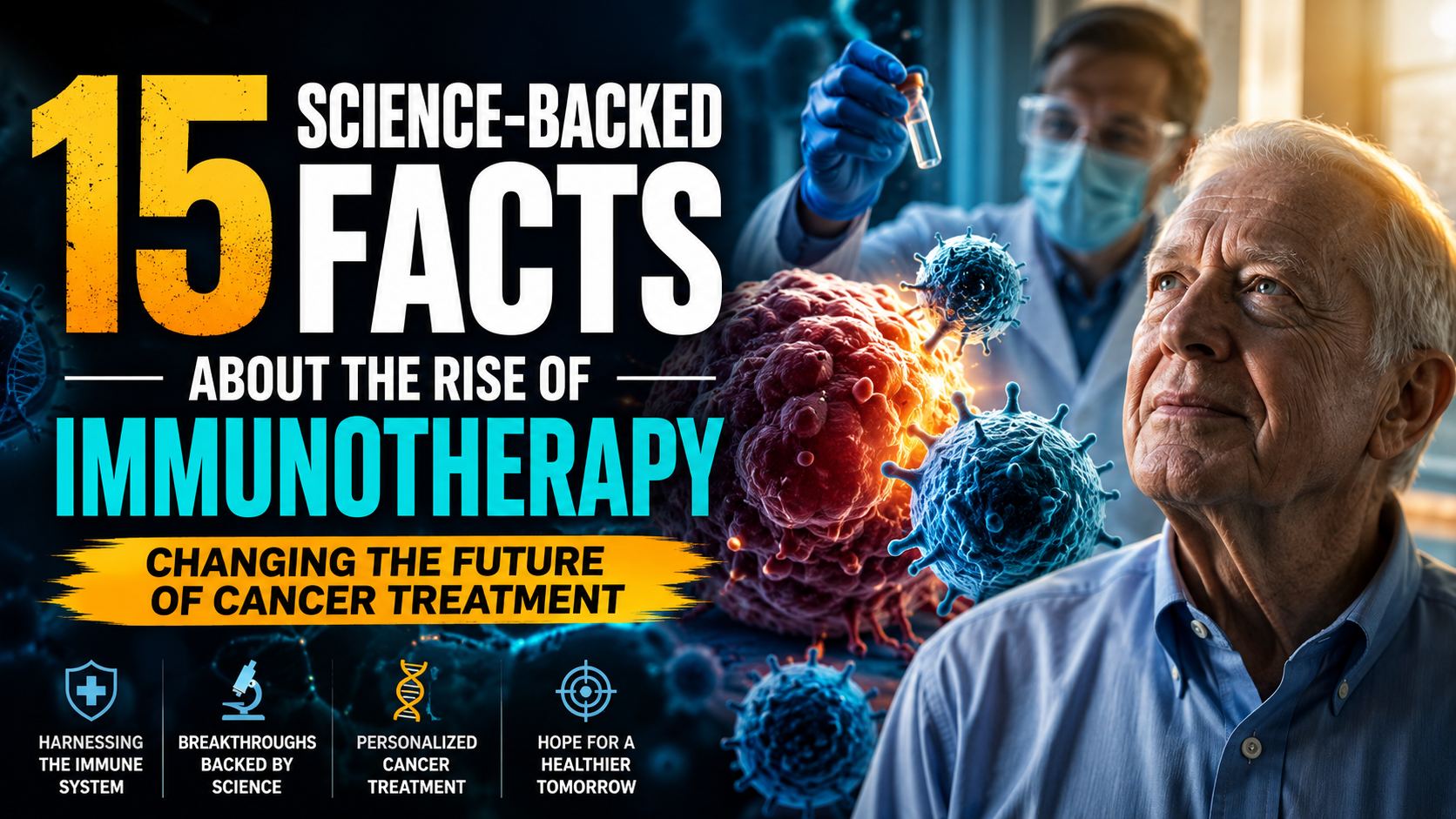
Cancer treatment has undergone remarkable changes over the past few decades. For many years, the primary weapons against cancer were surgery, radiation therapy, and chemotherapy. While these approaches have saved countless lives, researchers continued searching for treatments that could target cancer more precisely while reducing damage to healthy tissues.
One of the most significant breakthroughs to emerge from that effort is immunotherapy. Rather than attacking tumors directly, immunotherapy works by helping the body’s own immune system recognize and fight cancer cells more effectively.
The success of treatments such as pembrolizumab, which helped former U.S. President Jimmy Carter achieve remission from metastatic melanoma in 2015, brought immunotherapy into the global spotlight. Since then, research in this field has expanded rapidly, offering new hope for patients facing some of the most challenging forms of cancer.
Here are 15 science-backed facts that explain why immunotherapy is transforming modern cancer care.
1. Immunotherapy Uses the Body’s Natural Defense System
The immune system is designed to identify and eliminate threats such as viruses, bacteria, and abnormal cells.
Cancer cells, however, often develop ways to hide from immune surveillance. Immunotherapy helps remove those disguises, allowing immune cells to recognize and attack tumors that previously escaped detection.
This unique approach is what makes immunotherapy fundamentally different from traditional cancer treatments.
2. The Concept Has Been Studied for More Than a Century
Although immunotherapy feels like a modern breakthrough, the idea behind it has surprisingly deep roots.
Scientists began investigating connections between the immune system and cancer as early as the late 1800s. Early researchers observed that some cancer patients experienced tumor shrinkage after severe infections stimulated immune responses.
Those observations laid the foundation for decades of research that eventually led to today’s advanced immunotherapy treatments.
3. Checkpoint Inhibitors Changed Everything
One of the most important developments in cancer medicine was the creation of immune checkpoint inhibitors.
Cancer cells often exploit natural immune “brakes” that prevent the immune system from becoming overly aggressive. By activating these brakes, tumors can avoid destruction.
Checkpoint inhibitor drugs block those signals, essentially releasing the immune system’s restraints and allowing immune cells to attack cancer more effectively.
Many of the most successful modern immunotherapies fall into this category.
4. Immunotherapy Has Improved Outcomes for Certain Advanced Cancers
Historically, advanced cancers such as metastatic melanoma carried extremely poor prognoses.
In the past, treatment options for patients with widespread disease were often limited. Today, immunotherapy has helped some patients achieve long-term disease control and, in certain cases, complete remission.
While outcomes vary between individuals, these improvements represent a major milestone in oncology.
5. Not Every Patient Responds the Same Way
One of the most fascinating aspects of immunotherapy is the variation in patient responses.
Some individuals experience dramatic and long-lasting improvements, while others receive only modest benefits or no benefit at all.
Researchers are working to understand why these differences occur. Factors such as genetics, tumor biology, immune function, and overall health may all influence treatment success.
This ongoing research is helping move medicine toward more personalized care.
6. Immunotherapy Can Continue Working After Treatment Ends
Unlike some traditional therapies that only work while actively administered, immunotherapy may create lasting immune memory.
Once the immune system learns to recognize cancer cells, it may continue monitoring for those cells long after treatment has ended.
This ability to create durable responses is one reason immunotherapy has generated so much excitement among cancer specialists.
7. It Is Being Used for More Than Melanoma
Melanoma was one of the first major success stories, but immunotherapy is now used for a growing number of cancers.
Researchers and physicians have incorporated immunotherapy into treatment strategies for:
- Lung cancer
- Kidney cancer
- Bladder cancer
- Head and neck cancers
- Certain lymphomas
- Liver cancer
- Esophageal cancer
The list continues to expand as new evidence emerges.
8. Scientists Are Combining Immunotherapy With Other Treatments
Rather than replacing traditional therapies entirely, immunotherapy is often used alongside them.
Researchers are exploring combinations that include:
- Chemotherapy
- Radiation therapy
- Targeted therapies
- Surgical treatments
These combinations may improve outcomes by attacking cancer from multiple angles simultaneously.
The goal is to maximize effectiveness while minimizing unnecessary harm to healthy tissues.
9. The Immune System Is More Powerful Than Previously Thought
For many years, scientists underestimated the complexity of the immune system’s role in cancer control.
Modern research has revealed that immune cells constantly patrol the body, searching for abnormal changes that may signal disease.
Immunotherapy demonstrates how powerful these natural defense mechanisms can be when properly activated.
This growing understanding is reshaping cancer research worldwide.
10. Side Effects Are Different From Traditional Treatments
Immunotherapy can produce side effects, but they often differ from those associated with chemotherapy.
Because these treatments stimulate immune activity, side effects may occur when the immune system mistakenly attacks healthy tissues.
Possible reactions can affect:
- Skin
- Digestive system
- Lungs
- Liver
- Hormone-producing glands
Most side effects can be managed effectively when recognized early, highlighting the importance of close medical supervision.
11. Researchers Are Searching for Better Predictors of Success
One of the biggest challenges in immunotherapy is identifying which patients are most likely to benefit.
Scientists are developing biomarkers—measurable biological indicators—that may help predict treatment responses before therapy begins.
Improved prediction tools could reduce unnecessary treatments and help patients receive the most effective care sooner.
This represents one of the fastest-growing areas of cancer research.
12. Personalized Medicine Is Driving Progress
Cancer is not a single disease.
Each tumor contains unique genetic and biological characteristics. As a result, treatments that work well for one patient may be less effective for another.
Immunotherapy is helping accelerate the shift toward personalized medicine, where treatment plans are tailored to an individual’s specific cancer profile.
This approach has the potential to improve outcomes while reducing unwanted side effects.
13. Researchers Are Exploring New Generations of Immunotherapy
Checkpoint inhibitors are only one piece of a much larger picture.
Scientists are actively investigating innovative approaches such as:
- Cancer vaccines
- Engineered immune cells
- Personalized immune therapies
- Novel antibody treatments
- Tumor-targeting immune technologies
Many experts believe the next generation of immunotherapy could be even more effective than current options.
14. The Field Is Growing Rapidly
Few areas of medicine have expanded as quickly as cancer immunotherapy.
Every year, researchers publish thousands of studies exploring new treatment combinations, biomarkers, immune mechanisms, and therapeutic strategies.
Clinical trials continue to test innovative approaches across numerous cancer types.
This rapid pace of discovery suggests that the next decade could bring even more significant advances.
15. Immunotherapy Is Changing the Conversation Around Cancer
Perhaps the most important fact about immunotherapy is the shift in perspective it has created.
For decades, cancer treatment focused primarily on directly destroying tumors. Immunotherapy introduced a different strategy—empowering the body’s own defenses to participate in the fight.
This change has opened entirely new avenues of research and inspired fresh optimism among patients, physicians, and scientists alike.
While immunotherapy is not a cure for every cancer, it has already altered expectations about what may be possible in the future.
Why Immunotherapy Matters
The rise of immunotherapy represents more than a new category of medication. It reflects a deeper understanding of how cancer interacts with the immune system and how those interactions can be used to improve patient outcomes.
For many individuals diagnosed with advanced cancers, immunotherapy has provided options that did not exist just a generation ago. In some cases, it has led to years of disease control that would once have seemed unlikely.
As research continues, scientists hope to expand these benefits to even more patients and cancer types.
Looking Ahead
The future of immunotherapy appears exceptionally promising.
Researchers are working to improve response rates, reduce side effects, identify better biomarkers, and develop more personalized treatment approaches. Advances in genetics, artificial intelligence, and molecular biology are also helping accelerate progress.
Although significant challenges remain, the momentum behind immunotherapy continues to grow.
Final Thoughts
The rise of immunotherapy stands as one of the most important medical advances of the 21st century. By harnessing the power of the immune system, scientists have opened a new frontier in cancer treatment—one that offers hope, innovation, and the potential for better outcomes.
From early scientific theories to modern breakthrough therapies, immunotherapy has transformed the way doctors approach cancer care. While it is not a universal solution, its impact is undeniable, and ongoing research suggests the best may still be ahead.
As scientists continue uncovering new ways to strengthen the body’s natural defenses, immunotherapy is likely to remain at the forefront of cancer treatment for years to come.







