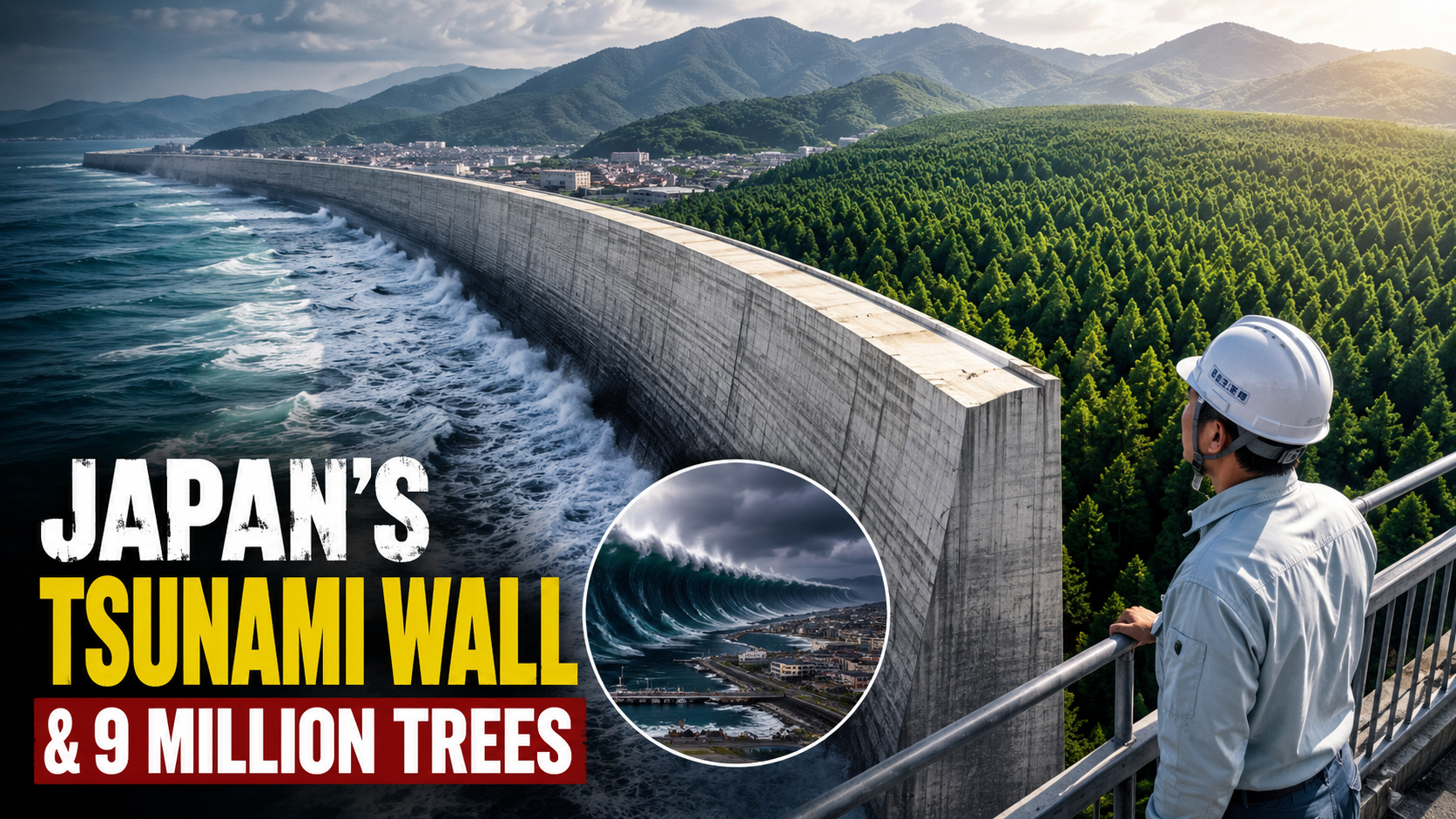
Japan has long lived with the reality of natural disasters. Situated along the Pacific Ring of Fire, the country experiences frequent earthquakes, volcanic activity, and the ever-present threat of tsunamis. Throughout its history, Japan has repeatedly demonstrated remarkable resilience, rebuilding and adapting after devastating events.
One of the most extraordinary examples of this determination is the construction of extensive tsunami defenses, including massive seawalls stretching along parts of the coastline and large-scale reforestation efforts involving millions of trees. Together, these projects represent one of the world’s most ambitious attempts to reduce disaster risks while restoring and protecting coastal environments.
Here are fifteen surprising facts about Japan’s massive tsunami wall and its efforts involving approximately nine million trees.
1. The Tsunami Wall Stretches for Hundreds of Kilometers
Japan’s tsunami defense system is enormous.
Following the devastating 2011 earthquake and tsunami, extensive seawall construction projects were undertaken along vulnerable sections of the northeastern coastline. In some regions, these barriers extend for hundreds of kilometers.
Their sheer length makes them among the largest coastal defense systems ever built.
2. Some Sections Are Surprisingly Tall
Not all tsunami walls are the same height.
Depending on local geography and historical risk assessments, some sections rise several stories above ground level. Certain barriers reach heights comparable to multi-story buildings.
Standing beside these structures offers a striking visual reminder of the immense power that tsunami waves can unleash.
3. The Project Was Inspired by Tragic Experience
The catastrophic earthquake and tsunami of March 2011 profoundly shaped Japan’s approach to disaster preparedness.
The disaster caused widespread destruction and claimed thousands of lives, demonstrating that existing defenses were insufficient in many locations.
The experience reinforced the importance of developing stronger and more comprehensive protective measures.
4. The Walls Are Designed to Reduce, Not Eliminate, Risk
One common misconception is that tsunami walls can stop every possible wave.
In reality, these barriers are intended to reduce damage, delay flooding, and provide valuable time for evacuation. Extremely large tsunamis may still overtop or bypass some defenses.
Engineers generally view the walls as one component of a broader disaster-management strategy rather than a complete solution.
5. Japan Also Invested Heavily in Coastal Forests
Alongside engineered barriers, Japan has placed significant emphasis on restoring coastal vegetation.
Millions of trees have been planted in affected regions, contributing to long-term environmental recovery and helping stabilize coastal landscapes.
These large-scale planting efforts reflect a recognition that natural systems can complement human-made infrastructure.
6. Around Nine Million Trees Have Been Planted
The scale of reforestation efforts is extraordinary.
Approximately nine million trees have been planted across various projects aimed at rebuilding and strengthening coastal environments. These initiatives involved local communities, volunteers, and numerous organizations working together over many years.
The numbers highlight Japan’s commitment to recovery and environmental restoration.
7. Coastal Forests Can Provide Additional Protection
Trees cannot stop a major tsunami on their own.
However, coastal forests may help reduce wind-blown debris, slow smaller waves, trap sediments, and provide ecological benefits that contribute to healthier shorelines.
Scientists increasingly recognize that combining natural and engineered defenses can create more resilient coastal systems.
8. The Projects Required Enormous Engineering Efforts
Building extensive seawalls along rugged coastlines presented significant challenges.
Engineers had to account for local geography, seismic risks, wave behavior, and long-term durability. Construction required large quantities of materials and years of planning and implementation.
The undertaking ranks among the most ambitious disaster-mitigation projects in modern history.
9. The Efforts Reflect Japan’s Culture of Preparedness
Disaster readiness has become deeply embedded in Japanese society.
Regular evacuation drills, early warning systems, educational programs, and infrastructure investments all play important roles in national preparedness.
The tsunami walls and tree-planting projects are physical expressions of a broader commitment to reducing risk and protecting communities.
10. The Projects Sparked Public Debate
Not everyone agreed on every aspect of the seawall projects.
Some residents welcomed the increased protection, while others expressed concerns about costs, environmental impacts, and changes to scenic coastal views.
The discussions highlighted the complex choices societies often face when balancing safety, environmental considerations, and community preferences.
11. The Reforestation Projects Help Restore Ecosystems
Planting millions of trees does more than support disaster resilience.
Coastal forests can create habitats for wildlife, improve soil stability, and contribute to biodiversity. Rebuilding these natural areas may also help restore ecological functions disrupted by natural disasters.
The projects therefore serve both environmental and protective purposes.
12. Technology Plays a Crucial Supporting Role
Physical barriers are only one element of Japan’s tsunami preparedness strategy.
Advanced earthquake detection systems, rapid communication networks, and sophisticated warning technologies help provide precious minutes for evacuation when major events occur.
These technologies work alongside infrastructure and environmental measures to create a layered approach to disaster management.
13. The Projects Demonstrate Long-Term Thinking
Many large-scale infrastructure projects are planned around years or decades.
Japan’s tsunami defenses, however, reflect thinking that extends across generations. Building seawalls and restoring forests are investments intended to protect communities far into the future.
This long-term perspective is one of the most remarkable aspects of the effort.
14. They Have Become Symbols of Resilience
For many people, the seawalls and newly planted forests represent more than engineering and environmental projects.
They symbolize determination, remembrance, and the desire to learn from tragedy. Communities affected by disaster have transformed painful experiences into efforts aimed at creating a safer future.
These projects stand as visible reminders of human resilience in the face of powerful natural forces.
15. They Remind Us That Living With Nature Requires Adaptation
Perhaps the most surprising lesson from Japan’s massive tsunami walls and millions of newly planted trees is that absolute control over nature is impossible.
Earthquakes and tsunamis remain among the planet’s most powerful phenomena. Instead of attempting to eliminate risk entirely, Japan’s approach emphasizes preparation, adaptation, and the combination of human ingenuity with environmental restoration.
The result is a remarkable example of how societies can respond to natural hazards by investing in both engineered solutions and the healing power of nature.
Final Thoughts
Japan’s massive tsunami walls and the planting of approximately nine million trees represent one of the world’s most ambitious responses to natural disaster risk. These efforts combine engineering, environmental restoration, technological innovation, and community participation on an extraordinary scale.
More importantly, they tell a powerful story about resilience. They demonstrate that while humanity cannot prevent every natural disaster, we can learn from experience, adapt thoughtfully, and work together to create communities that are better prepared for the challenges of the future.







