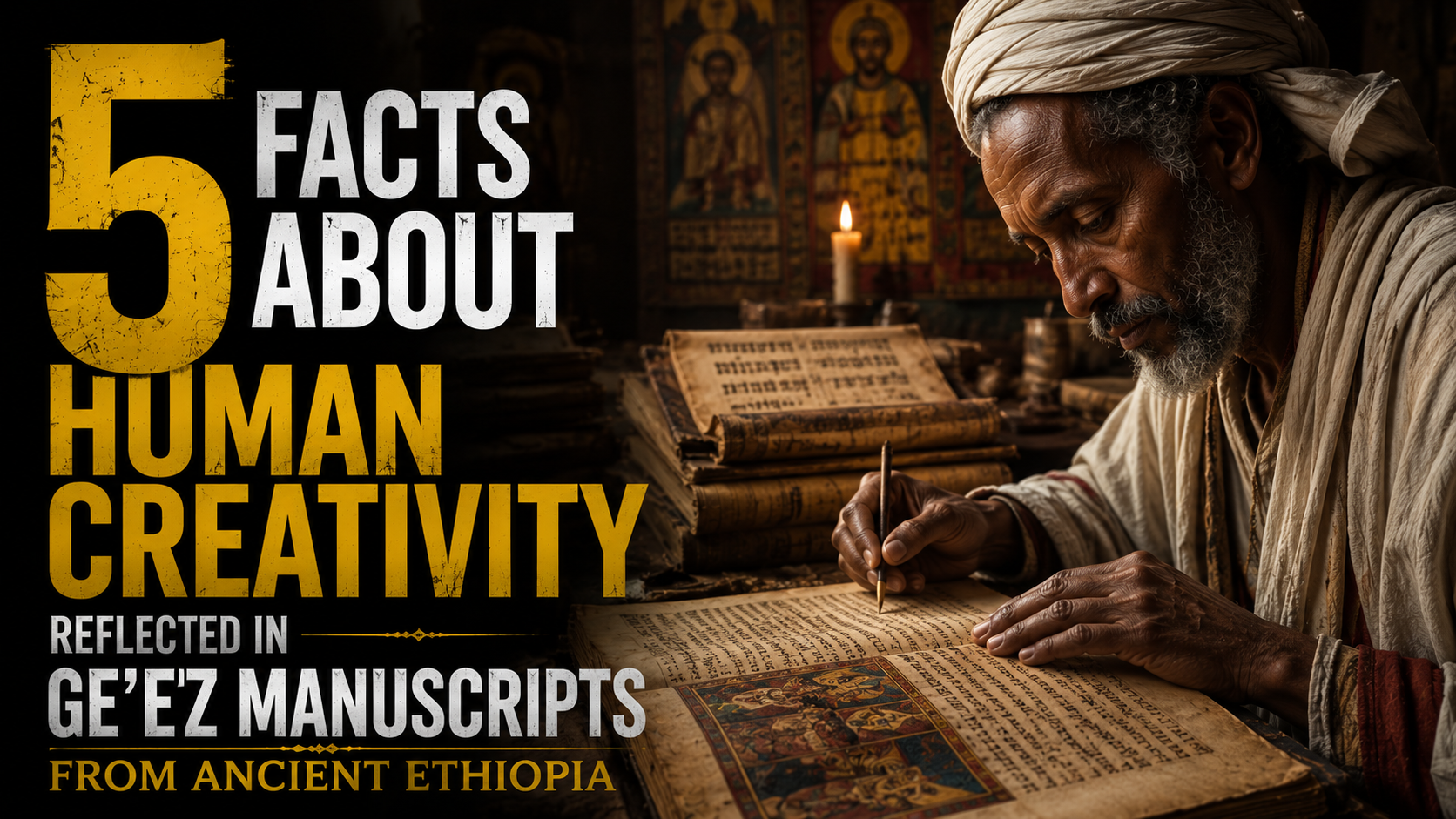
Ancient manuscripts are more than just written records—they are windows into the imagination, skill, and cultural identity of the people who created them. Among the most fascinating examples are the Ge’ez manuscripts from ancient Ethiopia, which preserve not only religious and historical knowledge but also remarkable artistic expression.
Written in the ancient Ge’ez script, these manuscripts reveal how creativity and spirituality were deeply connected in Ethiopian civilization. They showcase a tradition where writing was not just functional, but also artistic and symbolic.
Here are five compelling facts that highlight human creativity reflected in these extraordinary manuscripts.
1. Writing as a Form of Sacred Art
In Ge’ez manuscripts, writing was never purely utilitarian.
Scribes treated each page as a sacred space, carefully shaping letters with precision and intention.
The script itself became a form of visual art, often enhanced with decorative elements that elevated the spiritual meaning of the text.
This approach shows how creativity and faith were intertwined in manuscript production.
2. Illuminated Designs That Enhanced Meaning
Many Ge’ez manuscripts feature illuminated pages with intricate designs and symbolic imagery.
These decorations were not random—they were carefully chosen to reflect theological themes and cultural symbolism.
Colors, patterns, and illustrations helped guide readers through the spiritual significance of the text.
This blend of art and writing demonstrates a sophisticated understanding of visual storytelling.
3. Handmade Craftsmanship Passed Through Generations
The creation of Ge’ez manuscripts required exceptional skill and patience.
Scribes often trained for years under experienced masters to learn the precise techniques of writing and illustration.
This knowledge was passed down through generations, preserving a continuous artistic tradition.
Each manuscript reflects the individuality and discipline of its creator.
4. Use of Natural Materials in Creative Expression
Ancient Ethiopian scribes relied on locally available natural materials to create their manuscripts.
Ink was often made from organic substances, while parchment was prepared from animal skins.
Even the tools used for writing were handcrafted, requiring ingenuity and resourcefulness.
These materials contributed to the unique texture and visual character of each manuscript.
5. Storytelling That Blends History, Faith, and Imagination
Ge’ez manuscripts often combined historical accounts with religious narratives and symbolic storytelling.
Rather than separating fact from interpretation, scribes wove them together into a unified cultural expression.
This storytelling approach reflects a creative worldview where history and spirituality were deeply connected.
It allowed readers to engage with the text on multiple intellectual and emotional levels.
The Cultural Importance of Ge’ez Manuscripts
Beyond their artistic value, these manuscripts played a central role in preserving Ethiopian identity.
They documented religious teachings, historical events, and philosophical ideas that shaped society for centuries.
In many ways, they served as both educational tools and cultural treasures.
Their survival today provides a direct link to one of Africa’s oldest written traditions.
The Role of Scribes as Cultural Artists
Scribes in ancient Ethiopia were not just writers—they were artists, historians, and cultural guardians.
Their work required discipline, creativity, and deep understanding of language and symbolism.
Each manuscript reflects a personal contribution to a larger cultural legacy.
This elevates their role far beyond simple documentation.
Why These Manuscripts Still Matter Today
Ge’ez manuscripts continue to attract scholars, historians, and art enthusiasts around the world.
They offer insight into early writing systems, religious thought, and artistic expression in Africa.
Their preservation helps modern audiences appreciate the depth and sophistication of ancient Ethiopian civilization.
They also serve as a reminder of the importance of protecting cultural heritage.
Human Creativity Across Time
One of the most striking aspects of Ge’ez manuscripts is how clearly they demonstrate timeless human creativity.
Despite being created centuries ago, they reflect ideas and artistic choices that still resonate today.
The combination of beauty, meaning, and craftsmanship highlights the universal nature of human expression.
It shows that creativity has always been a defining feature of human culture.
Final Thoughts
The Ge’ez manuscripts of ancient Ethiopia stand as powerful evidence of how writing can transcend communication and become art.
Through intricate designs, symbolic storytelling, and careful craftsmanship, they reveal a rich tradition of creativity that continues to inspire scholars and artists alike.
More than historical documents, they are enduring expressions of imagination, faith, and cultural identity.
In every carefully drawn letter and decorated page, they remind us that human creativity has always been deeply connected to the desire to preserve meaning and beauty across generations.







