Neanderthals have long fascinated scientists and the public alike. As one of our closest extinct human relatives, they offer crucial clues about how humans evolved, migrated, and adapted to changing environments. In recent years, advances in genetic technology have allowed researchers to extract and study Neanderthal DNA with remarkable precision.
One of the most groundbreaking developments came from the analysis of the oldest Neanderthal DNA ever recovered. This genetic material, preserved for tens of thousands of years, has provided unexpected insights into Neanderthal life, health, and their relationship with early modern humans.
Far from being a simple genetic record, this ancient DNA has reshaped what we know about human evolution.
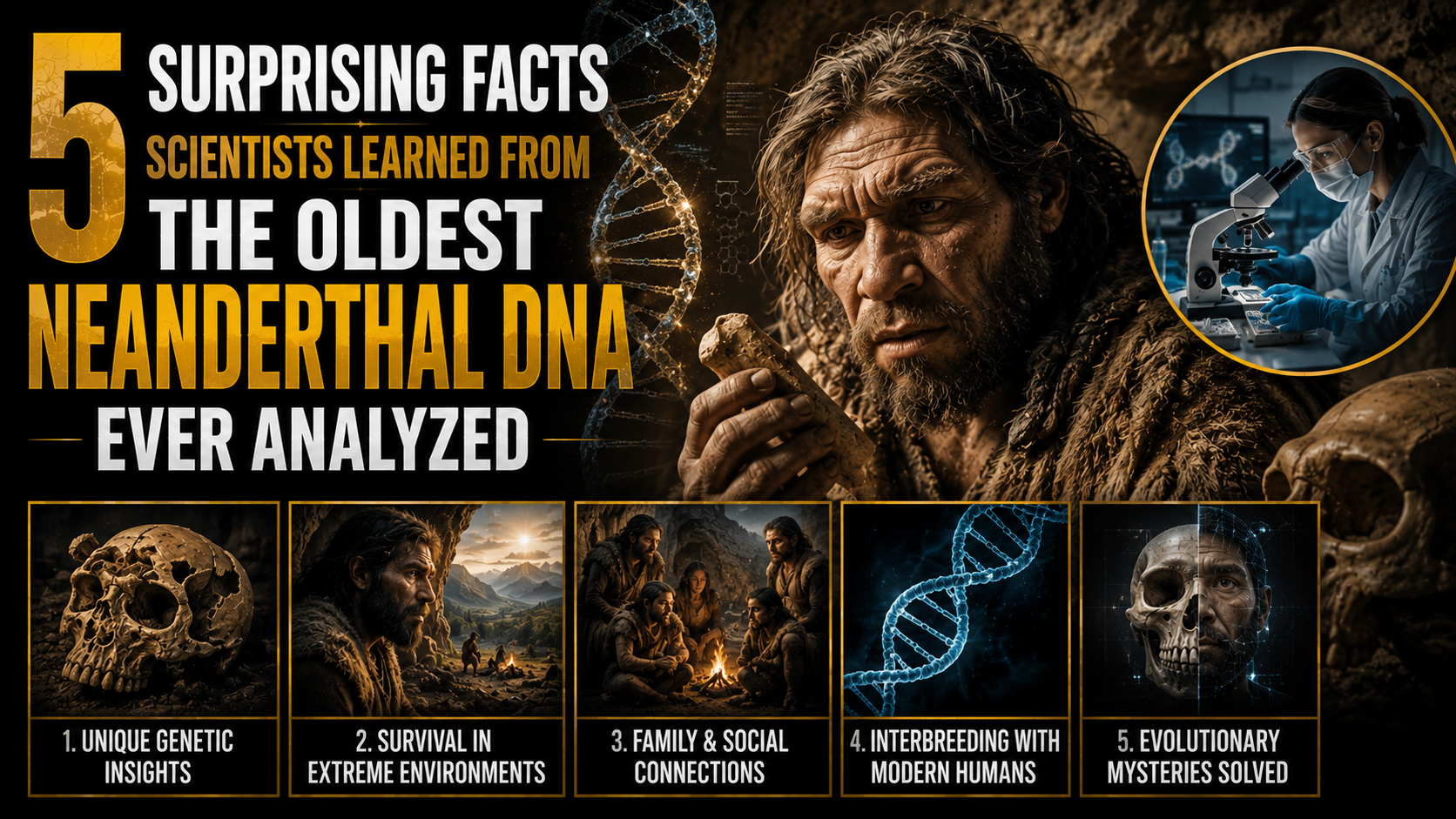
Here are five surprising facts scientists learned from the oldest Neanderthal DNA ever analyzed.
1. Neanderthals Were More Genetically Diverse Than Expected
One of the most important discoveries is that Neanderthals were not genetically uniform.
The DNA revealed significant variation among different Neanderthal groups across regions and time periods.
This suggests that populations were more widespread and interconnected than previously believed.
Such diversity helps explain how they adapted to different environments across Eurasia.
2. Early Interbreeding With Modern Humans Was More Complex
Genetic analysis confirmed that Neanderthals and early modern humans interbred.
However, the oldest DNA samples suggest this process was more frequent and complex than once thought.
Rather than a single event, there may have been multiple periods of interaction.
This means human ancestry is more intertwined with Neanderthals than earlier models suggested.
3. Some Genes Were Linked to Survival in Harsh Environments
Certain Neanderthal genes appear to have played a role in adapting to cold climates.
These genes influenced traits such as skin function, immune response, and metabolism.
They likely helped Neanderthals survive in Ice Age conditions.
Interestingly, some of these genes still exist in modern human populations today.
4. Genetic Evidence Points to Smaller, Isolated Groups
The oldest DNA shows signs of limited genetic mixing within Neanderthal populations.
This suggests that many groups were small and relatively isolated.
Such isolation can lead to reduced genetic diversity over time.
It may also have made populations more vulnerable to environmental changes and decline.
5. Neanderthal Biology Was Closer to Modern Humans Than Once Believed
The genetic data revealed a surprising level of biological similarity between Neanderthals and modern humans.
Many genes associated with brain development, immunity, and physical traits overlap significantly.
This challenges older views that Neanderthals were vastly different from Homo sapiens.
Instead, they appear to have been closely related cousins with shared biological foundations.
Why This Ancient DNA Matters
The analysis of ancient Neanderthal DNA is more than a scientific milestone—it is a window into human history.
Each genetic discovery helps reconstruct how early populations lived, migrated, and interacted.
It also helps explain how modern humans inherited certain traits still present today.
As techniques improve, even older and more degraded DNA samples may reveal additional insights.
The Role of Modern Technology in Ancient Genetics
Advances in sequencing technology have made it possible to analyze DNA that was once thought unusable.
Ultra-sensitive methods can now reconstruct fragmented genetic material with increasing accuracy.
This allows scientists to piece together genomes from specimens tens of thousands of years old.
Without these innovations, much of this information would remain inaccessible.
Final Thoughts
The oldest Neanderthal DNA ever analyzed has transformed our understanding of human evolution.
From unexpected genetic diversity to complex interbreeding patterns, each discovery adds depth to the story of our ancient relatives.
Far from being a simple branch on the evolutionary tree, Neanderthals now appear as a dynamic and closely related human group.
As research continues, these ancient genes will likely reveal even more about where we come from—and how deeply connected we remain to the past.







