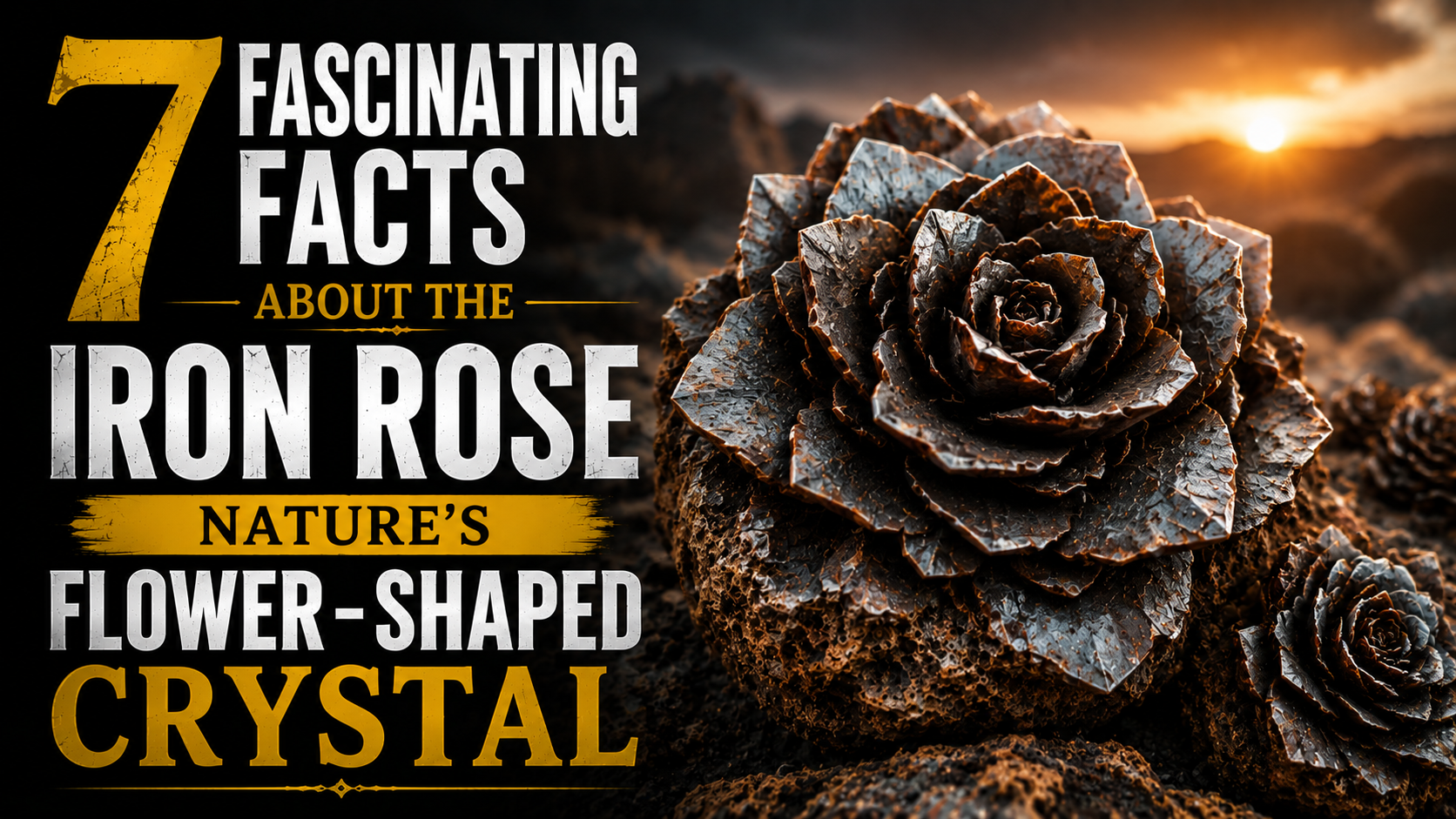
Nature has a way of surprising us with formations that look almost too artistic to be real. One of the most striking examples is the so-called “Iron Rose,” a rare mineral formation that naturally resembles a blooming flower made of metal.
Often mistaken for something handcrafted, iron roses are actually created through geological processes that take place over long periods of time. Their intricate, petal-like structure has fascinated collectors, geologists, and nature enthusiasts for decades.
Here are seven fascinating facts that reveal what makes the iron rose such an extraordinary natural wonder.
1. It Is a Natural Form of Hematite
The iron rose is primarily composed of hematite, a common iron oxide mineral.
However, what makes it special is not its composition, but its structure.
Instead of forming as solid chunks, the mineral grows in thin, overlapping layers that resemble petals of a blooming flower.
This natural arrangement gives it its signature appearance.
2. Its Formation Requires Extreme Geological Pressure
Iron roses form deep underground under intense pressure and specific temperature conditions.
Over time, mineral-rich fluids deposit layers of hematite in a radial pattern.
This slow accumulation process creates the delicate, petal-like shapes that define the crystal.
Such conditions are rare, which makes these formations uncommon.
3. Each Iron Rose Is Completely Unique
No two iron roses are exactly alike.
Variations in pressure, mineral content, and formation time ensure that each specimen develops its own distinct shape.
Some appear tightly clustered, while others spread outward like open blossoms.
This individuality adds to their appeal among collectors.
4. They Are Often Found in Desert Regions
Iron roses are most commonly discovered in arid environments such as deserts.
Dry conditions help preserve their fragile structures after formation.
Regions in Europe, North Africa, and parts of the Americas are known for producing these mineral formations.
Their desert origin contributes to their rarity and beauty.
5. They Can Form in “Sand Roses” With Gypsum
Iron roses are sometimes confused with another formation called desert roses, which are made of gypsum or barite.
While both resemble flowers, iron roses are metallic and heavier in structure.
In some cases, iron minerals and gypsum can combine, creating hybrid formations.
These combinations further blur the line between geology and natural art.
6. Their Metallic Shine Comes From Iron Content
Unlike many crystals that appear glassy or translucent, iron roses have a distinct metallic sheen.
This reflective surface is due to their high iron content and dense crystalline structure.
When light hits them, they often appear to glow with a deep reddish or silvery tone.
This visual effect enhances their flower-like appearance.
7. They Are Highly Valued by Collectors and Museums
Because of their rarity and visual appeal, iron roses are sought after by mineral collectors worldwide.
Museums also display them as examples of natural mineral artistry.
Some specimens are small enough to fit in the palm of a hand, while others grow into larger, more complex formations.
Their value comes from both scientific interest and aesthetic beauty.
How Iron Roses Form: A Geological Perspective
The creation of an iron rose is a slow and delicate process that can take thousands or even millions of years.
It begins when iron-rich water seeps into rock cavities.
As conditions change, the iron minerals begin to crystallize in layered patterns.
Over time, these layers build up into the distinctive rosette shape.
This process is influenced by temperature, pressure, and chemical composition.
Why They Look Like Flowers
The flower-like appearance of iron roses is a result of radial crystal growth.
Instead of forming in straight lines, the crystals expand outward from a central point.
This natural symmetry mimics the structure of petals in a blooming flower.
It is a striking example of how natural forces can produce visually artistic results.
The Scientific Importance of Iron Roses
Beyond their beauty, iron roses provide valuable insight into geological processes.
They help scientists understand how minerals crystallize under specific environmental conditions.
Studying them can also reveal information about the Earth’s underground chemistry.
Each specimen serves as a natural record of geological history.
Cultural and Aesthetic Appeal
Iron roses are often admired not only for their scientific value but also for their artistic resemblance.
Many people describe them as “nature’s sculptures” because of their intricate design.
They are frequently used in educational displays to illustrate the beauty of mineral formation.
Their appeal bridges the gap between science and art.
Preservation Challenges
Despite their metallic nature, iron roses can still be fragile.
Improper handling or exposure to moisture can damage their structure.
Collectors often store them in controlled environments to maintain their condition.
This careful preservation ensures that their delicate formations remain intact for study and display.
Final Thoughts
The iron rose stands as a powerful reminder that nature is capable of creating structures that rival human artistry.
Formed deep within the Earth under rare conditions, these flower-shaped crystals represent patience, precision, and geological beauty.
Whether viewed through a scientific lens or appreciated for their visual elegance, iron roses continue to captivate anyone who encounters them.
They are more than minerals—they are natural works of art shaped by time itself.







