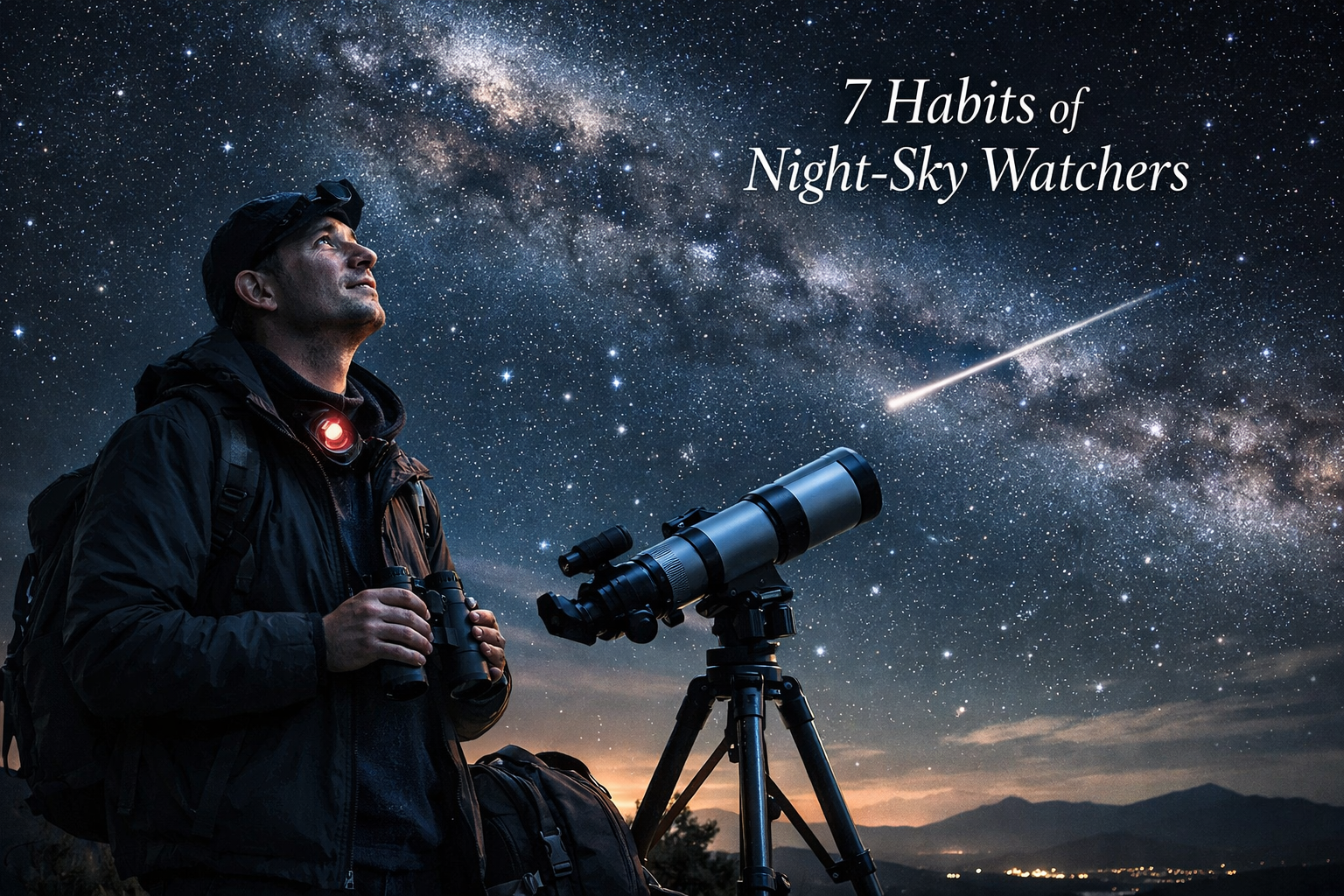
Have you ever heard about a meteor shower, lunar eclipse, or rare planetary alignment only after it happened? If so, you’re not alone. Many people discover incredible astronomical events when photos start flooding social media the next day. By then, the opportunity to witness the celestial show firsthand has already passed.
Yet there are people who rarely miss these events. Whether it’s a dazzling meteor shower, a bright comet, a Blood Moon, or a stunning display of the Northern Lights, they always seem to know exactly when and where to look.
The secret isn’t luck. It’s a collection of simple habits that help them stay informed, prepared, and ready to enjoy whatever the night sky has to offer.
The good news is that you don’t need expensive telescopes, advanced astronomy knowledge, or years of experience to develop these habits yourself. A little planning and curiosity can dramatically increase your chances of catching the most exciting skywatching events throughout the year.
Here are seven habits commonly shared by people who never seem to miss a celestial spectacle.
1. They Keep Track of Astronomical Calendars
One of the most important habits of dedicated skywatchers is staying informed about upcoming events.
The night sky follows predictable cycles. Astronomers can calculate the dates of meteor showers, eclipses, planetary conjunctions, and other celestial events years in advance. People who consistently witness these events make it a habit to check astronomy calendars regularly.
Rather than relying on chance, they know exactly what’s coming and when.
At the beginning of each year, many experienced stargazers review a list of major astronomical events and add them to their personal calendars. This simple step prevents surprises and allows plenty of time to prepare.
Events commonly listed on astronomy calendars include:
- Meteor showers
- Solar eclipses
- Lunar eclipses
- Planetary alignments
- Supermoons
- Comet appearances
- International Space Station flyovers
Knowing about these events ahead of time often makes the difference between witnessing them and hearing about them later.
2. They Pay Attention to Weather Conditions
Even the most spectacular astronomical event can be hidden behind clouds.
That’s why experienced observers keep a close eye on weather forecasts in the days leading up to an event. A perfectly timed meteor shower becomes meaningless if thick cloud cover blocks the sky.
Many skywatchers monitor weather conditions several days in advance and remain flexible with their plans.
Instead of simply checking whether rain is expected, they focus on factors such as:
- Cloud cover
- Humidity
- Atmospheric transparency
- Wind conditions
- Fog potential
Sometimes driving just a short distance can mean the difference between a completely overcast sky and excellent viewing conditions.
People who rarely miss celestial events understand that successful skywatching requires cooperation from nature.
3. They Have a Go-To Viewing Location
Finding a suitable place to observe the night sky is often easier when you already know where you’re going.
Frequent skywatchers usually have one or more trusted viewing locations that offer clear horizons and minimal light pollution. These spots become reliable destinations whenever an astronomical event occurs.
Good observing locations often include:
- Rural fields
- Hilltops
- State parks
- Nature reserves
- Lakeshores
- Desert areas
- Dark-sky parks
Having a preselected location eliminates last-minute decision-making and allows more time to enjoy the event.
Many enthusiasts even scout new locations throughout the year so they always have backup options available.
4. They Use Technology to Their Advantage
Modern technology has transformed skywatching.
People who consistently catch celestial events often use apps, websites, and alerts that provide real-time astronomical information. These tools remove much of the guesswork from planning observations.
Popular astronomy tools can help users:
- Identify stars and planets
- Track meteor shower peaks
- Predict satellite passes
- Locate constellations
- Monitor eclipse schedules
- Receive event notifications
Smartphone apps can even point directly toward celestial objects using augmented reality features.
Instead of replacing the experience of observing the sky, technology helps people become more connected to it.
By staying informed through reliable digital tools, skywatchers are less likely to overlook important events.
5. They Prepare Their Equipment Ahead of Time
One common reason people miss astronomical events is poor preparation.
Imagine hearing that a meteor shower is peaking tonight, only to discover that your binoculars are misplaced, your camera battery is dead, or your telescope needs assembly.
Experienced observers avoid these problems by preparing in advance.
Even if they use only basic equipment, they make sure everything is ready before the event begins.
Preparation often includes:
- Charging batteries
- Cleaning lenses
- Packing binoculars
- Testing cameras
- Bringing flashlights
- Checking telescope alignment
- Gathering warm clothing
Many skywatchers keep a dedicated astronomy kit so they can leave quickly whenever conditions are favorable.
This habit reduces stress and ensures they spend more time observing and less time troubleshooting.
6. They Make Skywatching a Regular Activity
People who rarely miss celestial events don’t wait for rare occurrences to look at the sky.
Instead, they make stargazing a regular part of their routine.
By spending time outdoors at night throughout the year, they naturally become more familiar with seasonal changes in the sky. This ongoing relationship with astronomy makes it easier to notice unusual events when they occur.
Regular observation helps people learn:
- Seasonal constellations
- Planet movements
- Moon phases
- Rising and setting times
- Changes in brightness among stars
As familiarity grows, so does awareness.
Someone who routinely observes the sky is far more likely to notice an approaching conjunction, an unexpected bright comet, or an unusually active meteor shower.
In many cases, the habit of simply looking up is what separates dedicated skywatchers from everyone else.
7. They Stay Curious and Continue Learning
Curiosity is perhaps the most powerful habit of all.
People who consistently experience astronomical events tend to have a genuine interest in the universe. They enjoy learning about planets, stars, galaxies, eclipses, and space exploration.
This ongoing curiosity keeps them engaged and informed.
They read articles, watch documentaries, follow astronomy organizations, and participate in online communities where upcoming events are frequently discussed.
The more they learn, the more excited they become about observing celestial phenomena firsthand.
Curiosity creates a positive cycle:
- Learning increases interest.
- Interest encourages observation.
- Observation leads to discovery.
- Discovery fuels further learning.
Over time, skywatching becomes more than a hobby—it becomes a lifelong source of wonder.
Why Most People Miss Night Sky Events
Many astronomical events are surprisingly easy to observe, yet countless people never see them.
Several factors contribute to this:
Busy Schedules
Modern life leaves little room for spontaneous stargazing. Work, family responsibilities, and daily routines often take priority.
Lack of Awareness
Many people simply don’t know when events are happening. Without reminders or notifications, even major celestial occurrences can pass unnoticed.
Light Pollution
Bright city lights make it difficult to see many astronomical objects. As urban areas continue to expand, fewer people experience truly dark skies.
Weather Challenges
Cloudy conditions frequently interfere with observations, especially when events occur only once or twice per year.
Understanding these obstacles can help aspiring skywatchers overcome them more effectively.
The Rewards of Watching the Night Sky
People who prioritize astronomical events often describe the experience as deeply rewarding.
Watching a meteor streak across the sky or seeing the Moon turn red during a total eclipse creates a sense of connection to something larger than ourselves.
Skywatching offers benefits that extend beyond astronomy itself:
Stress Relief
Spending time outdoors under a star-filled sky can be calming and restorative.
Greater Appreciation for Nature
Astronomical events remind us that Earth is part of a vast and dynamic universe.
Family Bonding
Many celestial events make excellent family activities and create lasting memories.
Lifelong Learning
Each observation presents an opportunity to discover something new.
These rewards help explain why so many people become passionate about observing the heavens.
Turning Skywatching Into a Habit
The good news is that anyone can become more aware of celestial events.
You don’t need professional equipment or extensive scientific knowledge. Small changes in behavior can significantly improve your chances of witnessing remarkable astronomical phenomena.
Start by:
- Following astronomy news sources
- Setting event reminders
- Identifying local dark-sky locations
- Checking weather forecasts regularly
- Spending more time outdoors at night
- Learning basic constellations
- Keeping binoculars handy
Over time, these simple actions become habits.
And once they do, you’ll find yourself catching more eclipses, meteor showers, planetary conjunctions, and other celestial wonders than ever before.
Final Thoughts
People who never miss night sky events aren’t necessarily experts. More often, they’re simply prepared, curious, and attentive. They plan ahead, stay informed, monitor weather conditions, and make time to look up when something special is happening above them.
The universe offers countless breathtaking displays throughout the year, from dazzling meteor showers to rare eclipses and brilliant planetary alignments. By adopting the seven habits outlined above, you can dramatically increase your chances of witnessing these unforgettable moments.
The next spectacular event may be just around the corner. The question is simple: will you hear about it afterward, or will you be outside watching it happen in real time?







