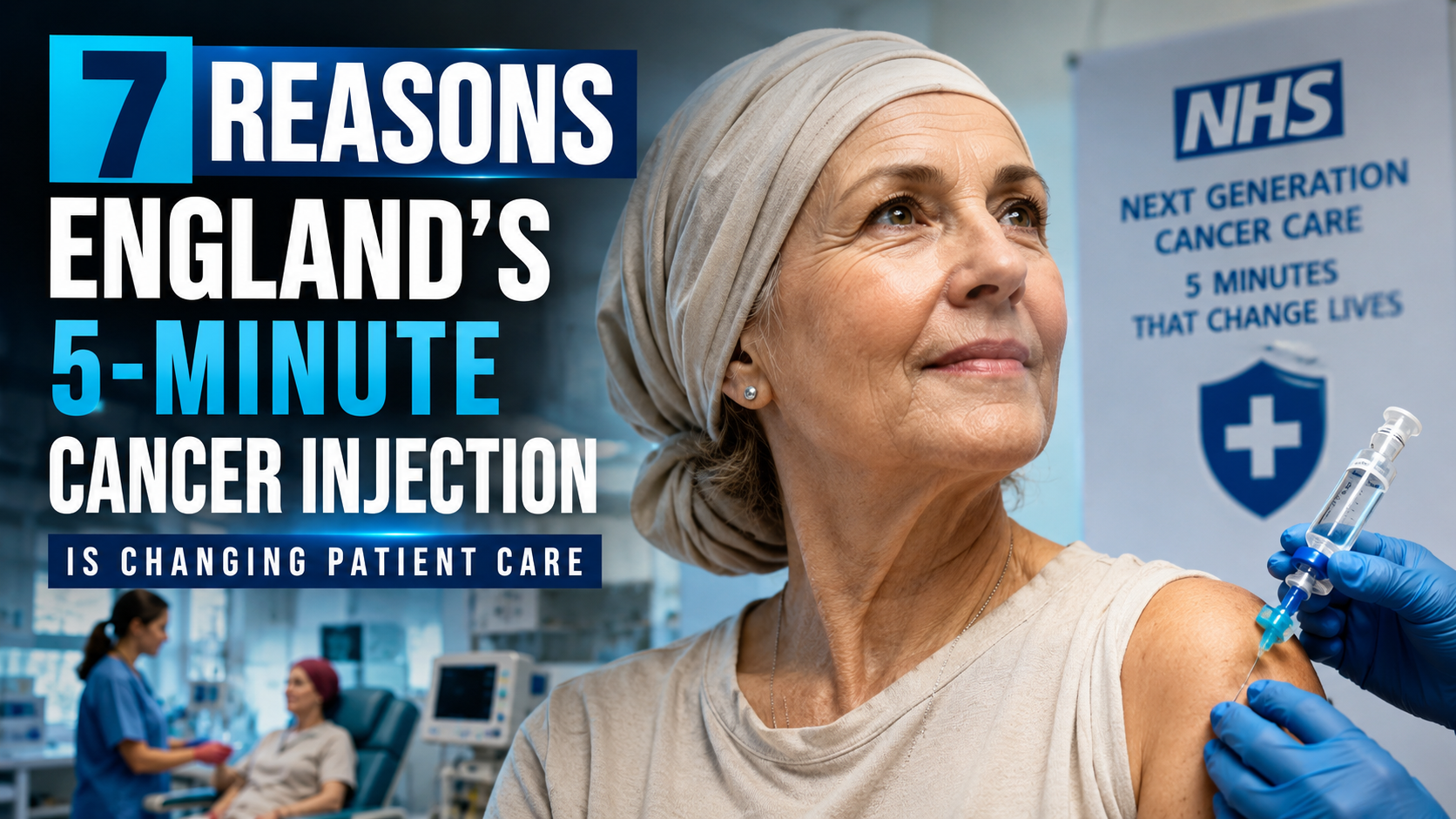
Cancer treatment has entered a new era in England, and one of the most talked-about medical developments is surprisingly simple: a five-minute injection.
For decades, many cancer therapies required patients to spend hours connected to intravenous drips inside crowded hospital treatment rooms. While those therapies helped save lives, the process often placed additional physical and emotional strain on patients already dealing with serious illness.
Now, a faster and more convenient treatment method is beginning to change that experience.
Healthcare providers across England are introducing a rapid cancer injection that can replace lengthy IV infusions for some patients. The new approach dramatically reduces treatment time while improving comfort, hospital efficiency, and overall patient experience.
Medical experts believe this innovation could reshape how cancer care is delivered in the future. Patients who once spent most of their day at treatment centers may soon complete therapy in minutes and return home much sooner.
The impact goes far beyond convenience. Faster treatment times can reduce stress, free up hospital resources, and allow healthcare workers to focus on more patients in need.
Here are seven major reasons why England’s five-minute cancer injection is being seen as a breakthrough in modern healthcare.
1. Patients Spend Far Less Time in Hospitals
One of the biggest advantages of the new injection is the dramatic reduction in treatment time.
Traditional IV cancer therapies can sometimes take between 30 minutes and several hours, depending on the medication and patient monitoring requirements. For many people undergoing regular treatment, that means repeated long days inside clinics and hospitals.
The five-minute injection changes that experience entirely.
Instead of sitting connected to infusion equipment for extended periods, eligible patients can receive their medication quickly through an injection under the skin. In many cases, the appointment itself becomes significantly shorter.
That difference may sound small on paper, but for patients, it can be life-changing.
Cancer treatment often affects every part of a person’s routine. Patients may need transportation assistance, time away from work, childcare arrangements, or support from family members. Reducing treatment time helps restore a sense of normalcy to daily life.
For individuals already coping with fatigue, nausea, anxiety, or pain, spending fewer hours in medical settings can also improve emotional well-being.
Many patients describe hospital visits as mentally exhausting. A shorter appointment means less waiting, less stress, and more time recovering comfortably at home.
2. The Injection Improves Quality of Life
Cancer care is not only about extending life — it is also about improving the quality of life during treatment.
Long hospital visits can become emotionally draining over time. Patients often experience anxiety before appointments, discomfort during treatment, and exhaustion afterward.
The quicker injection process helps reduce some of that burden.
Patients who receive the injection can often move through treatment faster and return to their normal routines sooner. This allows them to spend more time with family, rest at home, continue hobbies, or maintain work schedules when possible.
That sense of independence matters deeply.
Cancer can make people feel as though they have lost control over their lives. A treatment process that is faster and less disruptive can help restore confidence and dignity.
Families benefit as well. Caregivers frequently rearrange schedules to accompany loved ones to treatment appointments. Shorter visits reduce logistical stress for everyone involved.
In many cases, improving comfort and convenience can have a positive effect on emotional health, which is an important but sometimes overlooked part of cancer recovery.
3. Hospitals Can Treat More Patients Efficiently
Healthcare systems around the world continue to face pressure from rising patient demand, staffing shortages, and limited treatment space.
England’s National Health Service has dealt with increasing strain in recent years, especially in oncology departments where treatment demand remains extremely high.
The five-minute injection could help ease some of that pressure.
When treatments take less time, hospitals can free up infusion chairs and clinical resources for other patients who still require traditional IV therapies.
This creates a more efficient workflow throughout cancer treatment centers.
Instead of one patient occupying a treatment chair for several hours, clinics may be able to care for multiple patients in the same amount of time.
That efficiency can help reduce waiting lists and improve access to care.
Medical professionals say this type of innovation is particularly valuable because it improves operational efficiency without compromising treatment effectiveness.
In healthcare, even small time savings can create major system-wide improvements when multiplied across thousands of patients.
4. The Injection Reduces Pressure on Healthcare Workers
Doctors, nurses, and cancer specialists often work under enormous pressure.
Cancer care requires precision, emotional support, and constant patient monitoring. Long infusion treatments also demand significant nursing time and attention.
By shortening administration time, the injection may help reduce some of the workload placed on healthcare staff.
Nurses can spend less time managing IV setups and prolonged infusion monitoring while focusing more on patient support and critical care needs.
This matters because healthcare worker burnout has become a serious global issue.
Many hospitals continue to struggle with staffing shortages and overwhelming workloads. Innovations that improve efficiency without sacrificing patient safety can help create a healthier working environment for medical professionals.
When healthcare workers have more manageable schedules and workflows, patients benefit too.
Doctors and nurses who are less overwhelmed may have more time for communication, education, and personalized care.
That human connection remains one of the most important aspects of successful cancer treatment.
5. The Treatment Is Designed to Be Just as Effective
Speed means little if treatment quality is compromised.
One reason the five-minute injection has attracted so much attention is because studies indicate it can provide similar medical effectiveness to traditional intravenous delivery for certain therapies.
The medication itself is not necessarily new. In some cases, it is the delivery method that has changed.
Rather than slowly administering the drug through a vein, the treatment is delivered through a subcutaneous injection, meaning it is injected under the skin.
Researchers and healthcare providers carefully evaluate these methods before they are approved for broader use.
Patient safety, absorption rates, side effects, and treatment outcomes are all studied extensively.
For eligible patients, the faster injection can offer comparable therapeutic benefits while delivering a much more convenient experience.
This balance between effectiveness and convenience is what makes the development especially significant.
Medical innovation is often associated with futuristic technology or expensive equipment, but sometimes the most impactful changes involve improving how existing treatments are delivered.
6. It Represents a Shift Toward More Patient-Centered Care
Modern healthcare is increasingly focused on patient-centered treatment.
That means designing systems and therapies around the real needs of patients rather than simply prioritizing institutional processes.
The five-minute cancer injection reflects that shift clearly.
Patients today want treatments that fit more naturally into their lives. They want comfort, flexibility, efficiency, and reduced disruption whenever possible.
Healthcare providers are beginning to recognize that convenience is not a luxury — it is an important part of compassionate care.
For years, cancer patients often had limited options regarding how treatment was administered. Now, advances in medical science are creating more personalized approaches.
Some patients may still require traditional infusions depending on their condition, medications, or medical history. However, offering alternative delivery methods provides greater choice and flexibility.
This development also highlights a broader trend in medicine: moving care closer to patients and reducing unnecessary hospital time whenever safe and appropriate.
Future healthcare innovations may continue building on this idea through home-based treatments, remote monitoring, and simplified therapy delivery systems.
7. The Innovation Could Influence Cancer Care Worldwide
Although the rollout is taking place in England, the implications could extend far beyond the country’s borders.
Healthcare systems across the globe face many of the same challenges: overcrowded hospitals, growing cancer rates, rising treatment costs, and workforce shortages.
A faster and more efficient treatment model naturally attracts international attention.
If the injection continues to show strong results, other countries may adopt similar approaches for cancer therapies and additional medical conditions.
Global healthcare leaders are constantly searching for solutions that improve both patient outcomes and operational efficiency.
The five-minute injection offers an example of how relatively small procedural innovations can create large-scale impact.
It may also encourage pharmaceutical companies and researchers to invest more heavily in simplified drug delivery systems.
The future of medicine may involve not only discovering new treatments but also making existing therapies easier, faster, and less stressful for patients.
That shift could improve healthcare accessibility for millions of people around the world.
Why This Development Matters Beyond Cancer Treatment
The importance of this innovation extends beyond oncology.
Healthcare systems are increasingly looking for ways to deliver treatments more efficiently without lowering quality standards.
The success of fast-administered injections could inspire similar approaches in other medical specialties, including autoimmune diseases, chronic conditions, and immune therapies.
Reducing treatment times has economic benefits as well.
Shorter appointments can lower operational costs, improve patient flow, and reduce infrastructure pressure on hospitals.
For patients, the benefits are deeply personal.
Less time in hospitals often means less emotional exhaustion, reduced transportation costs, fewer work disruptions, and improved daily life.
When healthcare systems become more efficient and humane at the same time, everyone benefits.
The Emotional Side of Faster Treatment
Medical statistics and efficiency improvements are important, but the emotional impact of cancer treatment should never be overlooked.
Many patients describe treatment days as physically and mentally draining.
The anticipation, waiting, side effects, and uncertainty can create emotional fatigue over months or even years.
A shorter treatment process cannot eliminate the emotional weight of cancer, but it can reduce some of the daily burden associated with care.
Something as simple as spending less time inside a hospital can help patients feel more connected to ordinary life.
That emotional relief can be meaningful during an incredibly difficult chapter of life.
Families may also experience less stress when treatment becomes more manageable.
Children, spouses, and caregivers often carry emotional strain alongside the patient. Faster appointments can ease scheduling challenges and reduce the overall disruption caused by ongoing medical care.
Challenges and Limitations Still Exist
While the five-minute injection represents exciting progress, it is important to recognize that not every patient will qualify for this treatment method.
Eligibility depends on several medical factors, including cancer type, medication compatibility, treatment stage, and overall health condition.
Some therapies still require intravenous administration due to how the drugs work within the body.
Additionally, healthcare providers must ensure patients are monitored carefully for side effects and treatment response.
Medical innovations also require training, infrastructure updates, and careful implementation to ensure patient safety.
Despite these limitations, experts see the development as an important step forward rather than a complete replacement for existing therapies.
The goal is not necessarily to eliminate traditional cancer treatments but to provide better options whenever possible.
A Glimpse Into the Future of Healthcare
The growing excitement around England’s five-minute cancer injection reflects a larger transformation happening across modern medicine.
Healthcare is gradually becoming faster, more personalized, and more focused on patient experience.
Technological advances, pharmaceutical innovation, and new treatment models are changing expectations for what medical care can look like.
Patients increasingly expect healthcare systems to value both effectiveness and convenience.
The success of rapid treatment methods may encourage further innovation aimed at reducing unnecessary complexity in medicine.
Future therapies could become more portable, less invasive, and easier to access outside traditional hospital settings.
That evolution has the potential to improve outcomes while also making treatment less intimidating for patients.
Final Thoughts
England’s five-minute cancer injection is more than just a faster way to deliver medication.
It represents a meaningful shift in how healthcare systems think about patient care, efficiency, and quality of life.
By reducing treatment times, easing pressure on hospitals, and improving patient experience, this innovation highlights how even small medical changes can create enormous impact.
For cancer patients, every hour matters.
More time at home, less stress during treatment, and improved convenience can make an incredibly difficult journey slightly easier.
As healthcare systems continue evolving, patient-centered innovations like this may become increasingly common.
And if this approach continues delivering strong results, England’s five-minute injection could become a model for the future of cancer treatment worldwide.







