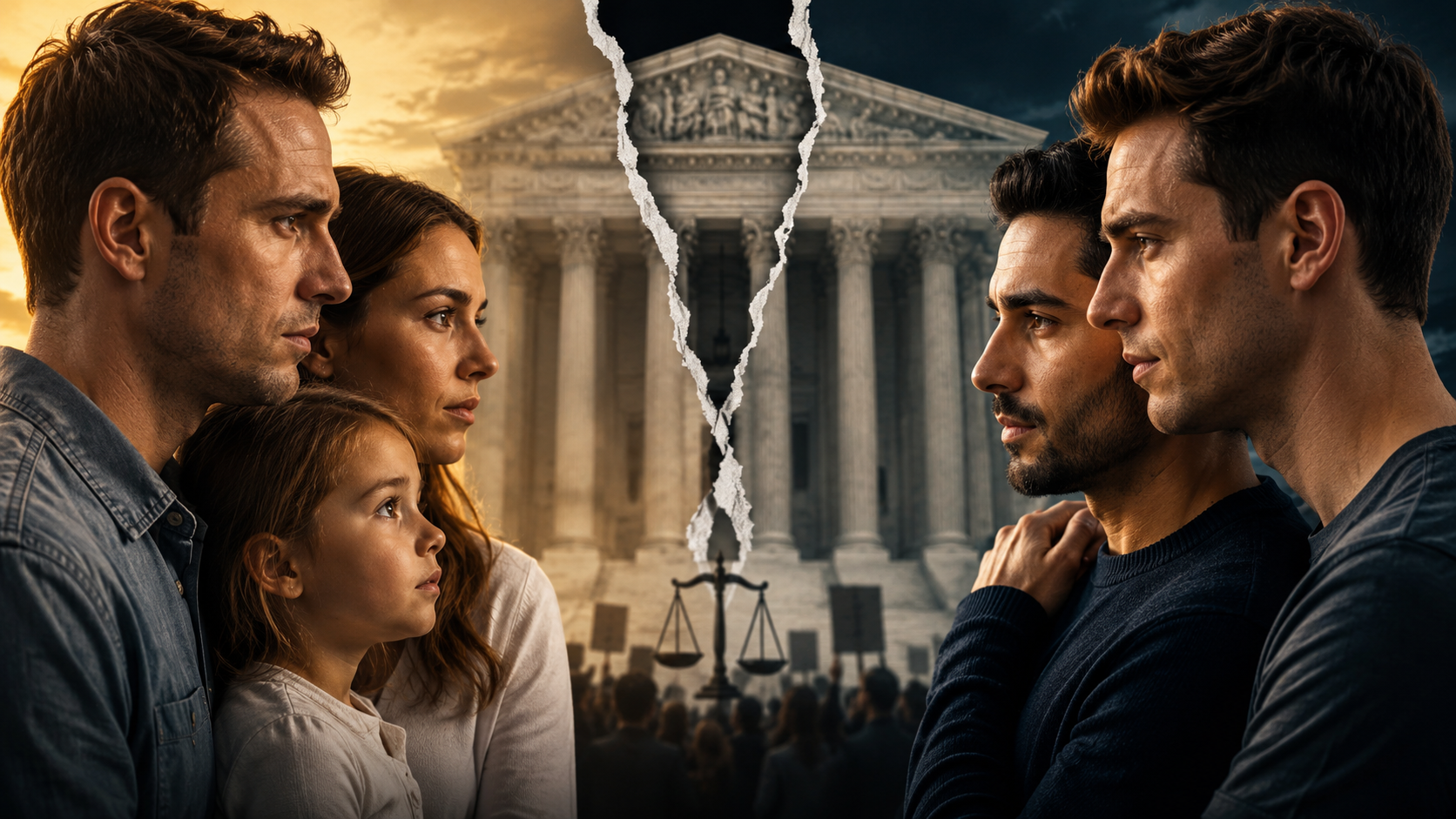
Few social issues have generated as much discussion in recent decades as the debate surrounding traditional marriage. Across political, religious, cultural, and legal circles, conversations about marriage have evolved significantly, reflecting broader changes in society and shifting views about family, identity, and personal freedom.
Because the topic is often discussed through headlines, social media posts, and political talking points, many people encounter only simplified versions of a much more complex conversation. As a result, misconceptions can develop about what the debate actually involves and why it remains important to many individuals and communities.
Whether someone strongly supports traditional definitions of marriage, advocates for broader definitions, or simply wants to understand the discussion more clearly, it helps to recognize the deeper factors shaping the conversation.
Here are seven things many people overlook when examining the ongoing debate over traditional marriage.
1. The Debate Is About More Than Legal Definitions
One common misunderstanding is the belief that the discussion revolves solely around laws and government policies.
While legal recognition is certainly an important aspect of the issue, the debate often extends far beyond legislation. For many people, marriage represents a cultural institution, a religious commitment, a social structure, and a personal value system all at once.
Different groups approach marriage from different perspectives. Some view it primarily as a legal arrangement that provides rights and responsibilities. Others see it as a sacred covenant rooted in religious teachings or long-standing cultural traditions.
Because marriage serves multiple roles in society, disagreements often involve differing views about its purpose rather than simply its legal definition.
Understanding this broader context helps explain why conversations about marriage can become so passionate and emotionally charged.
2. Historical Traditions Play a Significant Role
Many discussions about traditional marriage are deeply connected to history.
Throughout much of human history, societies developed customs and expectations regarding marriage that influenced family structures, inheritance systems, social stability, and community life. These traditions often became woven into cultural identities and religious beliefs.
For supporters of traditional marriage, preserving these historical understandings may feel like protecting an institution that has provided continuity across generations.
At the same time, others argue that institutions naturally evolve as societies change and that historical practices should be examined in light of contemporary values and experiences.
Recognizing the role of history helps clarify why the debate often involves questions about tradition, continuity, and social change.
3. Religious Beliefs Are Central for Many Participants
Another aspect that is sometimes overlooked is the importance of faith-based convictions.
For millions of people around the world, views about marriage are shaped by religious teachings that have guided communities for centuries. These beliefs are often deeply personal and closely connected to broader understandings of morality, family life, and spiritual commitment.
Because religious perspectives play such a significant role, many participants in the debate do not view their position as merely political. Instead, they see it as an expression of sincerely held beliefs.
Understanding this distinction does not require agreement with any particular viewpoint. However, recognizing the role faith plays in shaping opinions can lead to more productive and respectful conversations.
When people understand where others are coming from, meaningful dialogue becomes easier.
4. Emotions Often Influence the Conversation
Marriage is not simply an abstract concept.
It is connected to people’s families, relationships, personal experiences, and identities. As a result, discussions about marriage often involve strong emotions.
Individuals may draw on their upbringing, religious background, life experiences, or personal relationships when forming their opinions. Because these experiences are deeply meaningful, disagreements can sometimes feel intensely personal.
This emotional dimension explains why conversations about marriage occasionally become heated, even when participants are discussing legal or policy issues.
Recognizing the human element behind the debate can encourage greater empathy and understanding among people who hold different views.
5. The Discussion Involves Broader Questions About Society
The marriage debate frequently intersects with larger questions about the kind of society people want to build.
Supporters of various positions often discuss topics such as family stability, child development, religious liberty, individual rights, social institutions, and cultural values.
These broader concerns mean that the conversation is rarely limited to marriage alone. Instead, it often reflects deeper beliefs about community, responsibility, freedom, and social change.
People may reach different conclusions because they prioritize different values or interpret societal trends differently.
Understanding these broader concerns helps explain why the debate continues even in places where legal questions have largely been settled.
6. Most People Want Respectful Dialogue
Public discussions can sometimes create the impression that the debate consists entirely of conflict and hostility.
In reality, many individuals on all sides of the issue desire respectful conversations rather than confrontation. They may hold strong convictions, but they also recognize the importance of civil discourse.
Constructive dialogue becomes possible when people focus on understanding rather than assuming motives. Too often, individuals are reduced to stereotypes or assigned intentions they do not actually hold.
Meaningful discussions require listening carefully, asking thoughtful questions, and acknowledging that reasonable people can arrive at different conclusions.
Respect does not require agreement. It requires treating others with dignity even when perspectives differ.
7. The Conversation Continues to Evolve
Perhaps the most important thing people fail to realize is that discussions about marriage are not static.
Cultural attitudes, legal frameworks, religious communities, and social institutions continue to evolve. New generations often approach these topics differently than previous ones, bringing fresh perspectives and priorities to the conversation.
At the same time, long-standing beliefs and traditions continue to influence how many people understand marriage and family life.
Because society is constantly changing, discussions about marriage are likely to remain part of public life for years to come.
The debate is not simply about revisiting old arguments. It also involves navigating new questions that arise as cultures and communities continue to develop.
Why This Topic Remains So Important
Marriage occupies a unique place in society because it touches so many aspects of human life.
It influences family relationships, community structures, religious practices, legal systems, and cultural traditions. Few institutions affect as many areas of life simultaneously.
As a result, conversations about marriage often carry significance far beyond the individuals directly involved. People frequently view the issue through the lens of broader concerns about social stability, personal freedom, cultural identity, or moral values.
This explains why discussions about marriage continue to generate interest even when other public debates fade from attention.
The topic resonates because it relates to questions that many people consider fundamental: How should families be structured? What role should tradition play in modern society? How can diverse communities coexist while respecting different beliefs?
These are complex questions without simple answers.
The Importance of Understanding Different Perspectives
One challenge in modern public discourse is the tendency to view disagreements through an “us versus them” framework.
However, complex social issues rarely fit neatly into such categories.
People often arrive at their views through a combination of personal experiences, cultural influences, religious beliefs, education, and individual reflection. Understanding this complexity can help reduce unnecessary hostility.
Listening to different perspectives does not require abandoning one’s own convictions. Instead, it provides an opportunity to better understand the values and concerns that shape other viewpoints.
In many cases, people discover that they share common goals—such as strong families, healthy communities, and mutual respect—even when they disagree about how those goals should be achieved.
Recognizing these shared concerns can create a foundation for more constructive conversations.
Moving Beyond Simplified Narratives
One reason the marriage debate can be difficult to understand is that public discussions often reduce complex issues to simple slogans.
While slogans may capture attention, they rarely capture the full picture.
The reality is that questions about marriage involve history, culture, religion, law, personal identity, social policy, and human relationships. Each of these dimensions contributes to the broader conversation.
Approaching the topic with curiosity rather than assumptions allows for a more informed understanding of the issues involved.
It also encourages greater appreciation for the diversity of perspectives that exist within modern societies.
Final Thoughts
The debate over traditional marriage is often portrayed as a straightforward disagreement, but in reality it involves a wide range of cultural, religious, historical, legal, and personal considerations.
The seven points discussed here highlight some of the complexities that are frequently overlooked. The conversation is about more than legal definitions. It is shaped by tradition, faith, personal experience, social values, and evolving cultural norms.
Regardless of where someone stands on the issue, understanding these deeper dimensions can lead to more thoughtful discussions and a more nuanced perspective.
In a world where many conversations quickly become polarized, taking the time to understand the broader context behind important social debates is a valuable step toward greater empathy, mutual respect, and informed dialogue.







