When most people think about intelligence, they picture someone with advanced degrees, an impressive vocabulary, or a high score on an IQ test. Popular culture often portrays intelligent individuals as people who constantly display their knowledge or dominate conversations with facts and statistics.
In reality, genuine intelligence is often much quieter.
Some of the smartest people you’ll ever meet may not feel the need to prove how intelligent they are. They don’t rely on complicated words, flashy credentials, or constant attempts to demonstrate superiority. Instead, their intelligence reveals itself through their habits, mindset, emotional awareness, and how they interact with the world around them.
Modern psychologists recognize that intelligence comes in many forms. Cognitive ability is important, but emotional intelligence, creativity, adaptability, self-awareness, and curiosity are equally valuable qualities that contribute to a person’s overall intelligence.
Here are eight signs that often indicate someone possesses genuine intelligence.
1. They Demonstrate Strong Empathy

One of the most overlooked indicators of intelligence is empathy.
Empathy is the ability to understand and appreciate another person’s feelings, experiences, and perspectives. It goes far beyond simply feeling sorry for someone. Truly empathetic individuals can often recognize emotional cues that others miss.
They may notice:
- Changes in body language
- Shifts in tone of voice
- Unspoken discomfort
- Emotional needs
- Social dynamics within groups
This ability requires a high level of emotional awareness and observation.
Empathetic people tend to be better listeners because they genuinely want to understand what others are experiencing. Rather than immediately judging, criticizing, or offering solutions, they often take the time to see situations from multiple perspectives.
Research has increasingly linked empathy with emotional intelligence, an important aspect of overall cognitive functioning. People who understand emotions—both their own and those of others—are often better equipped to navigate relationships, solve conflicts, and communicate effectively.
2. They’re Comfortable Spending Time Alone

Many highly intelligent people value solitude.
This doesn’t mean they dislike others or avoid social interaction. Instead, they often enjoy having time to think, reflect, create, and recharge without constant external stimulation.
Solitude provides opportunities for:
- Deep thinking
- Self-reflection
- Problem-solving
- Creative exploration
- Personal growth
Intelligent individuals frequently use alone time to process ideas, pursue hobbies, read, learn, or simply organize their thoughts.
Interestingly, being comfortable alone often reflects a strong sense of self. Rather than relying on constant social validation, these individuals find fulfillment through their own interests and pursuits.
They may have smaller social circles, but their relationships are often deeper and more meaningful.
3. They Possess an Endless Curiosity

One of the strongest indicators of intelligence is an ongoing desire to learn.
Highly intelligent people rarely assume they already know enough. Instead, they remain curious about the world throughout their lives.
They often ask questions such as:
- Why does this happen?
- How does this work?
- What can I learn from this?
- Is there another perspective?
Their curiosity extends beyond formal education.
They may enjoy:
- Reading books
- Exploring different cultures
- Learning new skills
- Traveling
- Studying unfamiliar topics
- Engaging in thoughtful conversations
Rather than accepting information at face value, they tend to investigate deeper and seek a broader understanding.
This curiosity keeps their minds active and open to new ideas.
4. They Recognize the Limits of Their Knowledge

One of the greatest misconceptions about intelligence is that smart people believe they know everything.
The opposite is often true.
Truly intelligent individuals understand how much they don’t know.
The more someone learns, the more they realize the world is incredibly complex. This awareness often creates intellectual humility rather than arrogance.
You’ll frequently hear intelligent people say things like:
- “I’m not sure.”
- “I need to learn more about that.”
- “I could be wrong.”
- “Can you explain that to me?”
They are comfortable admitting gaps in their knowledge because they view learning as a strength rather than a weakness.
In contrast, people who constantly insist they are right may actually be revealing insecurity rather than intelligence.
Genuine intelligence is often accompanied by a willingness to remain a student.
5. They Have Strong Self-Awareness

Self-awareness is one of the most valuable forms of intelligence.
It involves understanding:
- Your strengths
- Your weaknesses
- Your emotions
- Your motivations
- Your values
- Your behavioral patterns
Highly self-aware individuals spend time reflecting on who they are and how they interact with the world.
They recognize areas where they excel while also acknowledging areas where improvement is needed.
This self-knowledge helps them make better decisions because their actions align with their goals and values.
Self-awareness also contributes to emotional maturity. Rather than blaming others for every problem, they can evaluate their own role in difficult situations and learn from their mistakes.
6. They Think Creatively

Creativity is often misunderstood as something reserved for artists, musicians, and writers.
In reality, creativity is a form of intelligence that appears in countless areas of life.
Creative thinkers have the ability to:
- Connect unrelated ideas
- Generate innovative solutions
- Approach problems from new angles
- Adapt existing concepts
- Imagine possibilities others overlook
Whether they’re solving workplace challenges, managing personal issues, or developing new ideas, creative individuals often see opportunities where others see obstacles.
This flexibility of thought is one of the hallmarks of intelligence.
Many groundbreaking innovations throughout history were made possible by people who questioned conventional thinking and explored alternative possibilities.
7. They Adapt Well to Change

Life is unpredictable.
Unexpected challenges, changing circumstances, and unfamiliar environments are unavoidable. One of the clearest signs of intelligence is the ability to adapt effectively when circumstances change.
Intelligent people tend to be flexible rather than rigid.
When faced with new situations, they often:
- Learn quickly
- Adjust their strategies
- Remain open-minded
- Find practical solutions
- Stay calm under pressure
Adaptability allows them to thrive in situations that might overwhelm others.
Rather than resisting change, they look for ways to work with it.
This resilience often becomes particularly valuable during career transitions, personal setbacks, or periods of uncertainty.
8. They Listen More Than They Speak

One subtle trait shared by many intelligent individuals is their willingness to listen.
People who constantly talk often miss opportunities to learn. Those who listen carefully gain access to new information, perspectives, and experiences.
Intelligent listeners tend to:
- Ask thoughtful questions
- Pay attention to details
- Avoid interrupting
- Consider alternative viewpoints
- Learn from others
They understand that every person possesses knowledge and experiences worth hearing.
Listening also reflects confidence. Someone who feels secure in their intelligence usually doesn’t need to dominate every conversation.
Instead, they allow space for others to contribute and often learn something valuable in the process.
Intelligence Isn’t Always Obvious
One reason genuine intelligence can be difficult to recognize is that it doesn’t always look the way people expect.
Popular stereotypes often portray intelligence as:
- Exceptional academic achievement
- Advanced degrees
- Technical expertise
- Impressive vocabulary
- High IQ scores
While these can certainly indicate intelligence, they represent only a portion of the picture.
A person can be highly intelligent without excelling in traditional academic settings. Likewise, someone may possess extensive knowledge in one area while lacking emotional awareness or adaptability.
True intelligence is multidimensional.
It includes how a person thinks, learns, communicates, solves problems, understands emotions, and navigates life.
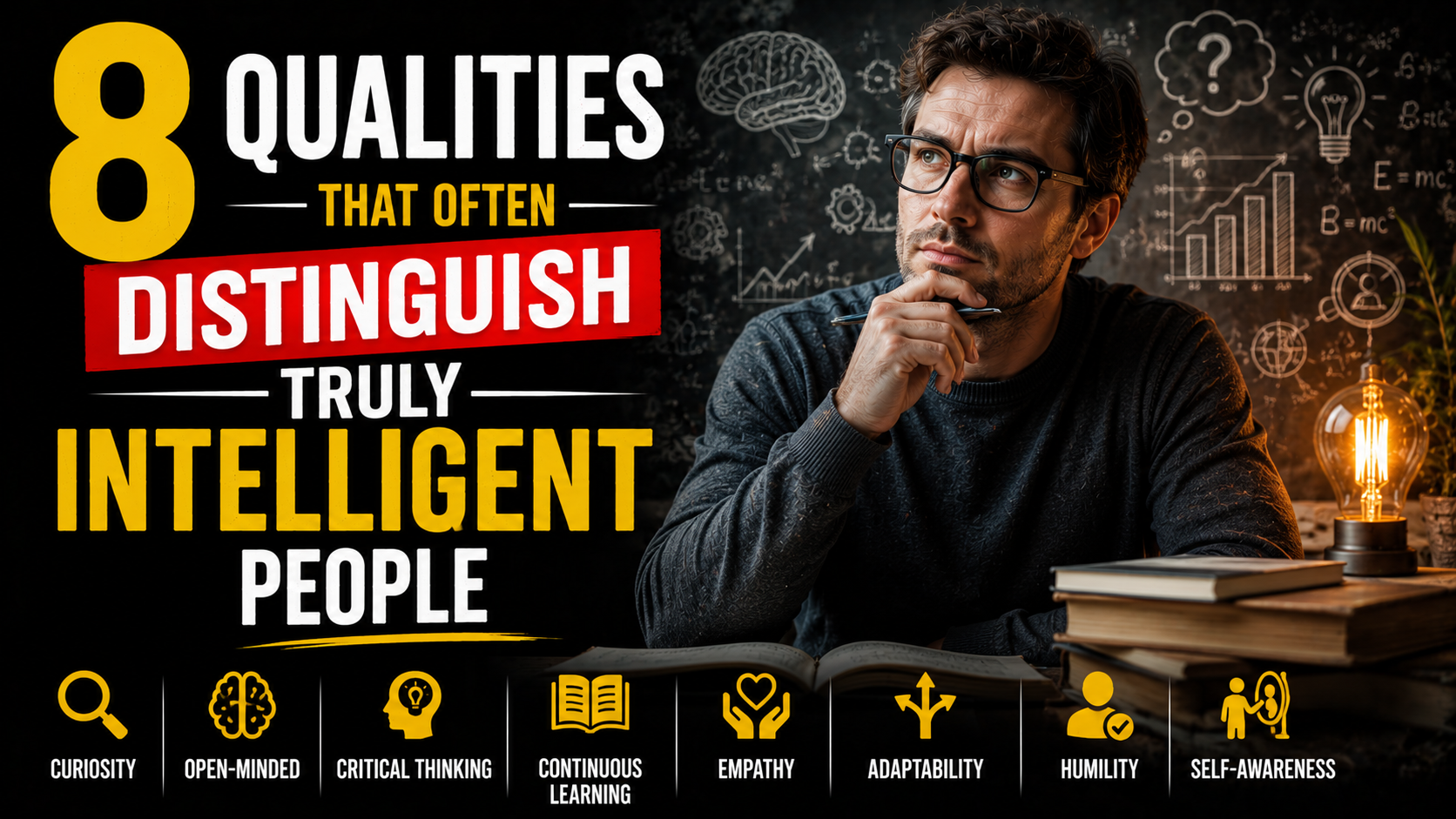
Common Traits of Truly Intelligent People
While every intelligent individual is unique, many share several qualities:
- Curiosity
- Humility
- Open-mindedness
- Emotional awareness
- Adaptability
- Creativity
- Self-reflection
- Lifelong learning
These traits often contribute more to long-term success and fulfillment than raw intellectual ability alone.
The Bottom Line
Intelligence isn’t always loud, flashy, or obvious. In many cases, the smartest people are those who remain curious, continue learning, listen carefully, adapt to change, and recognize that they don’t have all the answers.
Genuine intelligence extends far beyond academic achievements or test scores. It shows up in empathy, creativity, self-awareness, resilience, and the ability to understand both yourself and the people around you.
Perhaps the clearest sign of true intelligence is the willingness to keep growing. The smartest individuals aren’t focused on proving how much they know—they’re focused on discovering how much more there is to learn.







