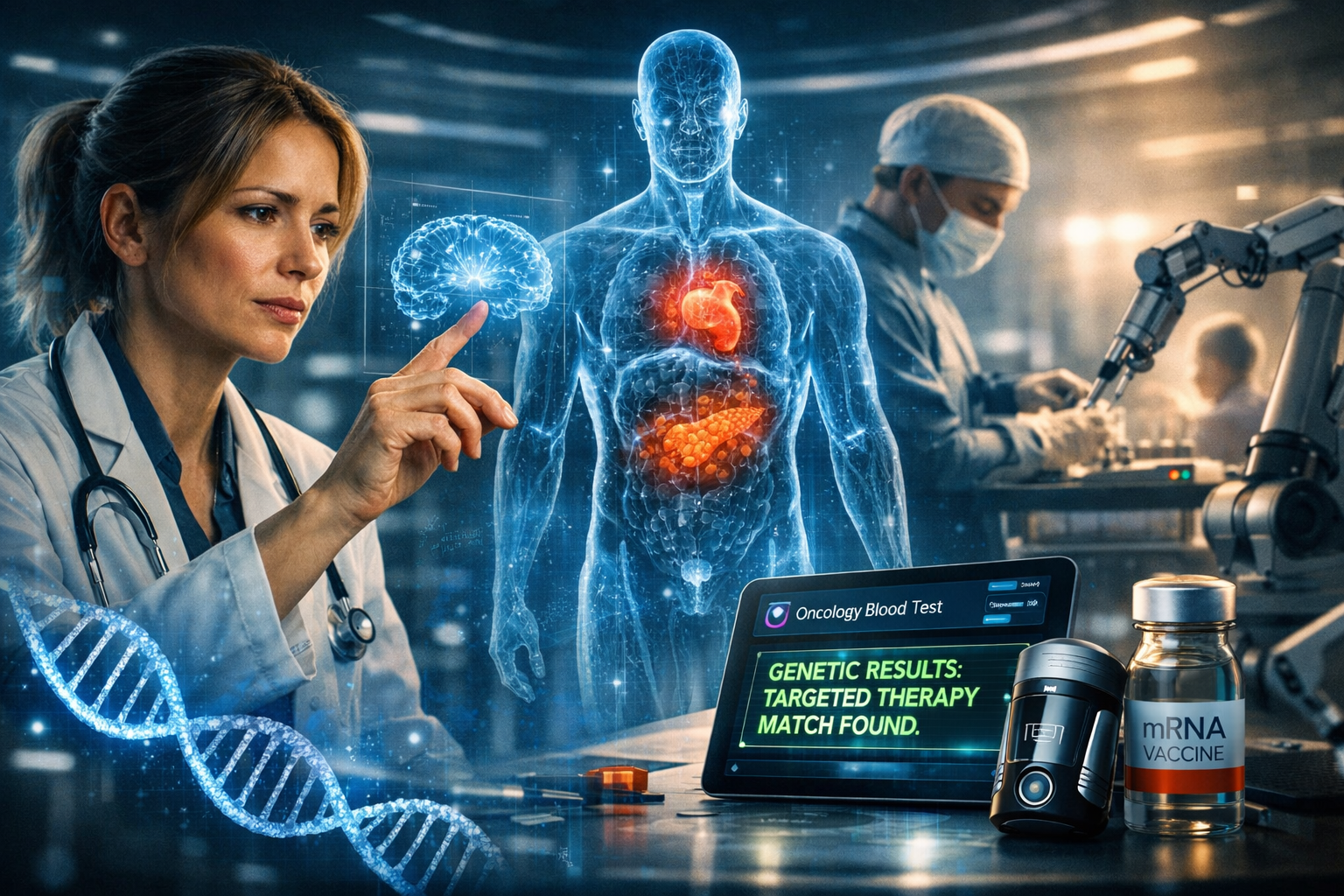
Healthcare has always aimed to provide the best possible treatment for patients, but for much of modern medical history, many therapies followed a one-size-fits-all approach. Doctors often prescribed the same medications and treatment plans to large groups of people with similar diagnoses, even though patients frequently responded in very different ways.
Today, that model is rapidly changing.
Advances in genetics, biotechnology, artificial intelligence, medical imaging, and data analytics are helping healthcare professionals better understand the unique characteristics of each individual patient. Instead of focusing solely on diseases, modern medicine is increasingly focused on the person who has the disease.
This shift is known as precision medicine, and it is transforming the future of healthcare. Rather than relying on generalized treatments, precision medicine aims to deliver therapies tailored to a person’s genes, lifestyle, environment, and biological profile.
While the field is still evolving, there are already clear signs that healthcare is moving into a new era where treatments become more personalized, effective, and targeted than ever before.
Here are eight major indicators that precision treatment is reshaping modern medicine.
1. Genetic Testing Is Becoming More Common
One of the strongest signs of the precision medicine revolution is the growing use of genetic testing.
Just a few decades ago, analyzing a person’s DNA was incredibly expensive and time-consuming. Today, advances in genomic technology have made genetic testing far more accessible and affordable.
Healthcare providers can now use genetic information to identify inherited health risks, understand disease susceptibility, and guide treatment decisions.
For example, certain genetic markers can help doctors determine which medications are most likely to work effectively for a particular patient. In some cases, genetic testing may also reveal whether an individual is at higher risk for developing specific medical conditions.
As genomic science continues to advance, genetic testing is becoming an increasingly valuable tool in personalized healthcare.
2. Cancer Treatments Are Becoming More Targeted
Cancer care offers one of the clearest examples of precision treatment in action.
Traditionally, cancer therapies often focused on the location of a tumor. Today, doctors are increasingly examining the genetic and molecular characteristics of cancer cells themselves.
This allows healthcare teams to identify specific mutations or biological pathways that drive tumor growth.
By targeting these unique features, treatments can become more precise and potentially more effective while reducing unnecessary exposure to therapies that may not provide significant benefits.
Researchers continue to discover new biomarkers that help match patients with treatments most likely to improve outcomes.
This approach is changing how many forms of cancer are diagnosed and managed.
3. Artificial Intelligence Is Enhancing Medical Decision-Making
Artificial intelligence is rapidly becoming an important part of healthcare.
Modern AI systems can analyze enormous amounts of medical data, including laboratory results, imaging scans, patient histories, and research findings.
These technologies help healthcare professionals identify patterns that might otherwise be difficult to detect.
Rather than replacing doctors, AI serves as a powerful support tool that can improve diagnostic accuracy and assist with treatment planning.
As machine learning systems become more sophisticated, they may help create highly individualized recommendations based on each patient’s unique circumstances.
This capability aligns perfectly with the goals of precision medicine.
4. Wearable Technology Is Providing Real-Time Health Data
The rise of wearable health devices is changing how patients and healthcare providers monitor health conditions.
Smartwatches, fitness trackers, glucose monitors, heart rhythm sensors, and other connected devices can continuously collect health information throughout the day.
Instead of relying solely on occasional medical appointments, healthcare professionals can now access ongoing data that reveals how a patient’s body functions in everyday life.
This real-time information allows for more personalized treatment adjustments and earlier identification of potential health concerns.
The result is a more proactive approach to healthcare rather than one focused only on reacting to problems after they occur.
5. Drug Therapy Is Becoming More Personalized
People often respond differently to the same medication.
A drug that works well for one patient may be less effective—or produce more side effects—for another.
Researchers are increasingly studying how genetic differences influence medication responses, a field known as pharmacogenomics.
By understanding how an individual’s genetic makeup affects drug metabolism and effectiveness, healthcare providers can make more informed prescribing decisions.
This approach may reduce trial-and-error prescribing and improve treatment success rates.
As research continues, personalized medication strategies are expected to become more common across many areas of medicine.
6. Advanced Diagnostics Are Detecting Disease Earlier
Precision treatment depends on accurate and timely diagnosis.
Fortunately, diagnostic technology is advancing rapidly.
Modern imaging systems, molecular testing methods, liquid biopsies, and sophisticated laboratory techniques are helping doctors detect diseases earlier than ever before.
Earlier detection often means more treatment options and better outcomes.
Rather than waiting for symptoms to become severe, healthcare providers can increasingly identify health issues during their earliest stages.
This ability to recognize disease sooner is a critical component of personalized care because it allows interventions to be tailored before conditions become more difficult to manage.
7. Patients Are Playing a Larger Role in Healthcare Decisions
Another major sign of precision medicine is the growing emphasis on patient-centered care.
Modern healthcare increasingly recognizes that successful treatment involves more than biological factors alone.
Lifestyle, personal preferences, cultural values, family history, and individual goals all influence healthcare decisions.
Patients today often have access to more information than ever before, allowing them to participate actively in discussions about treatment options.
Shared decision-making encourages collaboration between healthcare professionals and patients, helping create care plans that better reflect individual needs and circumstances.
This shift supports the broader goals of personalized healthcare.
8. Research Is Focusing on Individual Differences
Perhaps the most significant sign of healthcare’s transformation is the growing recognition that individual differences matter.
Researchers increasingly understand that diseases can behave differently from one person to another, even when diagnoses appear identical.
Large-scale medical studies now incorporate genetic data, environmental factors, lifestyle information, and biological markers to better understand these differences.
This research is helping scientists identify patient subgroups and develop treatments tailored to specific populations or even individual patients.
As knowledge expands, medicine is becoming less about treating averages and more about treating unique individuals.
Why Precision Medicine Matters
The movement toward precision treatment has the potential to improve healthcare in several important ways.
Potential benefits include:
- More effective therapies
- Reduced side effects
- Earlier disease detection
- Improved patient outcomes
- Better resource allocation
- More personalized care experiences
By focusing on the characteristics that make each patient unique, healthcare providers can make more informed decisions and potentially achieve better results.
This represents a major shift from traditional treatment models that often relied on broad population averages.
Challenges Still Facing Precision Healthcare
Despite its promise, precision medicine is not without challenges.
Researchers and healthcare systems continue working to address issues such as:
Data Privacy
Precision medicine relies heavily on personal health information, including genetic data. Protecting patient privacy remains a top priority.
Cost and Accessibility
Advanced testing and specialized treatments can be expensive. Ensuring equitable access is essential if precision healthcare is to benefit large populations.
Scientific Complexity
Human biology is extraordinarily complex. Researchers are still learning how genes, environment, behavior, and lifestyle interact to influence health.
Healthcare Infrastructure
Implementing precision medicine requires advanced technologies, specialized training, and significant healthcare system support.
Addressing these challenges will be important as personalized healthcare continues to expand.
What the Future Could Look Like
The future of healthcare may be dramatically different from what previous generations experienced.
Imagine a healthcare system where doctors can predict disease risk years before symptoms appear. Treatments could be selected based on a patient’s unique genetic profile. Wearable devices could continuously monitor health and alert providers to potential concerns before serious problems develop.
Artificial intelligence could analyze vast amounts of health data in seconds, helping physicians make faster and more accurate decisions.
In many ways, this future is already beginning to take shape.
The technologies driving precision medicine continue to improve, and new discoveries are emerging at an unprecedented pace.
Final Thoughts
Healthcare is undergoing one of the most significant transformations in modern history. Advances in genetics, data science, biotechnology, artificial intelligence, and diagnostics are creating opportunities to move beyond generalized treatment approaches and toward truly personalized care.
The eight signs highlighted here—from genetic testing and targeted therapies to wearable technology and patient-centered care—demonstrate that precision treatment is no longer a distant concept. It is becoming an increasingly important part of everyday healthcare.
While challenges remain, the direction is clear. Medicine is becoming more individualized, more data-driven, and more focused on understanding the unique characteristics of each patient.
As research continues and technology advances, precision treatment may help create a future where healthcare is not only more effective but also more personal than ever before.







