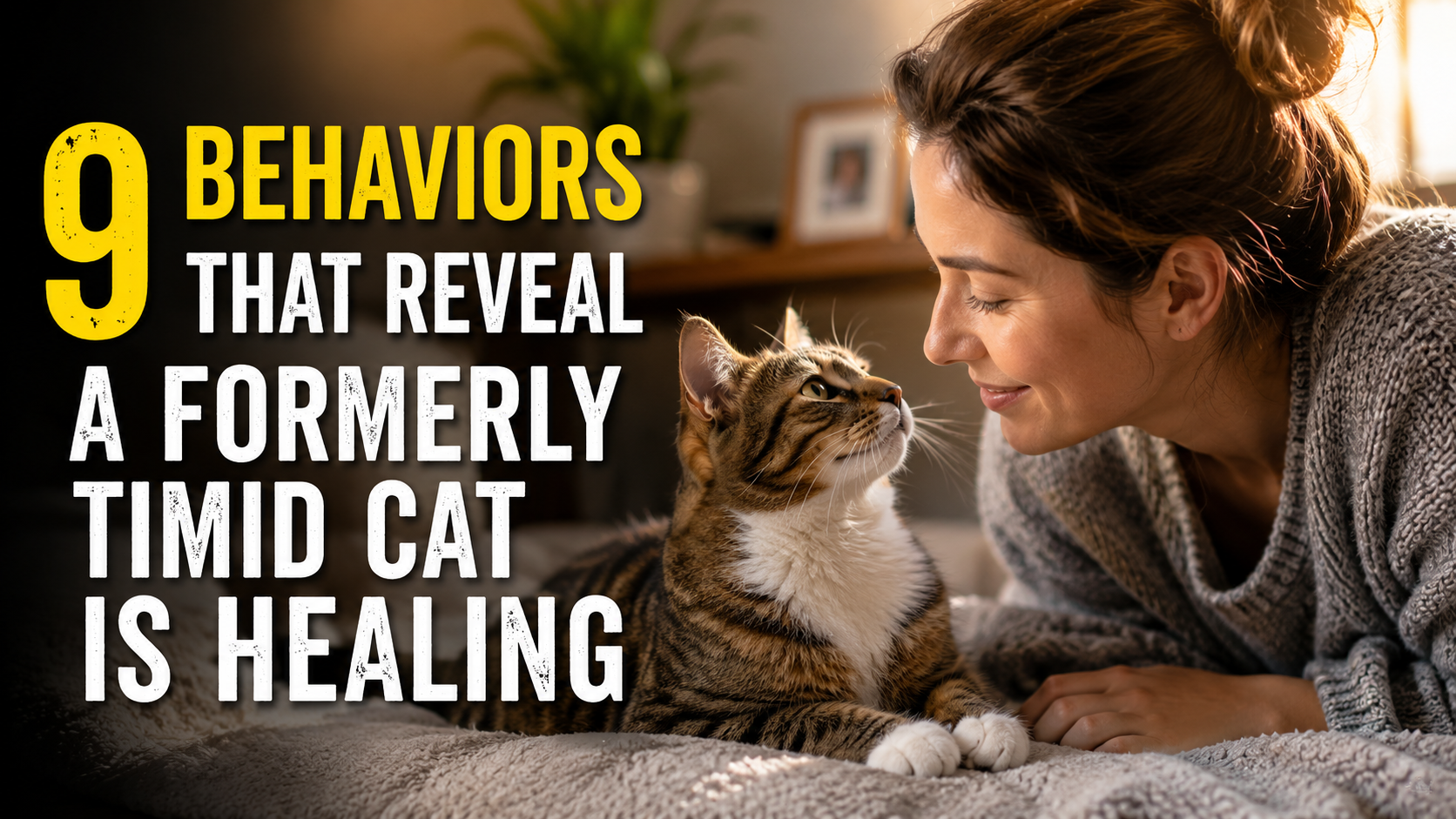
Bringing a rescue cat into your home can be a deeply rewarding experience, but it often requires patience, understanding, and time. Many cats that come from difficult backgrounds arrive carrying emotional scars. Some have experienced neglect, abandonment, lack of socialization, or stressful living conditions that leave them fearful of people and unfamiliar environments.
In the beginning, a timid cat may spend most of its time hiding, avoiding eye contact, or reacting nervously to everyday sounds and movements. For new owners, it can be heartbreaking to watch. Yet beneath that fear is a resilient animal capable of remarkable recovery.
The healing process rarely happens overnight. Trust develops slowly, often through small moments that are easy to overlook. A cat that once seemed terrified may gradually begin showing signs that it feels safer, more comfortable, and more confident in its surroundings.
If you’ve welcomed a shy rescue cat into your life, here are nine encouraging behaviors that often indicate emotional healing is underway.
1. They Spend Less Time Hiding
One of the clearest signs of progress is when a cat starts spending less time tucked away under furniture or behind closed doors.
Fearful cats often seek hidden spaces because they feel vulnerable. Hiding allows them to observe their surroundings while staying protected. During the early stages of adjustment, it isn’t unusual for a rescue cat to disappear for hours—or even days—at a time.
As healing begins, you’ll notice subtle changes. Instead of staying completely hidden, your cat may rest nearby where they can still see what’s happening. They might choose a chair, a windowsill, or a quiet corner rather than the darkest hiding spot in the house.
This shift shows that their sense of security is growing. They no longer feel the need to remain invisible to stay safe.
2. They Approach You Voluntarily
Trust cannot be forced. That’s why one of the most meaningful milestones occurs when a formerly timid cat chooses to come to you on their own.
At first, they may simply sit a few feet away and observe. Later, they might walk closer, sniff your hand, or briefly brush against your leg before retreating.
These interactions may seem minor, but they represent major emotional progress.
When a cat willingly approaches a person, they’re taking a calculated risk. They’re showing that curiosity is beginning to outweigh fear. Over time, those brief moments often evolve into affectionate greetings, lap visits, or requests for attention.
3. Their Body Language Becomes More Relaxed
Cats communicate a great deal through body language. Learning to recognize these signals can help you understand how your pet is feeling.
A frightened cat often appears tense. Their body may stay low to the ground, ears flattened, eyes wide, and muscles ready to react at any moment.
As they heal, their posture changes noticeably.
You may see:
- Ears held in a neutral position
- Slow blinking
- Stretching comfortably
- Resting with paws tucked underneath
- Sleeping in open areas
- A loosely held tail
These signs indicate that your cat no longer feels constantly on guard. Their nervous system is beginning to settle, allowing them to relax in ways they couldn’t before.
4. They Begin Exploring Their Environment
Confident cats are naturally curious. Fearful cats, on the other hand, tend to limit their movements because unfamiliar spaces feel risky.
A recovering cat often starts exploring areas they once avoided. They may investigate new rooms, jump onto furniture, watch activity from a higher perch, or spend time looking out the window.
Exploration is more than curiosity—it reflects growing confidence.
When a cat feels secure enough to investigate its surroundings, it’s demonstrating that the home no longer feels threatening. Instead of focusing solely on survival, they’re beginning to engage with the world around them.
5. They Develop Favorite Routines
Animals find comfort in predictability, and healing cats often create routines that help them feel secure.
You may notice your cat waiting by the food bowl at certain times, greeting you at the door, claiming a favorite sleeping spot, or following a daily schedule.
These habits may seem ordinary, but they reveal something important.
Cats living in a state of fear often struggle to establish routines because they remain focused on potential threats. Once they feel safer, they can devote more energy to regular activities and enjoyable rituals.
A cat that eagerly runs toward a favorite treat or meal every day is often displaying more than excitement—they’re showing trust in their environment and confidence that their needs will be met.
6. They Start Seeking Affection
Every cat has a different personality, and not all cats become highly affectionate. However, many formerly timid cats eventually begin seeking physical contact once they feel secure.
This might start with something small:
- Rubbing against your legs
- Sitting beside you on the couch
- Touching you with a paw
- Head-butting your hand
- Curling up nearby
These actions are significant because physical closeness requires vulnerability.
For a cat that once avoided all interaction, choosing to seek affection demonstrates a growing emotional bond. It means they increasingly associate you with comfort, safety, and positive experiences.
7. They Play More Often
Playfulness is one of the strongest indicators that a cat is feeling better emotionally.
Cats under stress frequently suppress playful behaviors. Their focus remains on staying alert and avoiding perceived danger. As a result, toys may go untouched for weeks or months.
When healing occurs, many cats rediscover their natural instincts to chase, pounce, stalk, and explore.
You may notice them batting at toys, chasing feather wands, zooming through the house, or inventing games of their own.
Play requires a sense of security. A cat that feels threatened rarely has the emotional bandwidth for fun. Increased playfulness often signals that they finally have enough confidence to enjoy life rather than simply endure it.
8. They Become More Vocal
Some shy cats remain nearly silent during their first weeks or months in a new home.
As trust develops, many begin expressing themselves more openly. Soft meows, chirps, purrs, trills, and other vocalizations often emerge as communication improves.
A cat that starts “talking” to you is often revealing that they feel more connected and comfortable.
Of course, every cat is different. Some naturally vocal breeds are chattier than others. But when a previously quiet rescue cat suddenly begins greeting you or responding to your presence, it’s often a positive sign that they feel emotionally safer.
9. They Sleep Deeply and Comfortably
Sleep can reveal a great deal about a cat’s emotional state.
Cats that feel unsafe tend to sleep lightly. They remain alert to sounds, movements, and potential threats. Many choose concealed locations where they can protect themselves.
As healing progresses, you’ll often notice deeper, more relaxed sleep.
Your cat may nap openly in the middle of a room, stretch out fully, expose their belly, or snooze beside family members.
These behaviors indicate a profound level of trust. Sleeping deeply leaves an animal vulnerable, so cats typically reserve this level of relaxation for environments where they genuinely feel secure.
Healing Is a Journey, Not a Straight Line
It’s important to remember that recovery isn’t always linear. Even after months of progress, a formerly timid cat may occasionally retreat, hide, or react nervously to unfamiliar situations.
This doesn’t mean you’ve lost the trust you’ve built.
Like people, animals can have good days and difficult days. Sudden noises, visitors, changes in routine, or stressful experiences may temporarily trigger old fears.
The key is to focus on the overall trend rather than isolated setbacks. Consistent progress over time matters far more than occasional moments of anxiety.
How You Can Support Your Cat’s Recovery
If you’re helping a shy rescue cat adjust, patience remains your most valuable tool.
Provide a predictable routine, offer safe hiding places, avoid forcing interactions, and allow your cat to set the pace. Positive reinforcement, gentle communication, and respect for boundaries can significantly strengthen trust.
Most importantly, celebrate small victories.
A cat stepping out of hiding, accepting a treat from your hand, or choosing to sit nearby may seem insignificant to others. Yet for a formerly fearful animal, these moments represent tremendous courage.
Final Thoughts
Watching a timid rescue cat transform into a confident companion is one of the most rewarding experiences a pet owner can have. The journey may take weeks, months, or even years, but every sign of trust reflects remarkable emotional growth.
Whether it’s exploring a new room, playing with a favorite toy, seeking affection, or sprinting excitedly toward a beloved snack, these behaviors reveal something powerful: your cat is beginning to feel safe.
And for an animal that once lived in fear, that sense of security can change everything.