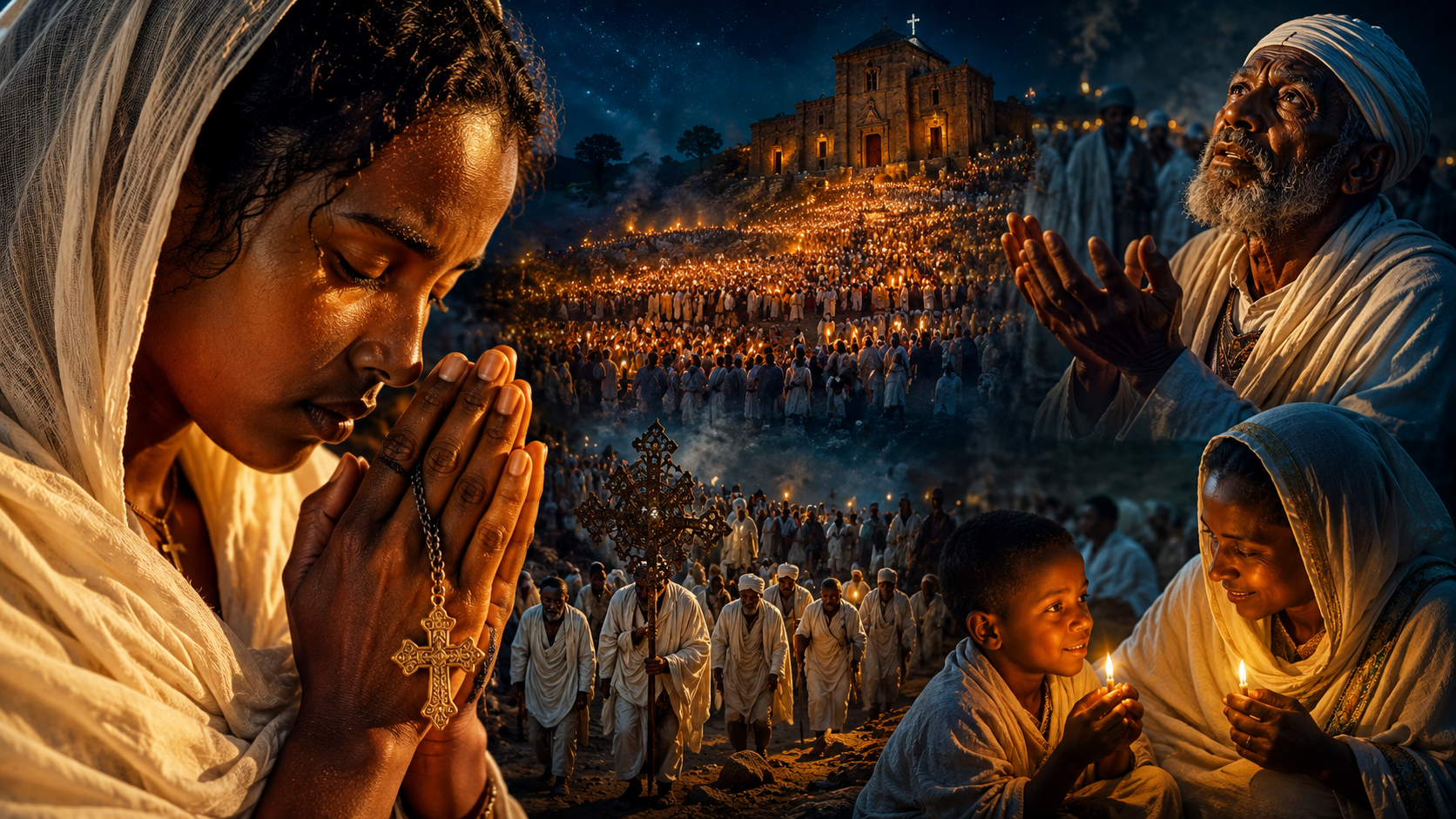
Every year, thousands of worshippers make their way across rugged landscapes, crowded roads, and long distances to celebrate Christmas in Ethiopia. Known locally as Genna, the holiday is observed on January 7 and holds deep spiritual significance for millions of Ethiopian Christians.
For many pilgrims, the journey is not merely a trip to a religious site. It is an act of devotion, reflection, sacrifice, and community. Some travel for days on foot. Others endure difficult weather conditions and physical exhaustion to participate in ceremonies that connect them to centuries of tradition.
To an outside observer, the sight can be remarkable. Vast crowds dressed in white garments gather in prayer, song, and celebration. Ancient rituals unfold against the backdrop of historic churches and sacred landscapes.
Yet beyond the religious significance, these pilgrimages reveal something equally fascinating: fundamental truths about human nature.
The motivations that drive people to undertake such demanding journeys offer insights into what humans value, seek, and need. While the setting is uniquely Ethiopian, the lessons are surprisingly universal.
Here are nine revealing facts about human nature reflected in the experiences of Ethiopia’s Christmas pilgrims.
1. People Long for Meaning Beyond Daily Life
Modern life often revolves around schedules, responsibilities, deadlines, and routines.
While these obligations are necessary, many people eventually begin searching for something deeper.
Pilgrimages highlight this desire in a powerful way.
The effort required to travel long distances for a spiritual celebration demonstrates that humans are motivated by more than convenience. People willingly sacrifice comfort when pursuing experiences they believe carry greater meaning.
Whether expressed through religion, philosophy, art, or personal purpose, the search for meaning appears to be a fundamental aspect of human existence.
The pilgrims’ journey reflects that universal longing.
2. Shared Beliefs Create Powerful Connections
One of the most striking aspects of Ethiopia’s Christmas celebrations is the sense of unity among participants.
Many pilgrims arrive from different regions, backgrounds, and walks of life. Yet once gathered, they become part of something larger than themselves.
Shared beliefs have an extraordinary ability to bring people together.
Humans naturally seek belonging.
We want to feel connected to communities that reflect our values and aspirations.
Pilgrimages demonstrate how common beliefs can create bonds among individuals who might otherwise never meet.
That sense of connection fulfills a deeply human need.
3. People Are Willing to Endure Hardship for What Matters
Comfort is appealing.
Yet history repeatedly shows that people are willing to endure significant challenges when pursuing something they consider meaningful.
The journeys undertaken by many Ethiopian pilgrims involve physical effort, long travel times, and personal sacrifice.
Why make such a demanding trip?
Because the destination represents something important.
This reveals an essential truth about human nature: people often tolerate discomfort when they believe the reward transcends immediate convenience.
Purpose can be a stronger motivator than comfort.
The willingness to sacrifice demonstrates the strength of conviction.
4. Rituals Provide Stability and Identity
Human beings are creatures of habit.
Across cultures and generations, rituals help create structure, continuity, and identity.
The traditions associated with Genna have been practiced for centuries. Participants often engage in ceremonies that connect them not only to their faith but also to their ancestors and cultural heritage.
Rituals provide a sense of continuity in an ever-changing world.
They remind people who they are and where they come from.
In times of uncertainty, familiar traditions can offer reassurance and stability.
This helps explain why rituals remain important across virtually every society.
5. Community Matters More Than Many People Realize
Modern culture often celebrates independence and individual achievement.
While those qualities have value, pilgrimages reveal the enduring importance of community.
The experience is rarely solitary.
People travel together, worship together, sing together, and celebrate together.
These shared experiences strengthen social bonds and create a sense of belonging.
Research consistently shows that meaningful relationships contribute significantly to well-being and life satisfaction.
Humans thrive when connected to others.
The gatherings during Ethiopia’s Christmas celebrations illustrate just how powerful those connections can be.
6. Humans Crave Experiences That Feel Authentic
In an increasingly digital world, authentic experiences have become especially meaningful.
Pilgrimages offer something difficult to replicate through technology.
Participants engage physically, emotionally, and spiritually.
The journey itself becomes part of the experience.
There are no shortcuts.
No virtual alternatives.
No substitutes for being present.
This desire for authenticity reflects a broader human tendency.
People want experiences that feel real, memorable, and transformative.
The popularity of pilgrimages demonstrates that genuine experiences continue to hold immense value.
7. Hope Remains One of Humanity’s Strongest Forces
Hope has inspired people throughout history.
It motivates action during difficult circumstances and encourages perseverance when outcomes remain uncertain.
For many pilgrims, the journey is fueled by hope.
Hope for spiritual renewal.
Hope for healing.
Hope for guidance.
Hope for loved ones.
Even when circumstances are challenging, hope encourages people to keep moving forward.
This capacity to imagine a better future may be one of humanity’s defining characteristics.
The determination displayed by pilgrims reflects the enduring power of hope.
8. People Seek Moments of Reflection
Modern life often moves at an overwhelming pace.
Many people spend their days responding to obligations without taking time to pause and reflect.
Pilgrimages create opportunities for contemplation.
Traveling long distances, participating in religious ceremonies, and stepping away from daily routines encourage introspection.
Humans naturally benefit from periods of reflection.
These moments help clarify priorities, process emotions, and reconnect with deeper values.
The popularity of spiritual journeys suggests that many people instinctively recognize this need.
Reflection remains an essential part of personal growth.
9. Humans Are Drawn to Something Larger Than Themselves
Perhaps the most profound lesson is humanity’s desire to connect with something greater.
Across cultures, people seek experiences that transcend individual concerns.
Some find this through religion.
Others through nature, service, art, family, or community.
Pilgrimages provide a vivid example of this impulse.
Participants willingly become part of a larger story that extends beyond personal interests.
This desire for transcendence appears throughout human history.
It reflects a deep-seated need to belong to something meaningful and enduring.
The journey becomes more than travel.
It becomes connection.
Understanding Ethiopia’s Christmas Tradition
To fully appreciate these lessons, it helps to understand the significance of Genna itself.
Ethiopian Christmas is celebrated according to the Ethiopian Orthodox calendar, which differs from the Gregorian calendar used in much of the world.
The holiday combines religious devotion, community gatherings, traditional clothing, music, and prayer.
Many worshippers attend lengthy church services that often begin before dawn.
Historic churches become gathering places for thousands of believers seeking spiritual renewal and communal celebration.
The atmosphere is both solemn and joyful.
For participants, the event represents far more than a holiday—it serves as an expression of faith, identity, and continuity.
Why Pilgrimages Continue to Matter Today
Some people assume that pilgrimages belong primarily to the past.
Yet millions of people worldwide continue to participate in religious journeys every year.
Why?
Because the motivations behind pilgrimage remain deeply relevant.
People still seek meaning.
They still crave connection.
They still value reflection.
They still desire experiences that feel significant.
Technology has transformed many aspects of modern life, but it has not eliminated these fundamental human needs.
Pilgrimages endure because they address something timeless.
The Psychology Behind Sacred Journeys
From a psychological perspective, pilgrimages offer several benefits.
They provide:
- A break from routine.
- A sense of purpose.
- Opportunities for social connection.
- Time for reflection.
- Shared emotional experiences.
- Participation in meaningful traditions.
These elements contribute to emotional well-being and personal fulfillment.
Even individuals who are not religious often understand the appeal of stepping away from ordinary life in pursuit of a meaningful experience.
The journey itself often becomes transformative.
Sometimes the process matters as much as the destination.
What These Pilgrims Teach the Rest of Us
The lessons revealed by Ethiopia’s Christmas pilgrims extend far beyond any single faith tradition.
At their core, they highlight universal aspects of the human experience.
We seek purpose.
We value connection.
We need hope.
We benefit from reflection.
We long for authenticity.
These desires appear across cultures, religions, and generations.
The pilgrims simply make them visible in a particularly powerful way.
Their journeys remind us that many of the things people need most cannot be purchased or downloaded.
They must be experienced.
Final Thoughts
The annual Christmas pilgrimages in Ethiopia offer more than a glimpse into a rich religious tradition. They provide valuable insights into what makes us human.
The nine lessons are worth remembering:
- People seek meaning beyond everyday routines.
- Shared beliefs create strong communities.
- Purpose often outweighs comfort.
- Rituals provide stability and identity.
- Human connection remains essential.
- Authentic experiences matter.
- Hope inspires perseverance.
- Reflection promotes growth.
- People naturally seek something larger than themselves.
These truths help explain why pilgrimages continue to attract participants generation after generation.
While the setting may be Ethiopia and the occasion may be Christmas, the deeper lessons transcend geography and religion.
They reveal enduring aspects of human nature that unite people across cultures, backgrounds, and beliefs.
And perhaps that is what makes these journeys so compelling—not just what they tell us about faith, but what they teach us about ourselves.







