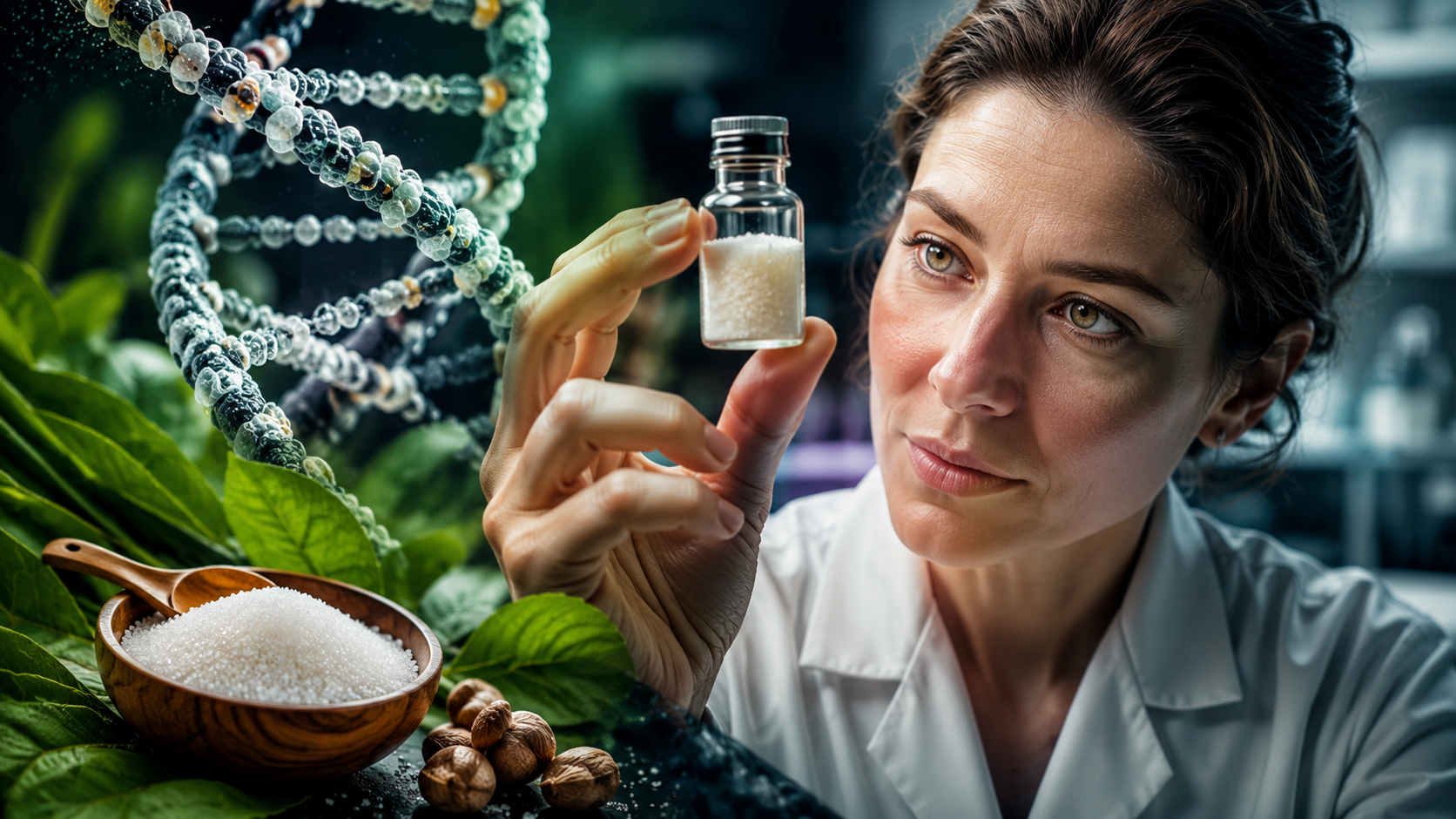
In the world of health and longevity research, few discoveries have generated as much excitement in recent years as a naturally occurring molecule called deoxyribose. While most people have never heard of it, scientists have known about this sugar for decades because it forms a crucial part of DNA—the genetic blueprint found in every cell of the human body.
Recently, however, researchers have begun exploring whether this simple sugar may have benefits that extend far beyond its role in genetics. Early studies suggest that deoxyribose could influence tissue repair, wound healing, cellular function, and even aspects of healthy aging. Although much of the research is still in its early stages, the findings have sparked growing interest among scientists seeking new ways to support human health.
It’s important to note that deoxyribose is not a miracle cure, nor have all of its potential benefits been fully proven in humans. Nevertheless, the emerging science is intriguing enough that researchers around the world are paying close attention.
Here are nine reasons why this natural DNA sugar has become an exciting area of scientific investigation.
1. It Is a Fundamental Building Block of DNA
The first reason deoxyribose attracts scientific interest is its essential role in life itself.
Deoxyribose is one of the core components of DNA, helping form the structural backbone that supports genetic information. Every cell in the body relies on DNA to store instructions for growth, repair, reproduction, and normal function.
Without deoxyribose, DNA as we know it could not exist.
Because it is so deeply involved in cellular biology, researchers believe understanding its behavior may reveal valuable insights into how cells maintain themselves, repair damage, and respond to aging.
2. It May Support Wound Healing
One of the most promising areas of research involves wound repair.
Several laboratory studies have suggested that deoxyribose may help stimulate processes involved in tissue regeneration. Scientists have observed that it appears to encourage the growth of new blood vessels, which play a critical role in delivering oxygen and nutrients to damaged tissues.
Efficient blood vessel formation is essential for proper healing. When tissues receive adequate blood supply, the body can repair injuries more effectively.
Although further human research is needed, these early findings have generated interest in the possibility of using deoxyribose-based materials in future wound-care technologies.
3. It Appears to Encourage Blood Vessel Growth
Researchers are particularly intrigued by deoxyribose’s potential impact on angiogenesis—the formation of new blood vessels.
Angiogenesis is a natural process that helps tissues grow, recover, and adapt after injury. Healthy circulation supports everything from skin repair to muscle recovery.
Some studies suggest that deoxyribose may promote signaling pathways involved in blood vessel development. This has led scientists to explore its possible applications in regenerative medicine and tissue engineering.
While much remains to be learned, the molecule’s apparent ability to influence vascular growth is one reason it continues attracting attention.
4. It Could Play a Role in Regenerative Medicine
Regenerative medicine focuses on helping the body repair or replace damaged tissues and organs.
Because deoxyribose may support cellular growth and tissue repair mechanisms, researchers are investigating whether it could become a useful component in biomaterials designed for healing.
Scientists are studying ways to incorporate deoxyribose into specialized scaffolds, gels, and medical dressings that may encourage tissue regeneration.
The goal is not simply to treat symptoms but to help the body rebuild itself more effectively. Although this field remains experimental, deoxyribose has emerged as a promising candidate for future innovations.
5. It May Help Scientists Better Understand Aging
Aging remains one of the most complex mysteries in biology.
Since DNA integrity plays a central role in the aging process, molecules associated with genetic structure naturally attract scientific attention. Researchers are interested in understanding how deoxyribose interacts with cellular repair systems and whether it influences mechanisms involved in maintaining healthy tissues over time.
While there is currently no evidence that deoxyribose can stop aging, studying its role in DNA-related processes may help scientists uncover clues about how cells age and how age-related damage accumulates.
This research could eventually contribute to broader efforts aimed at promoting healthy longevity.
6. It Is Naturally Produced by the Body
Unlike many compounds that generate health headlines, deoxyribose is not a synthetic laboratory invention.
It occurs naturally within living organisms and is involved in normal biological processes. This natural presence makes it particularly interesting to researchers because the body already recognizes and utilizes the molecule.
Understanding how naturally occurring compounds function often provides safer and more biologically compatible pathways for developing future therapies.
Because deoxyribose is already part of human biology, scientists see it as a potentially valuable tool for studying natural repair and maintenance systems.
7. It Could Improve Biomaterial Design
Modern medicine increasingly relies on advanced biomaterials to support healing and recovery.
Researchers are exploring whether deoxyribose can enhance the performance of materials used in medical implants, wound dressings, and tissue engineering platforms.
The goal is to create materials that better mimic the body’s natural environment, allowing cells to grow and function more effectively.
Early investigations suggest that incorporating deoxyribose into certain biomaterials may improve cellular interactions and promote more favorable healing responses.
If these findings continue to hold up under further testing, the molecule could play a significant role in future biomedical technologies.
8. It Offers New Opportunities for Tissue Engineering
Tissue engineering combines biology, medicine, and materials science to develop replacement tissues for damaged parts of the body.
One of the biggest challenges in tissue engineering is creating an environment where cells can thrive and organize themselves into functional structures.
Researchers are studying whether deoxyribose can help support this process by encouraging cell growth and vascular development. Because successful tissue engineering often depends on establishing healthy blood supplies, deoxyribose’s potential influence on angiogenesis has become especially relevant.
Although practical applications may still be years away, scientists view this area as highly promising.
9. The Research Is Opening New Scientific Questions
Sometimes the most exciting aspect of a discovery is not the answers it provides but the new questions it raises.
The growing interest in deoxyribose has encouraged researchers to examine previously overlooked aspects of cellular biology, tissue repair, and DNA-related processes.
Each new study contributes valuable information about how the body maintains itself, responds to injury, and adapts over time.
Even if some early hypotheses ultimately prove incorrect, the investigation itself is expanding scientific understanding and generating fresh ideas for future research.
That spirit of discovery is one of the reasons scientists remain enthusiastic about this seemingly simple molecule.
What Exactly Is Deoxyribose?
Deoxyribose is a five-carbon sugar that forms part of DNA’s structural framework. Together with phosphate groups and nitrogen-containing bases, it helps create the famous double-helix structure that carries genetic information.
The term “deoxyribose” refers to a version of ribose that contains one less oxygen atom. While the difference may seem small, it is crucial to the stability and function of DNA.
Every cell relies on this sugar to help preserve and transmit genetic instructions from one generation to the next.
Because it is so fundamental to biology, researchers continue uncovering new ways in which it may influence cellular activity beyond its traditional role in genetics.
What the Research Does Not Yet Prove
While excitement surrounding deoxyribose is growing, it is important to maintain a balanced perspective.
Most of the promising findings currently come from laboratory experiments, animal studies, or early-stage research. Large-scale human clinical trials are still limited, and scientists have not established deoxyribose as a treatment for any major health condition.
As with many emerging scientific discoveries, enthusiasm must be tempered with caution.
Further studies will be necessary to determine which potential applications are realistic, effective, and safe for widespread use.
The current evidence suggests promise—not certainty.
The Future of Deoxyribose Research
Interest in regenerative medicine, tissue engineering, and healthy aging continues to expand worldwide. As a result, deoxyribose is likely to remain an active area of investigation for years to come.
Researchers are exploring how the molecule interacts with cells, influences healing pathways, and supports biological structures. Future discoveries may reveal entirely new applications that scientists have not yet considered.
Whether deoxyribose becomes a cornerstone of advanced medical therapies or simply deepens our understanding of cellular biology, its scientific importance is already clear.
Final Thoughts
Deoxyribose may be a simple sugar, but its role in life is anything but simple. As a critical component of DNA, it lies at the heart of genetic function and cellular activity.
Recent research has revealed intriguing possibilities related to wound healing, blood vessel growth, regenerative medicine, biomaterials, and healthy aging. While many questions remain unanswered, the growing body of evidence has captured the attention of scientists across multiple disciplines.
The excitement surrounding this natural DNA sugar is not based on hype alone. It reflects a broader recognition that even familiar biological molecules can still hold surprising secrets.
As research continues, deoxyribose may help unlock new insights into how the body repairs itself, maintains health, and adapts throughout life—making it one of the most fascinating subjects in modern biomedical science.