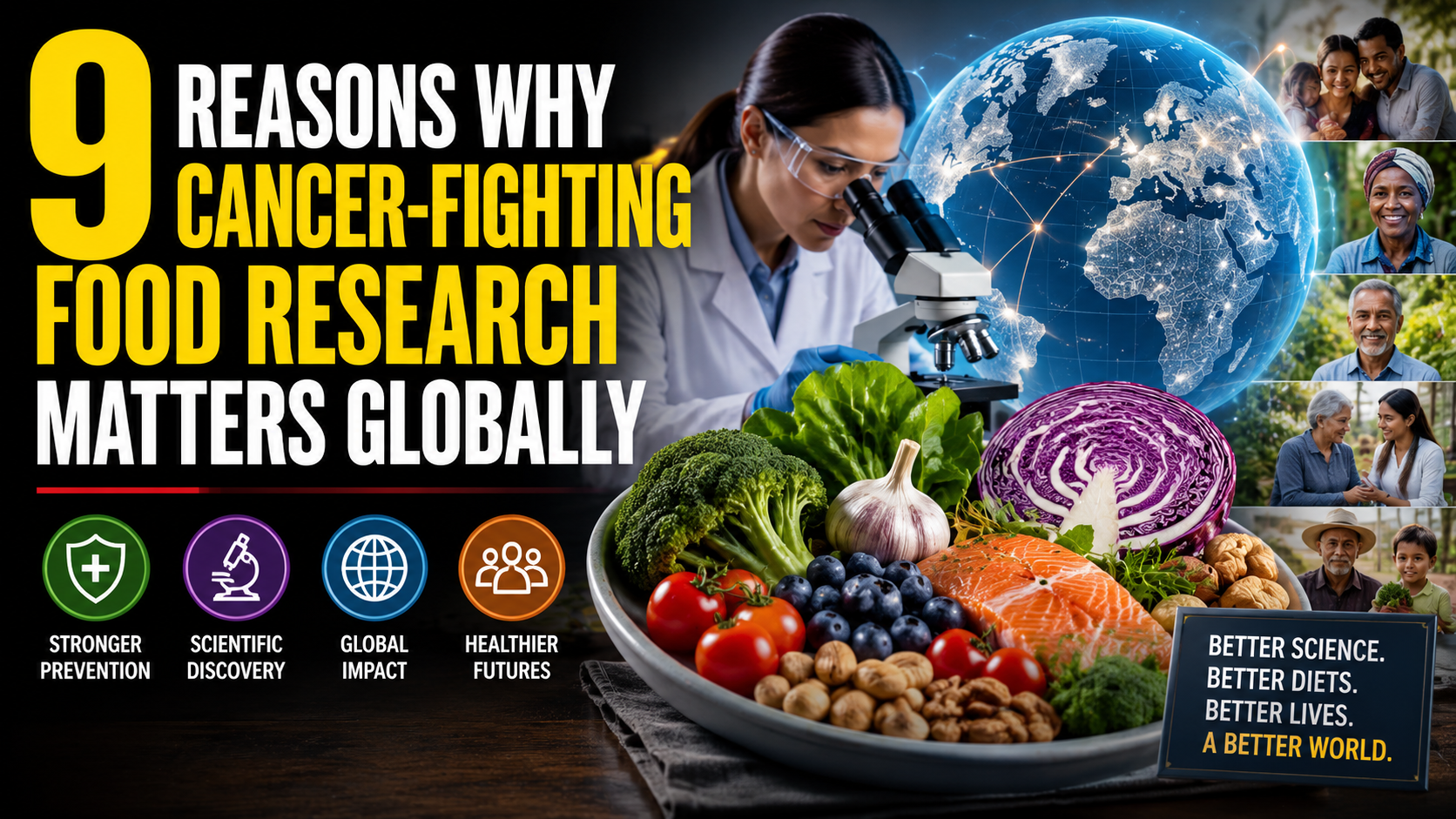
Over the past few decades, the relationship between diet and long-term health has become one of the most active areas of scientific research. Among the most closely studied topics is the idea that certain foods and natural compounds may play a role in reducing cancer risk or supporting the body’s defense systems.
While no single food can prevent or cure cancer, growing evidence suggests that nutrition can influence inflammation, cellular health, immune response, and overall disease risk. This has led researchers, healthcare professionals, and public health organizations to take a much closer look at what we eat—and how it affects long-term outcomes.
Cancer-fighting food research does not promise miracles. Instead, it provides valuable insights that can guide healthier choices, inform policy decisions, and improve global health strategies.
Here are nine important reasons why this field of research matters on a global scale.
1. It Helps Us Understand the Role of Diet in Disease Prevention
One of the most important contributions of food-based cancer research is that it deepens our understanding of how diet influences disease risk.
For many years, cancer was viewed primarily as a genetic or environmental condition. Today, researchers recognize that lifestyle factors—including nutrition—also play a significant role.
Studies examining fruits, vegetables, whole grains, and plant-based compounds have shown that certain dietary patterns may help reduce inflammation and oxidative stress in the body. These processes are linked to cellular damage, which can contribute to cancer development over time.
By understanding these relationships, scientists can better identify which dietary habits support long-term health.
2. It Supports Global Public Health Strategies
Cancer is one of the leading causes of death worldwide, and healthcare systems everywhere are under pressure to find more effective prevention strategies.
Nutrition research provides a low-cost, accessible tool for improving public health outcomes.
Unlike many medical treatments, dietary improvements can often be implemented at a population level through education campaigns, food guidelines, and policy changes.
Governments and health organizations use this research to develop recommendations that encourage healthier eating habits, such as increasing fruit and vegetable consumption and reducing processed food intake.
These efforts can have a broad impact across different countries and communities.
3. It Encourages Preventive Healthcare Instead of Reactive Treatment
Modern healthcare systems have traditionally focused on treating diseases after they appear. However, there is a growing shift toward prevention.
Cancer-related nutrition research supports this shift by highlighting how lifestyle choices may influence long-term risk.
Instead of relying solely on medical interventions after diagnosis, researchers aim to understand how early dietary habits might reduce the likelihood of disease development in the first place.
This preventive approach not only improves quality of life but can also reduce healthcare costs and strain on medical systems.
4. It Advances Our Knowledge of Plant-Based Compounds
Many cancer-related food studies focus on natural compounds found in plants, such as antioxidants, flavonoids, carotenoids, and polyphenols.
These compounds are being studied for their potential effects on cellular protection and inflammation regulation.
For example, certain plant pigments are believed to help neutralize free radicals—unstable molecules that can damage cells over time.
While research is still ongoing, these findings help scientists better understand how plant-based foods interact with biological systems.
This knowledge is also influencing the development of new dietary guidelines and nutritional science models.
5. It Helps Identify Healthy Dietary Patterns, Not Just Individual Foods
One of the key lessons from modern nutrition research is that health outcomes are influenced more by overall dietary patterns than by individual foods alone.
Rather than focusing on a single “superfood,” researchers study how combinations of foods interact within a balanced diet.
For instance, diets rich in vegetables, legumes, whole grains, and healthy fats are consistently associated with better health outcomes in many studies.
This broader perspective helps people avoid oversimplified nutrition claims and instead focus on sustainable eating habits.
It also encourages a more realistic understanding of how diet affects long-term wellness.
6. It Drives Innovation in Food Science and Biotechnology
Cancer-related nutrition research is not limited to academic studies. It also fuels innovation in food science, agriculture, and biotechnology.
Researchers are exploring ways to enhance the nutritional value of crops, improve food preservation methods, and develop functional foods with added health benefits.
In some cases, scientists are investigating how specific compounds can be extracted or concentrated for use in supplements or therapeutic research.
This intersection of food science and medicine is opening new pathways for innovation that could benefit both consumers and healthcare systems.
7. It Helps Reduce Health Inequalities Across Populations
Access to healthcare is not equal across all regions of the world. In many low-income areas, preventive healthcare and early cancer detection services may be limited.
Nutrition, however, is a more accessible form of health intervention.
Understanding how diet influences cancer risk allows health organizations to promote affordable, culturally adaptable dietary guidelines that can be implemented even in resource-limited settings.
Encouraging the consumption of locally available fruits, vegetables, and whole foods can make a meaningful difference in community health outcomes.
This makes nutrition research a powerful tool in reducing global health disparities.
8. It Provides a Foundation for Evidence-Based Dietary Guidelines
Dietary advice is often influenced by trends, marketing, or popular opinion. Scientific research helps ensure that recommendations are based on evidence rather than speculation.
Cancer-related food studies contribute to the development of official dietary guidelines issued by health authorities around the world.
These guidelines help people make informed decisions about their nutrition and reduce confusion caused by conflicting information.
As research continues to evolve, guidelines are regularly updated to reflect the most accurate scientific understanding available.
This ensures that public health recommendations remain reliable and relevant.
9. It Improves Awareness of the Connection Between Lifestyle and Health
Perhaps one of the most important outcomes of cancer-related nutrition research is increased public awareness.
Many people are now more conscious of how lifestyle factors—including diet, exercise, sleep, and stress—affect long-term health.
This awareness encourages individuals to take a more active role in managing their well-being.
While no diet can guarantee protection from cancer, informed choices can support overall health and reduce certain risk factors.
Education plays a key role in helping people understand the difference between scientific evidence and misinformation.
Why This Research Matters More Than Ever
As global populations grow and age, the burden of chronic diseases, including cancer, continues to rise. Healthcare systems face increasing pressure to find effective, sustainable solutions that go beyond treatment alone.
Nutrition research offers one of the most promising pathways for improving long-term health outcomes at scale.
It does not replace medical care or treatment, but it complements them by focusing on prevention, awareness, and healthier living.
By studying the relationship between food and disease, scientists are helping shape a future where health is supported not only in hospitals but also in everyday choices.
Challenges in the Field
Despite its importance, cancer-related nutrition research is complex and sometimes difficult to interpret.
Human diets vary widely, and long-term studies require significant time and resources. Additionally, isolating the effects of specific foods from other lifestyle factors can be challenging.
There is also the risk of misinformation when scientific findings are oversimplified or misinterpreted in public discussions.
For this reason, researchers emphasize the importance of careful study design, peer review, and responsible communication of results.
Looking Ahead
The future of cancer-related food research is likely to become even more advanced as technology improves.
New tools in genetics, data analysis, and molecular biology are allowing scientists to study nutrition at a much deeper level than ever before.
This may lead to more personalized dietary recommendations based on individual biology, lifestyle, and risk factors.
At the same time, global collaboration among researchers is helping to expand understanding across different populations and dietary cultures.
Final Thoughts
Cancer-fighting food research is not about discovering a single miracle ingredient. Instead, it is about building a deeper understanding of how nutrition interacts with the human body over time.
The insights gained from this field are shaping public health strategies, improving dietary guidelines, and encouraging healthier lifestyles around the world.
While much remains to be discovered, one thing is clear: the connection between food and long-term health is an essential part of modern medical science.
As research continues to evolve, it will play an increasingly important role in helping people make informed choices that support better health outcomes for individuals and communities alike.







