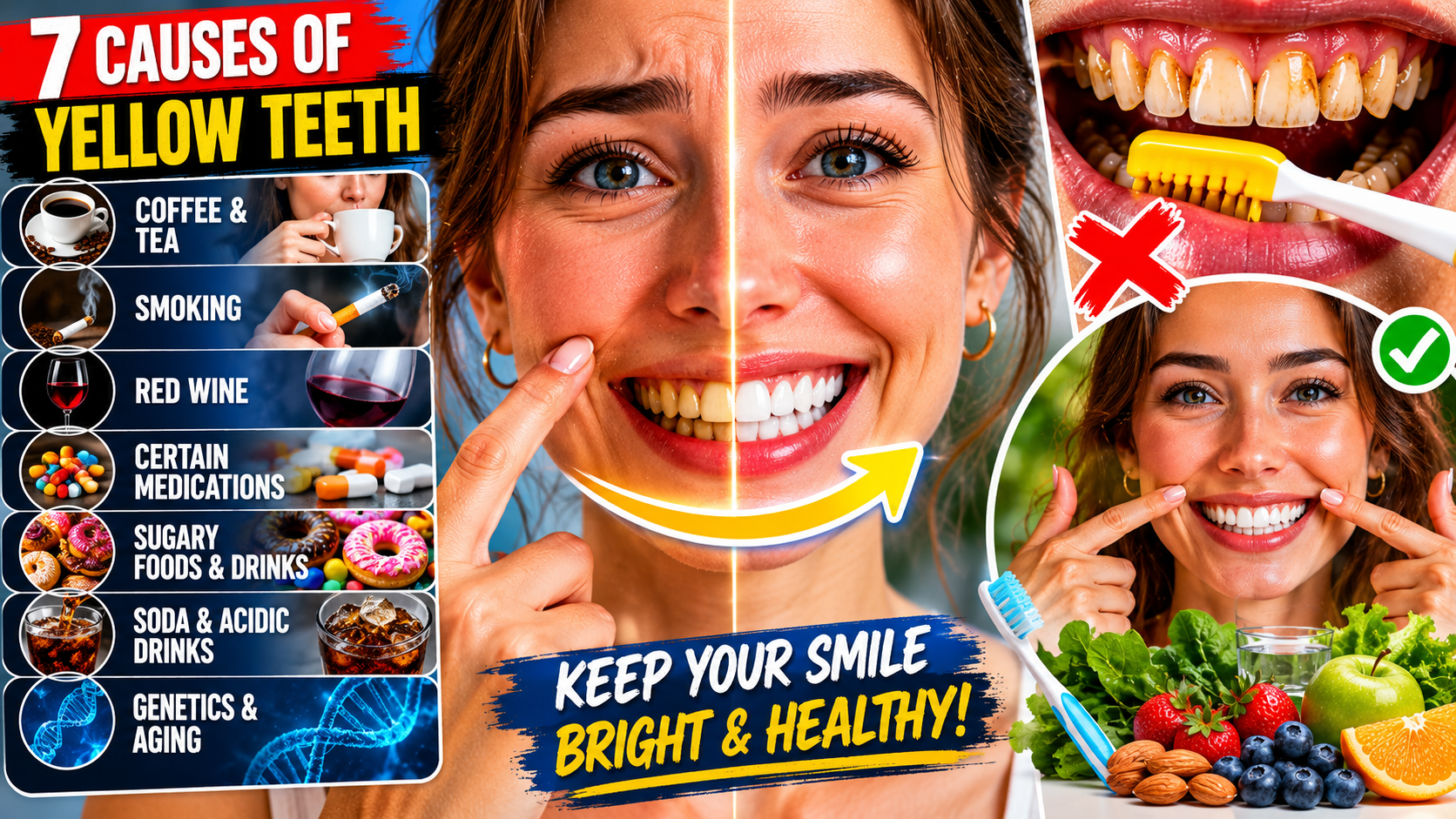
Have you noticed your teeth looking less white than they used to? You’re not alone. Tooth discoloration is incredibly common and can happen for a variety of reasons. While some causes are linked to genetics and aging, others are tied to everyday habits such as smoking, poor oral hygiene, and even certain medications.
The good news is that understanding why your teeth are yellowing is the first step toward preventing further staining and restoring a brighter smile. Here are seven of the most common causes of yellow teeth, along with practical tips to help keep your teeth looking their best.
1. Genetics Can Influence Tooth Color

Not everyone starts with the same shade of teeth. Genetics play a significant role in determining the thickness and quality of your tooth enamel. People with naturally thinner enamel tend to show more of the dentin beneath it—a layer that has a yellowish appearance.
Some individuals may also inherit enamel that is more porous, making it easier for stains from food and drinks to settle into the teeth.
What You Can Do
Although genetics can’t be changed, you can protect your enamel by brushing with fluoride toothpaste, limiting stain-causing beverages like coffee and red wine, and scheduling regular dental cleanings. Professional whitening treatments may also help improve the appearance of genetically discolored teeth.
2. Certain Dental Procedures May Cause Discoloration

Some dental treatments can affect the color of your teeth over time. For example, teeth that have undergone root canal treatment may gradually darken due to changes inside the tooth. Older fillings, crowns, and dental restorations can also become mismatched with surrounding teeth, creating an uneven appearance.
In some cases, excessive use of whitening products may wear down enamel, making the underlying dentin more visible.
What You Can Do
Talk to your dentist about restoration materials that closely match your natural tooth color. If discoloration develops after a dental procedure, treatments such as internal bleaching, bonding, or veneers may help restore a more uniform smile.
3. Smoking and Tobacco Use

Tobacco is one of the biggest contributors to stained teeth. Cigarettes, cigars, and other tobacco products contain nicotine and tar, which cling to tooth enamel and leave behind stubborn yellow or brown stains.
Over time, these particles penetrate tiny pores in the enamel, making discoloration increasingly difficult to remove. Smoking can also reduce saliva production, allowing stains and bacteria to build up more easily.
What You Can Do
The most effective solution is quitting tobacco use altogether. In the meantime, whitening toothpaste, regular brushing, and professional dental cleanings can help reduce surface stains. Drinking water after smoking may also help wash away some of the residue before it settles on your teeth.
4. Aging Naturally Changes Tooth Color

As we age, the outer layer of enamel gradually becomes thinner through years of chewing, brushing, and exposure to acidic foods and drinks. When enamel wears away, the yellow dentin underneath becomes more visible.
This is a natural process that affects nearly everyone to some degree.
What You Can Do
Protect your enamel by using fluoride toothpaste, avoiding excessive consumption of acidic foods, and maintaining a strong oral hygiene routine. While aging cannot be stopped, healthy habits can slow enamel wear and help preserve a brighter smile.
5. Medications Can Affect Tooth Appearance

Several medications have been linked to tooth discoloration. Certain antibiotics, particularly tetracycline taken during childhood, can cause deep staining that may be difficult to reverse.
Other medications, including some antihistamines, blood pressure drugs, and chemotherapy treatments, may contribute to discoloration by affecting saliva production or altering the structure of the teeth.
What You Can Do
Stay hydrated to combat dry mouth and maintain a thorough brushing and flossing routine. If you suspect a medication is affecting your teeth, speak with your healthcare provider about possible alternatives or ways to reduce the side effects.
6. Medical Conditions and Illnesses

Your overall health can have a direct impact on your oral health. Conditions such as acid reflux expose teeth to stomach acid, which gradually erodes enamel and reveals the darker dentin underneath.
Certain diseases can also interfere with tooth development, especially during childhood. One example is enamel hypoplasia, a condition that results in weaker or thinner enamel and can cause permanent discoloration.
What You Can Do
Managing underlying health conditions is essential for protecting your teeth. Regular dental visits, proper treatment of medical issues, and consistent oral hygiene can help minimize discoloration and preserve your smile. For severe staining, cosmetic treatments such as whitening procedures or veneers may provide noticeable improvement.
7. Poor Oral Hygiene

One of the most preventable causes of yellow teeth is inadequate oral care. When plaque isn’t removed through regular brushing and flossing, it can harden into tartar, a yellow or brown deposit that sticks to the teeth.
This buildup not only causes discoloration but also increases the risk of cavities and gum disease. Stains from food and beverages become trapped more easily when plaque and tartar are present.
What You Can Do
Brush your teeth twice a day with fluoride toothpaste, floss daily, and visit your dentist regularly for professional cleanings. Consistent oral hygiene remains one of the most effective ways to maintain a healthy, white smile.
Final Thoughts

Yellowing teeth can result from a variety of factors, ranging from genetics and aging to lifestyle habits and health conditions. While some causes are unavoidable, many can be managed through proper dental care and healthy daily habits.
A brighter smile doesn’t require perfection—just consistency. By brushing and flossing regularly, limiting stain-causing substances, staying on top of dental appointments, and addressing underlying health issues, you can keep your teeth looking cleaner and healthier for years to come.
And if discoloration has already become a concern, modern cosmetic dentistry offers plenty of effective options to help restore confidence in your smile. A little prevention and care today can go a long way toward keeping your teeth looking their best tomorrow.







